
Deprecated: mb_convert_encoding(): Handling HTML entities via mbstring is deprecated; use htmlspecialchars, htmlentities, or mb_encode_numericentity/mb_decode_numericentity instead in /mnt/storage/stage/builds/pugpig-site-subs-server/latest-1.2.0-1753096337.768322/pugpig-site-subs/content.php on line 225
In defence of Judas Iscariot
One of the most puzzling biblical characters is Judas Iscariot — traitor or hero? Essential to the divine plan, but still condemned? Gordon Reid explores this paradox

Judas Iscariot is an enigma —a man close to Jesus Christ and one of the 12 disciples, yet vilified as one of the most evil men in history, the great betrayer of Christ. Indeed, in Dante’s Inferno he is said to dwell in the lowest form of hell as the worst of all traitors: ‘“…that soul up there which has the greatest pain,” the Master said, “is Judas Iscariot.”’ But what is the truth about Judas — was he indeed a traitor, or just an innocent man caught up in events beyond his control?
The Bible offers confusing evidence: we know that Judas was a disciple and that the religious authorities paid him 30 pieces of silver to take them to where Jesus was spending the night. We also know that Jesus was aware of what Judas was going to do and took no action to stop him. Judas led the authorities to Jesus and they arrested him. Then, mysteriously, Judas is filled with remorse and commits suicide.
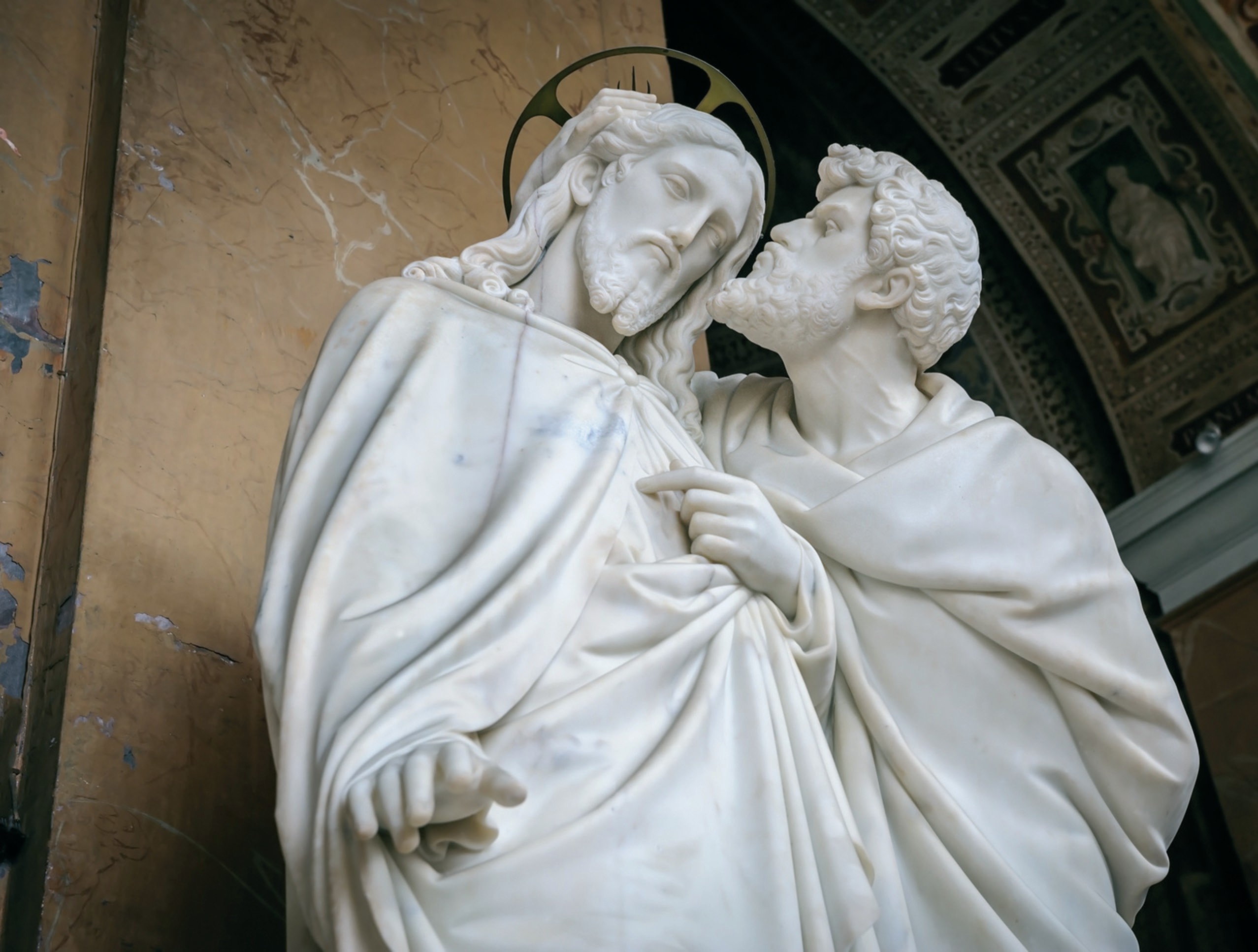
BOTH LUKE AND JOHN SUGGEST THAT THE REAL REASON FOR JUDAS’ ACTIONS WAS THAT HE WAS POSSESSED BY SATAN.
What kind of man was Judas? The Gospels are divided. Matthew blames greed and tells us that Judas went to the authorities and offered to betray Jesus to them for money: ‘Judas Iscariot went to the chief priests and said, “What will you give me if I betray him to you?” And they paid him thirty pieces of silver’ (Matthew 26:15). John’s Gospel confirms that he was a greedy and dishonest man: ‘…he was a thief; he kept the common purse and used to steal what was put into it’ (John 12:4). John Ruskin in The Crown of Wild Olive observed:
‘Judas was a common, selfish, muddle-headed, pilfering fellow; his hand always in the bag of the poor, not caring for them… He was only a common money-lover, and, like all moneylovers, did not understand Christ.’
Possible motives
But there may have been more to the actions of Judas than simple greed. Both Luke and John suggest that the real reason for Judas’ actions was that he was possessed by Satan. Luke, in particular, says that Judas was a good man until Satan possessed him: ‘Then Satan entered into Judas called Iscariot, who was one of the twelve — he went away and conferred with the chief priests and officers of the temple police about how he might betray him to them’ (Luke 22:3). John’s Gospel states that Judas was a bad man even before he was possessed by Satan: ‘“Did I not choose you, the twelve? Yet one of you is a devil.” He was speaking of Judas Iscariot’ (John 6:70). ‘The devil had already put it into the heart of Judas Iscariot to betray him. After he received the piece of bread, Satan entered into him’ (John 13:2).
The strange thing is that Jesus seemed to know that Judas would betray him. John observes how Jesus spoke to Peter: ‘Jesus was troubled in spirit and declared, “Very truly I tell you, one of you will betray me… . It is the one to whom I give this piece of bread when I have dipped it in the dish.” So when he had dipped the piece of bread, he gave it to Judas’ (John 13:21, 26).
There is a further possible reason for Judas acting as he did. John’s Gospel suggests that Jesus chose Judas to fulfil Old Testament prophecy: ‘Even my close friend whom I trusted, who ate of my bread has lifted his heel against me’ (Psalm 41:9). The Fourth Gospel makes this link clear: ‘I know whom I have chosen. But it is to fulfil scripture’ (John 13:18).
Remorse?
It is now that the confusion starts. According to Matthew, when Judas saw that Jesus had been condemned, he took the money back to the religious authorities and killed himself: ‘He said, “I have sinned by betraying innocent blood.” But they said, “What is that to us? See to it yourself.” Throwing down the pieces of silver in the temple, he departed; and he went and hanged himself.’ Luke’s version is different. He suggests that Judas may not have killed himself, but instead may have had a bizarre accident: ‘Judas bought a field; there he fell headlong, his body burst open and all his intestines spilled out’ (Acts 1:18). Whatever actually happened, Jesus made it clear that punishment would follow his betrayal: ‘…but woe to the one by whom the Son of Man is betrayed! It is better for that one not to have been born’ (Luke 22:22).
But there remain many unanswered questions about Judas. We know that:
■ he was one of the twelve disciples
■ he had been chosen by Jesus himself
■ he offered to betray Jesus to the religious authorities
■ Jesus knew what he was going to do, but did not stop him n he was paid 30 pieces of silver
■ he led the authorities to the Garden of Gethsemane, where Jesus was praying
■ he died mysteriously
Yet niggling doubts remain; did Judas really act out of greed? The amount he was paid was not great. Moreover, the disciples had very little money, so why would he have stayed with them? If Judas was possessed by Satan, then he could not have been acting of his own free will and therefore cannot be blamed. Similarly, if he was acting in fulfilment of prophecy then, once again, he may not have been acting of his own accord. If either of these is true, then Judas is an innocent man.
‘THE BOOK OF JUDAS’ SUGGESTS THAT JESUS ACTUALLY ASKED JUDAS TO BETRAY HIM SO THAT THE PLAN OF HUMAN SALVATION COULD BE CARRIED OUT. JESUS ALSO APPEARS TO WARN JUDAS THAT HIS NAME WOULD BE HATED FOREVER.
Political motivation
It has been suggested that Judas had a political motive and wanted to force Jesus into speaking to the religious authorities. In a sense, Judas wanted Jesus and the authorities to meet and talk, which may explain why Judas committed suicide after he realised what had happened.
The key question is, did Judas betray Jesus at all? Looking at all the events, all Judas actually did was lead the authorities to a well-known place (Gethsemane) where Jesus was praying. Jesus was not hiding — so does Judas’ action really merit the accusations of betrayal made against him? Was he really so evil?
An ancient manuscript called ‘The Book of Judas’ suggests that Jesus actually asked Judas to betray him so that the plan of human salvation could be carried out. Jesus also appears to warn Judas that his name would be hated forever. Perhaps the scholar William Klassen (2009) offers the more reasonable judgement on Judas: ‘I’m not saying that Judas is a saint… but we owe him an enormous debt for having helped Jesus to accomplish God’s will.’
References
Klassen, W. (2009) Judas: Betrayer or Friend of Jesus?, SCM Press.
Ruskin, J. (2010) The Crown of Wild Olive, FQ Books.