
Deprecated: mb_convert_encoding(): Handling HTML entities via mbstring is deprecated; use htmlspecialchars, htmlentities, or mb_encode_numericentity/mb_decode_numericentity instead in /mnt/storage/stage/builds/pugpig-site-subs-server/latest-1.2.0-1753096337.768322/pugpig-site-subs/content.php on line 225
exam focus
Edexcel exam terms explained
In the first of a series of columns introducing the A-level assessment criteria, we focus on what the command words mean in Edexcel exams

Edexcel: 9RS0/03 New Testament Studies WJEC/Eduqas: A120PA–F
All religious studies specifications are subject to several criteria laid down by government agencies concerned with the rigour and appropriateness of assessment at A-level. Edexcel, like the other boards, has to assess according to two assessment objectives and to weight them accordingly, as set out Table 1. How does this work out in practice?
You have to study three components out of a choice of four, and cover six areas in each component. These are outlined in
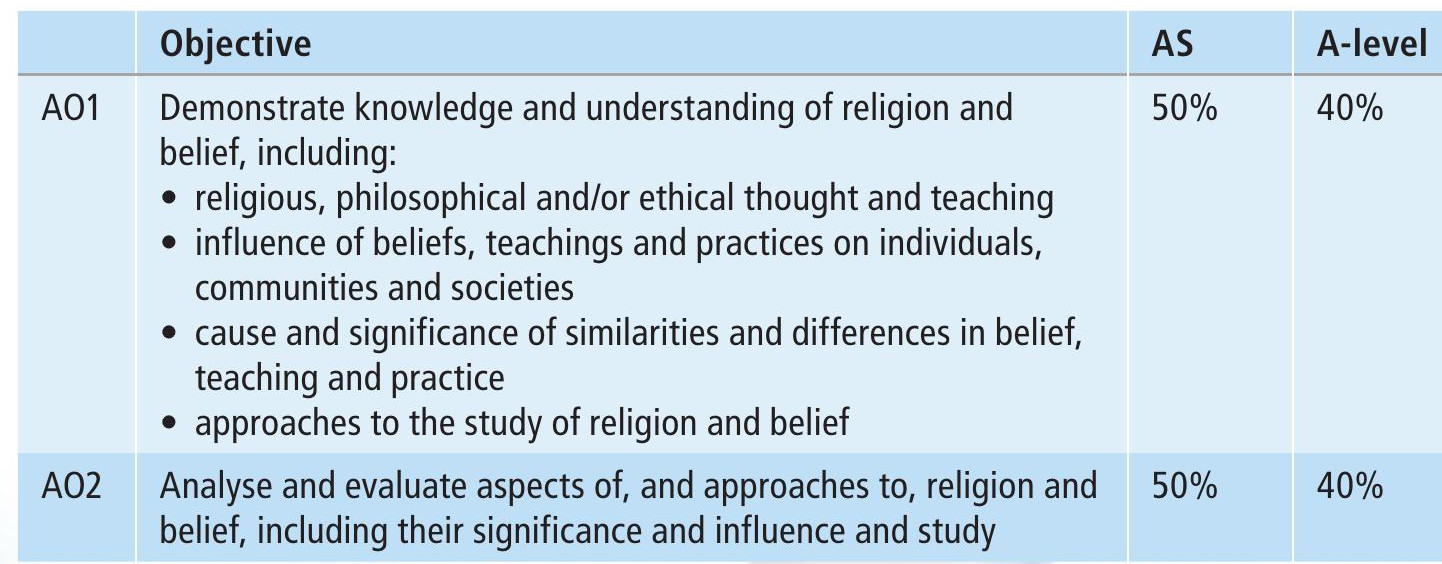
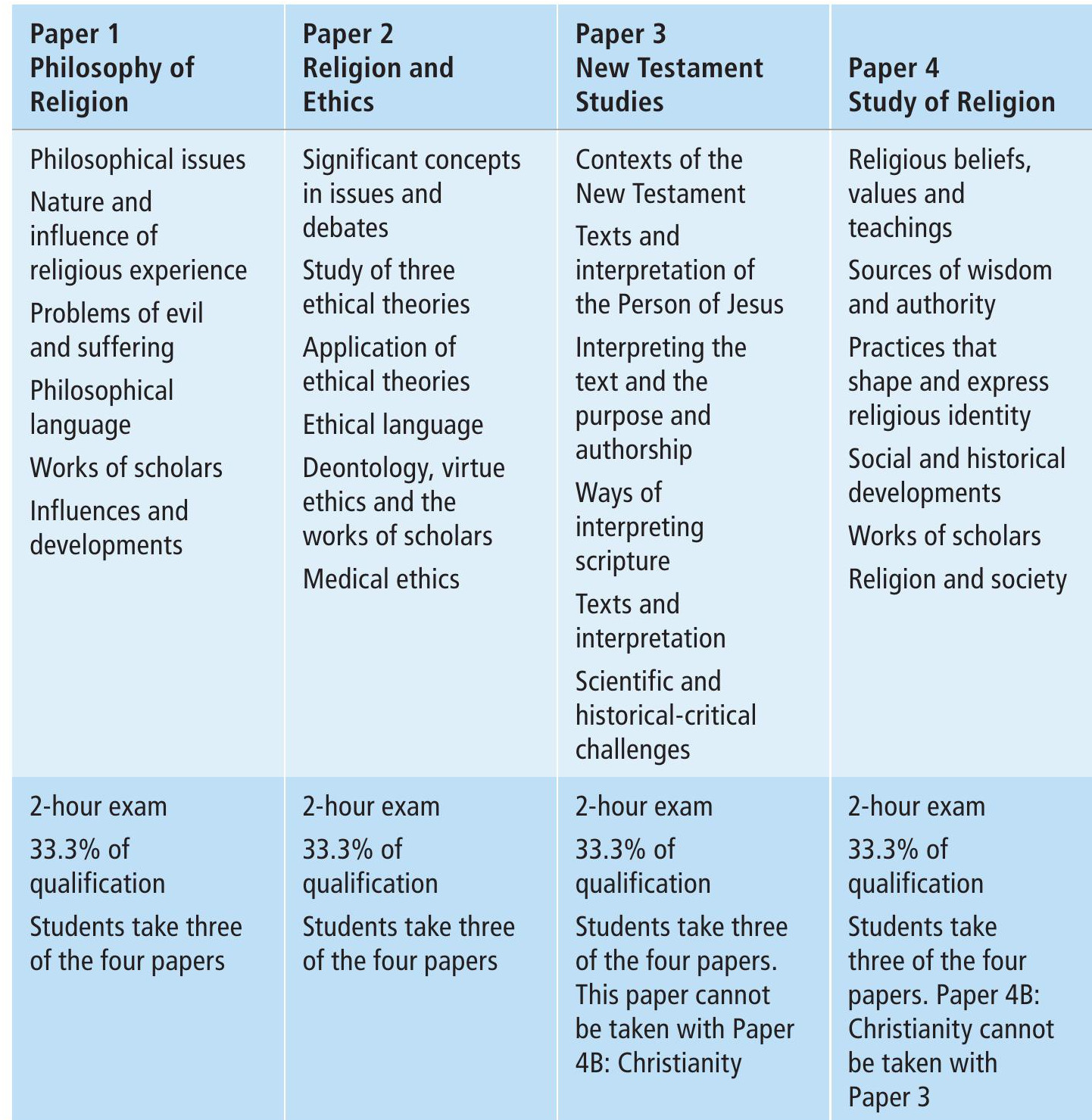
Table 2. Each component is assessed via an externally assessed written examination.
AS
You must answer all questions in Section A and one question in Section B.
Section A
Three structured questions (Q1, Q2 and Q3) — total 25 marks:
■ Q1 will always ask you to ‘Explore…’, and assesses AO1. You are required to recall the main features, incidents or principles, but are not expected to show in-depth knowledge and understanding.
■ Q2 and Q3 will always ask you to ‘Assess…’, and assesses AO1 and AO2. For AO1, you will be required to demonstrate knowledge and understanding. For AO2, you will be required to develop your answers showing analytical and evaluative skills. AO2 will be underpinned by AO1.
‘Assess’ therefore requires a justification or exemplification of a point. The answer must contain some linked reasoning.
Section B
One two-part essay question (Q4a and Q4b) — total 28 marks:
■ Q4a will always ask you to ‘Explore…’, and assesses AO1. You are required to recall the main features, incidents or principles, but are not expected to show in-depth knowledge and understanding.
■ Q4b will always ask you to ‘Analyse…’, and assesses AO1 and AO2. Analysis requires students to deconstruct information and/ or issues to find connections, and provide logical chains of reasoning (AO1 and AO2).
A-level
Section A
Section A questions provide a bridge between GCSE, AS and A-level:
■ Two structured questions (Q1 and Q2) — total 20 marks.
■ Q1 will always ask students to ‘Explore…’, and assesses AO1. You are required to recall the main features, incidents or principles, but are not expected to show in-depth knowledge and understanding.
■ Q2 will always ask you to ‘Assess…’, and assesses AO1 and AO2. For AO1, students will be required to demonstrate knowledge and understanding. For AO2, students will be required to develop their answers showing analytical and evaluative skills. AO2 will be underpinned by AO1.
‘Assess’ therefore requires a justification or exemplification of a point. The answer must contain some linked reasoning.
Section B
Two extended-response questions (Q3a and Q3b) on an excerpt from one extract from the anthology — total 30 marks:
■ Q3a will require you to clarify the key facts and ideas presented in the passage.
Q3a assesses AO1 and is marked using a levels-based mark scheme. ‘Clarify’ requires you to identify key ideas and explain key concepts (AO1).
■ Q3b will ask you to analyse and make arguments connected to the question.
Q3b assesses AO1 and AO2 and is marked using a levels-based mark scheme. ‘Analyse’ requires you to deconstruct information and/ or issues to find connections, and provide logical chains of reasoning (AO1 and AO2).
Section C
One extended essay question (Q4) — total 30 marks
For example:
Evaluate the strengths and weaknesses of the belief in immortality of the soul and reincarnation.
In your response to this question, you must include how developments in Philosophy of Religion have been influenced by one of the following areas:
■ religion and ethics
■ New Testament studies
■ the study of a religion
Five marks are awarded for AO1 and 25 marks are awarded for AO2.