
Deprecated: mb_convert_encoding(): Handling HTML entities via mbstring is deprecated; use htmlspecialchars, htmlentities, or mb_encode_numericentity/mb_decode_numericentity instead in /mnt/storage/stage/builds/pugpig-site-subs-server/latest-1.2.0-1753096337.768322/pugpig-site-subs/content.php on line 225
Southern belles Romanticism and racism
Nicola Onyett examines the enduring and problematic trope of the Southern belle in Gone with the Wind, A Streetcar Named Desire and The Help
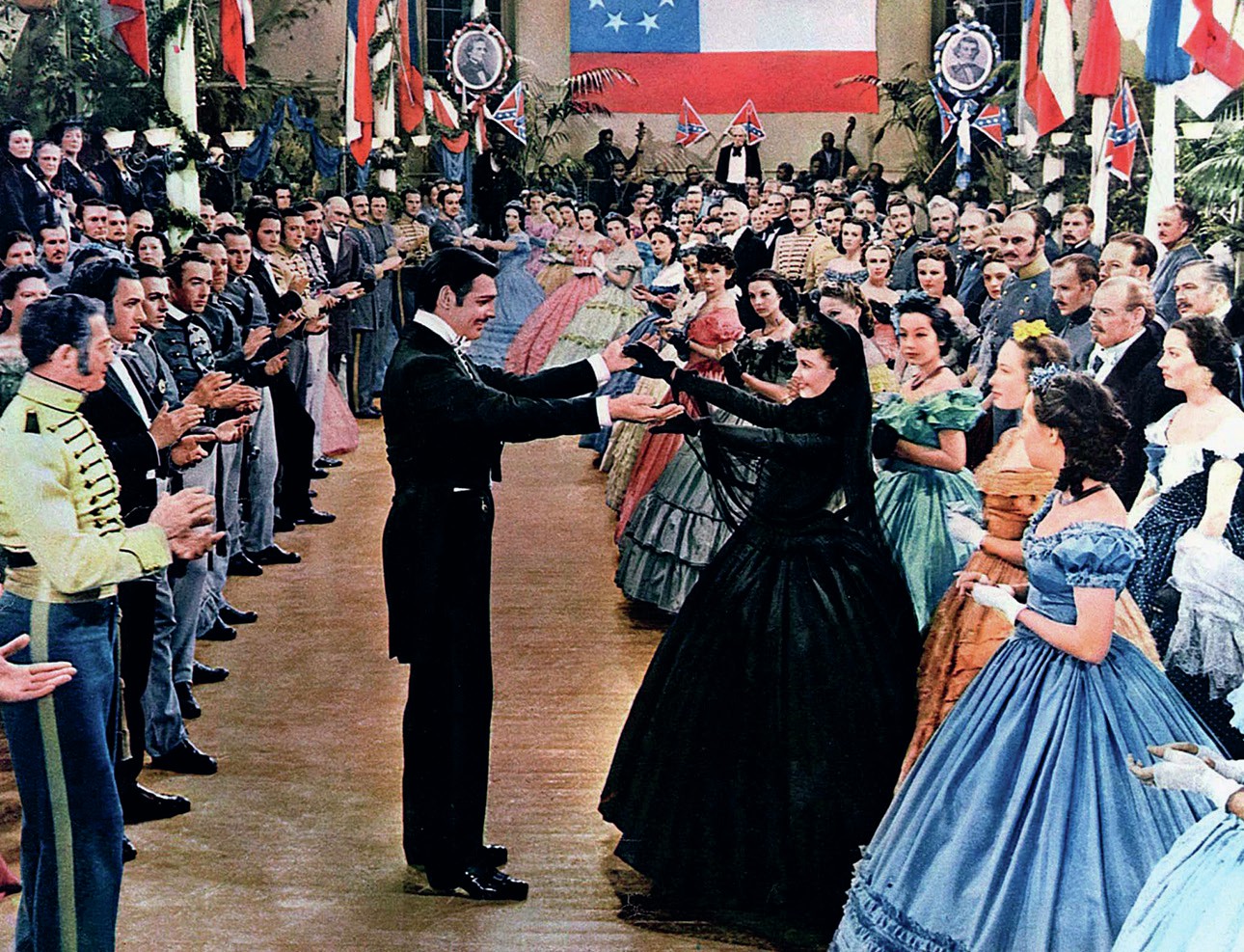
In American culture the iconic figure of the charming and flirtatious belle is an enduring reference point for traditional white Southern womanhood. The quintessential belle aesthetic is famously immortalised in the opening scene of the 1939 screen version of Margaret Mitchell’s epic historical romance Gone With the Wind, as Vivien Leigh’s Scarlett O’Hara dazzles the handsome Tarleton twins in glorious Technicolor. Yet, 80 years later, this film classic is a deeply problematic text. As historian Joshua Rothman argues, it is:
sweeping and epic in its scope… and filled with so many iconic lines of dialogue, characters, and screenshots that after a while it simply washes over you. It becomes beautiful, seductive and, superficially at least, nearly immune to critical engagement. There’s just one problem, of course. The film is racist as hell… a fantastical reading of the lives of the richest people in the antebellum South that one can only believe and fall in love with by denying how the real life O’Haras collectively subjected millions of black people to cruel violence and systematic exploitation to make their lives possible. (Rothman 2014)
Gone With the Wind fetishises a feminine archetype of white privilege only possible within the context of a slave-owning plantation culture. Its sentimental nostalgia for the Old South is tone-deaf to what is clearly institutionalised racism, yet its dissonant tropes remain treacherously seductive to some. As the African–American architectural and cultural historian Michael Henry Adams comments:
No wonder people complain of being lectured about slavery when they visit Savannah or Charleston. They, like me, have imagined themselves in the master’s place. No work to be done, fanned on white-pillared porches, sipping cooling drinks, pondering pleasures to come. Is it surprising so many, confronted by the nightmare behind the reverie, recoil in unacknowledged shame? I came to this crossroads early, no longer able to overlook the anguish of my ancestors. I saw exquisite architecture and ideas of gracious hospitality but knew both to be built on the worst criminality. (Adams 2019)
Bearing in mind the complex cultural associations of the Old South as represented in American literature, this article will compare three famous literary texts that work with the enduring ideology of the Southern belle in ways that reflect changing ideas and attitudes to gender, power and sexuality over time.
Gone With the Wind (1936)
Scarlett and Ellen O’Hara
Scarlett O’Hara is the daughter of the saintly Ellen, who devotes her energies to her faith, her family, her household and the wider community and functions as a moral touchstone for the microcosmic antebellum society she dominates. Feminist critic Molly Haskell, herself a white Southerner, has done much to peel back the layers of belle culture, arguing that the ‘Southern woman was born into a web of self-justifying paradox, a Victorian mix of privileges and penalties that would anchor upper-class values for a very long time’ (Haskell 2009, p. 115). Ellen O’Hara’s dominance of the domestic sphere makes her a typical nineteenth-century ‘angel in the house’ whose self-sacrifice is an example to all within her sphere of benign influence. It is deeply ironic that her ruthless and selfish daughter — who is acutely aware of the gulf between her own transgressive outlook and Ellen’s core belle values — comes to actively and furiously police the space defined as traditional ‘Southern womanhood’ when the family plantation is invaded by a cultural outsider:
Emmie Slattery! The dirty tow-headed slut whose illegitimate baby Ellen had baptised, Emmie who had given typhoid to Ellen and killed her. This overdressed, common, nasty piece of poor white trash was coming up the steps of Tara, bridling and grinning as if she belonged here. Scarlett thought of Ellen and … [felt] a murderous rage so strong it shook her like the ague. ‘Get off those steps, you trashy wench!’ she cried. ‘Get off this land! Get out!’ (Ch. 32)
As Molly Haskell points out, the exclusion of ‘not only black women but poor white women’ from the ring-fenced domain of the belle parallels a wider pattern of exclusion from official Southern history:
The upper class gets to create its own mythology because it’s the only class that can speak for itself … the labourers and farmers and frontierspeople, those without education or a political voice, had little to say about the Civil War and the society that came out of it. (Haskell 2009, p. 116).
Melanie Wilkes
Gone With the Wind’s classical belle figure is Scarlett’s nemesis, Melanie Wilkes, adored and revered by everyone from cynical anti-hero Rhett Butler, to wise old African–American servant Mammy, and feisty brothel owner Belle Watling. Significantly Melanie dies in childbirth at the end of the novel, an altruistic saint who sacrifices herself to save a child (like Ellen O’Hara). But while Mitchell’s traditional belles cannot endure the defeat of their culture, the scheming, deceitful Scarlett survives because of her ‘radical refusal of the rules of Southern Christian ladylike behaviour’ (Haskell, p. xii). Whenever she finds it expedient to play the belle, ‘Rhett or Mammy call her bluff. War justifies her masculinisation; crisis allows women to shed ladylike passivity and come into their own as competent agents’ (Haskell, p. 118). In Scarlett, Mitchell creates a very modern character: ‘an awesomely shrewd businesswoman who subverts the ethics and threatens the masculinity of the dear white honourable, paternalistic Southern gentleman’ (Haskell, p. xii).
A Streetcar Named Desire (1947)
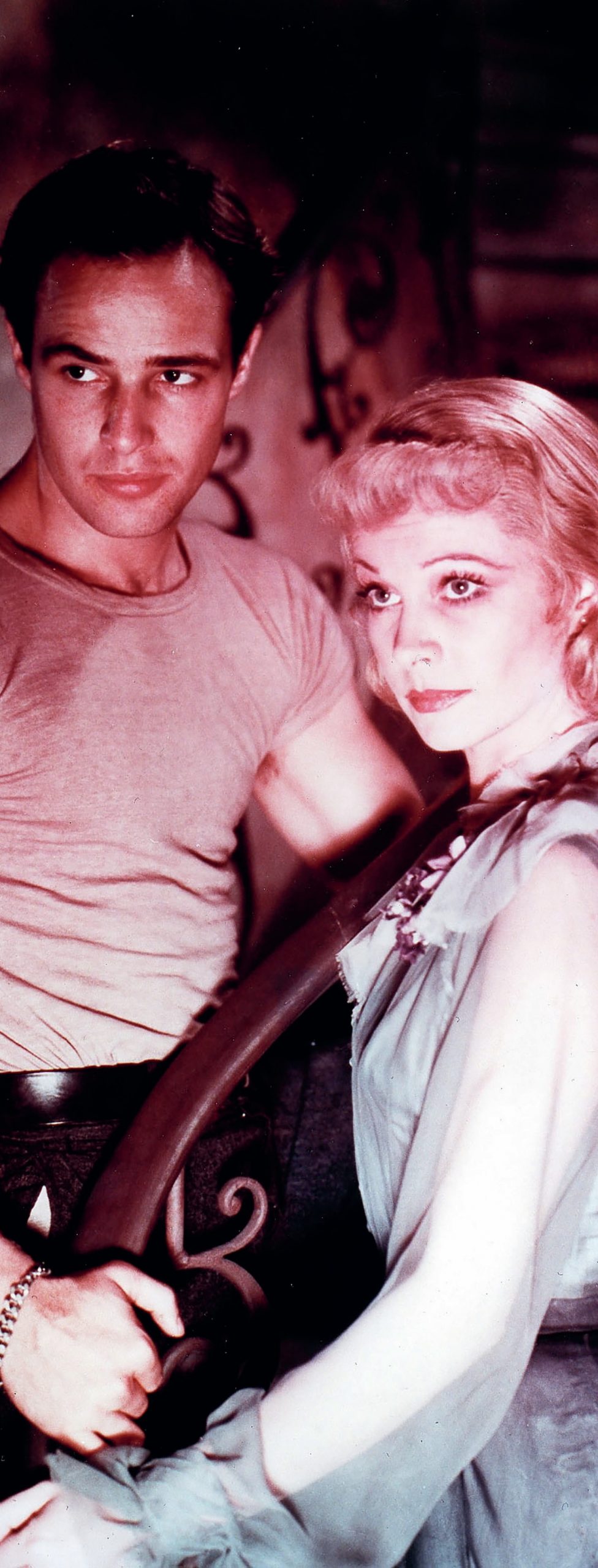
Blanche DuBois
As a writer closely associated with the Southern Gothic genre, Williams overhauls and deconstructs the traditional belle stereotype by making his tragic heroine, Blanche DuBois, both the genteel damsel in distress of the naïve Mitch’s dreams and also a promiscuous alcoholic. As Haskell notes, in traditional Southern culture ‘womanhood was virtually synonymous with purity and chastity, the cornerstone of the code of chivalry. Upon her sacred virtue rested the whole self-cleansing apparatus of white supremacy’ (Haskell, p. 115). Herein lies the bleak tragicomedy of Blanche’s flirtatiously pointing out to the hapless Mitch that her name means ‘white woods’ in French.
Exam links
AQA (A): Paper 2 Modern times (A Streetcar Named Desire and The Help); NEA: Gone with the Wind
Edexcel: Paper 2 Tragedy (A Streetcar Named Desire)
WJEC (Eduqas): Paper 2 Drama (A Streetcar Named Desire)
But this façade of ladylike gentility cuts no ice with her brother-in-law. When Mitch finally abandons Blanche after a brutally clumsy attempt to force himself on her, she revises their parting scene for Stanley’s benefit, playing up the gentle regret of the sorrowful belle. ‘I said to him “Thank you”, but it was foolish of me to think that we could ever adapt ourselves to each other… Our attitudes and our backgrounds are incompatible… so farewell, my friend!’ (Scene 9). Mercilessly, Stanley strips away this fantasy. ‘Mitch didn’t come back with roses… there isn’t a goddam thing but imagination!… lies and conceit and tricks!’… I’ve been on to you from the start! Not once did you pull any wool over this boy’s eyes!’ (Scene 10).
Cultural debate
Stanley’s cruelty emphasises what Williams saw as the brutality and coarseness of modern life. In adopting the nickname ‘Tennessee’, the playwright signalled his conscious commitment to representing the culture, values and conflicts of his native land, and there is both humour and pathos in his dramatisation of the genteel gallantry of the fabled Old South fading out amid the brash confidence of America’s postwar economic boom.
This cultural debate is framed around the binary oppositions embodied by Stanley and Blanche: male and female, predator and prey, poker and poetry, future and past. Blanche’s blind faith in archaic cultural traditions is emphasised when she sees the doctor who comes to commit her to a lunatic asylum as respecting the honour code of the Southern gentleman. As Haskell suggests, Southern upper-class womanhood could not exist ‘without cavaliers to worship at the foot of the pedestal. A woman… without a man was a woman bereft, depersonalised, without guardian or social standing’ (Haskell, p. 116). The doctor becomes a stand-in for Blanche’s fantasy beau, Shep Huntleigh: ‘Whoever you are —I have always depended on the kindness of strangers’ (Scene 11). Her tragic fate is Williams’ acknowledgment of the destruction of the mythological Old South: a ‘civilisation gone with the wind’.
The Help (2009)
Hilly Holbrook
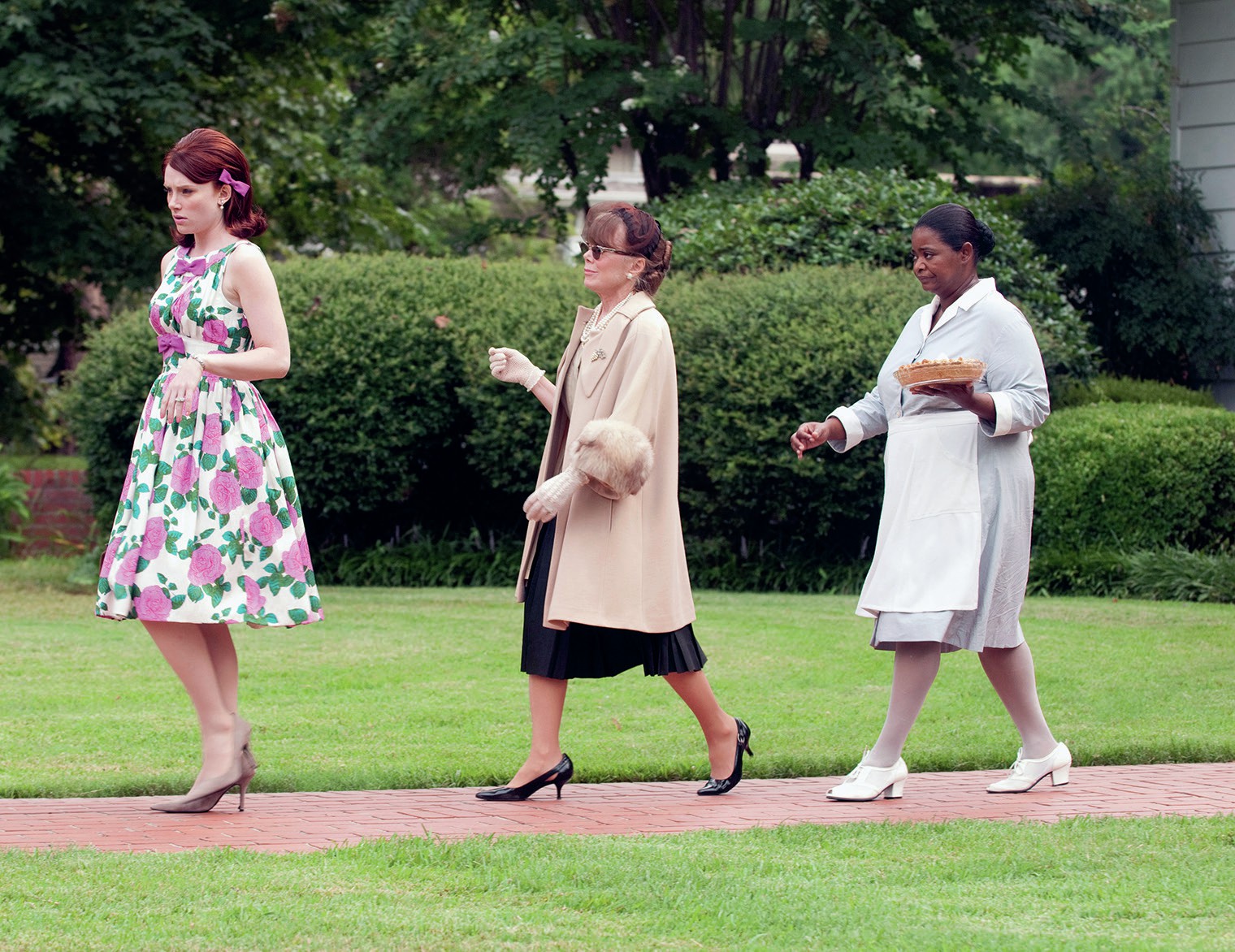
Hilly Holbrook in Kathryn Stockett’s The Help is constructed as a character still determinedly maintaining traditional belle ethics at the start of the 1960s, the decade of the Civil Rights movement. A wealthy and influential socialite and president of the Jackson Junior League, she is a stereotypical ‘Queen Bee/ Alpha Bitch’ villain permanently flanked by a pack of terrified underlings all eager to do her bidding: indeed the dynamic between Hilly and her acolytes is identical to that of Regina George and her posse The Plastics in Tina Fey’s classic 2004 high-school film comedy Mean Girls.
Hilly is a one-dimensional villain straight out of central casting. She parades her charitable nature through parodic white saviour enterprises predicated upon despicable racist tropes: she organises the collection of food for the ‘PSCAs’ (Poor Starving Children of Africa) for example, as ‘these tribal people’ cannot be trusted with actual money. ‘[H]ow would we even know if they’re even feeding their kids with it? They’re likely to go to the local voodoo tent and get a satanic tattoo with our money’ (Ch. 13). Her pet project, The Home Help Sanitation Initiative, aims to extend the segregated public facilities found all over the South during the Jim Crow laws era into private homes by making white employers install separate toilets for their black household staff, to prevent the spread of ‘harmful diseases’.
Hilly also socially excludes the vulnerable Celia Foote, othering her as ‘white trash’ from Sugar Ditch for much the same reason as Scarlett O’Hara ejected Emmie Slattery from the hallowed environs of Tara. The fact that Hilly’s ex-boyfriend Johnny is happily married to Celia only intensifies her malice. Poor Celia’s tragicomic attempts to access Jackson’s belle community are doomed to inevitable failure as the all-powerful Hilly segregates by class as well as race.
Soft-pedalling and humiliation
As Janet Maslin notes, The Help ‘is a debut novel by a Southern-born white author who renders black maids’ voices in thick, dated dialect’. She regrets Stockett’s ‘tide of soapsuds’ and ‘soft-pedaled version of Southern women’s lives’, suggesting that ‘Book groups armed with hankies will talk and talk about the [maids’] quiet bravery and the outrageous insults dished out by their vain, racist employers [in a] harsh yet still comfortable, reader-friendly world’ (Maslin 2009). Hilly Holbrook’s significance within the text is as the embodiment of a breathtakingly self-serving and institutionally racist social order that will be brought down by the Civil Rights Movement. Maslin is right to criticise Stockett’s ‘lead-footed linkage’ of Hilly’s hypocritical fundraising for Africa and appalling treatment of the African–Americans who live in her own home town, yet Hilly’s comeuppance is undeniably both richly satisfying and brutally comic. Her enemies pull off a double humiliation linked to her racist cultural obsessions by dumping a truckload of toilets on her front lawn and tricking her into eating chocolate pie laced with an infamous secret ingredient — ‘two slices of Minny’s shit’ (Ch. 26).
Question
Consider the image of the Southern belle as seen in one of these texts. To what extent does it uphold or challenge the classic archetype?
The Little Foxes by Lilian Hellman
Fried Green Tomatoes at the Whistle-stop Café by Fannie Flagg
The Glass Menagerie by Tennessee Williams
To hell with the belle?
For cultural commentator Elizabeth Boyd, it is high time to say ‘to hell with the belle’. She argues that while America has ‘engaged in long overdue soul-searching about the true meaning of Confederate symbolism’, one pernicious element of white Southern remembrance has yet to be satisfactorily interrogated: the popular Southern belle performances routinely staged on [modern university] campuses that enact a ‘choreography of exclusion’, where ‘otherwise thoroughly contemporary collegians demonstrate their ability to “do” white Southern womanhood: the attire, the manners, the demeanor, the shared references and, above all, the lineage’ (Boyd 2015).
This self-conscious romanticisation of the traditional belle construct promotes a connection with the values of the Old South that the students involved would presumably deny was at all racist — yet according to cultural writer Sam Biddle:
praising the loyalty and generosity of the Southern Belle is about as cheery as celebrating the camaraderie of the Hitler Youth … Every perk and beautiful part of white plantation life was created through black slavery. If Belles were patient and gracious, it’s because forced black labour enabled it. If the Southern life was pretty and sophisticated, it’s because slavery afforded it. Everything pleasant about Belle-hood was a function of human suffering on a vast scale — it’s conceptually impossible to separate the society bankrolled by slavery from the slavery itself. (Biddle 2014)
In other words, you can’t cherry-pick from the belle trope’s multifarious cultural messages, saying ‘yes’ to the ball dress while turning a blind eye to the overseer’s whip.
During the 2020 Black Lives Matter protests, Gone with the Wind was removed from HBO’s US streaming service, returning only weeks later with two hour-long documentaries to give it historical context. Participating scholar Jaqueline Stewart added the disclaimer that the 1939 film’s nostalgic view ‘denies the horrors of slavery’, while a panel discussed its ‘complicated legacy’, signalling its continuing cultural relevance to this debate (Guardian, 25 June 2020: www.tinyurl.com/yaxldhs7).
PRACTICE EXAM QUESTION
Explore Tennessee Williams’s presentation of violence in A Streetcar Named Desire. Relate your discussion to relevant contextual factors.
(25 marks, Edexcel-style)
EnglishReviewExtras
Get guidance for your answer at www.hoddereducation.co.uk/englishreviewextras
RESOURCES
Adams, M. (2019) ‘Downton Abbey, like plantation houses, delivers fantasy over brute reality’, Guardian (21 September): www.tinyurl.com/y5uaym9o
Biddle, S. (2014) ‘The “Southern Belle” is a Racist Fiction’, Gawker.com (17 October): www.tinyurl.com/w7uoox9
Boyd, E. (2015) ‘Remove the Southern belle from her inglorious perch’, Washington Post (21 August): www.tinyurl.com/ruszp2s
Haskell, M. (2009) Frankly, My Dear: Gone with the Wind Revisited, Yale University Press.
Maslin, J. (2009) ‘Racial Insults and Quiet Bravery in 1960s Mississippi’, New York Times (18 February): www.tinyurl.com/v85k3rw
Rothman, J. (2014) ‘The Ongoing “Allure” of the Antebellum South’, Pop South: Reflections of the South in Popular Culture (15 October): www.tinyurl.com/tgzuwzf