
Deprecated: mb_convert_encoding(): Handling HTML entities via mbstring is deprecated; use htmlspecialchars, htmlentities, or mb_encode_numericentity/mb_decode_numericentity instead in /mnt/storage/stage/builds/pugpig-site-subs-server/latest-1.2.0-1753096337.768322/pugpig-site-subs/content.php on line 225
Fundamentalism
Richard Dawkins claimed that 9/11 changed the view that religion was essentially harmless. Whether this has been proved to be the case or not, the power of religion to divide and challenge is well established. Kay Plowman explores how fundamentalism exerted a powerful force on religion in the USA in the late twentieth century
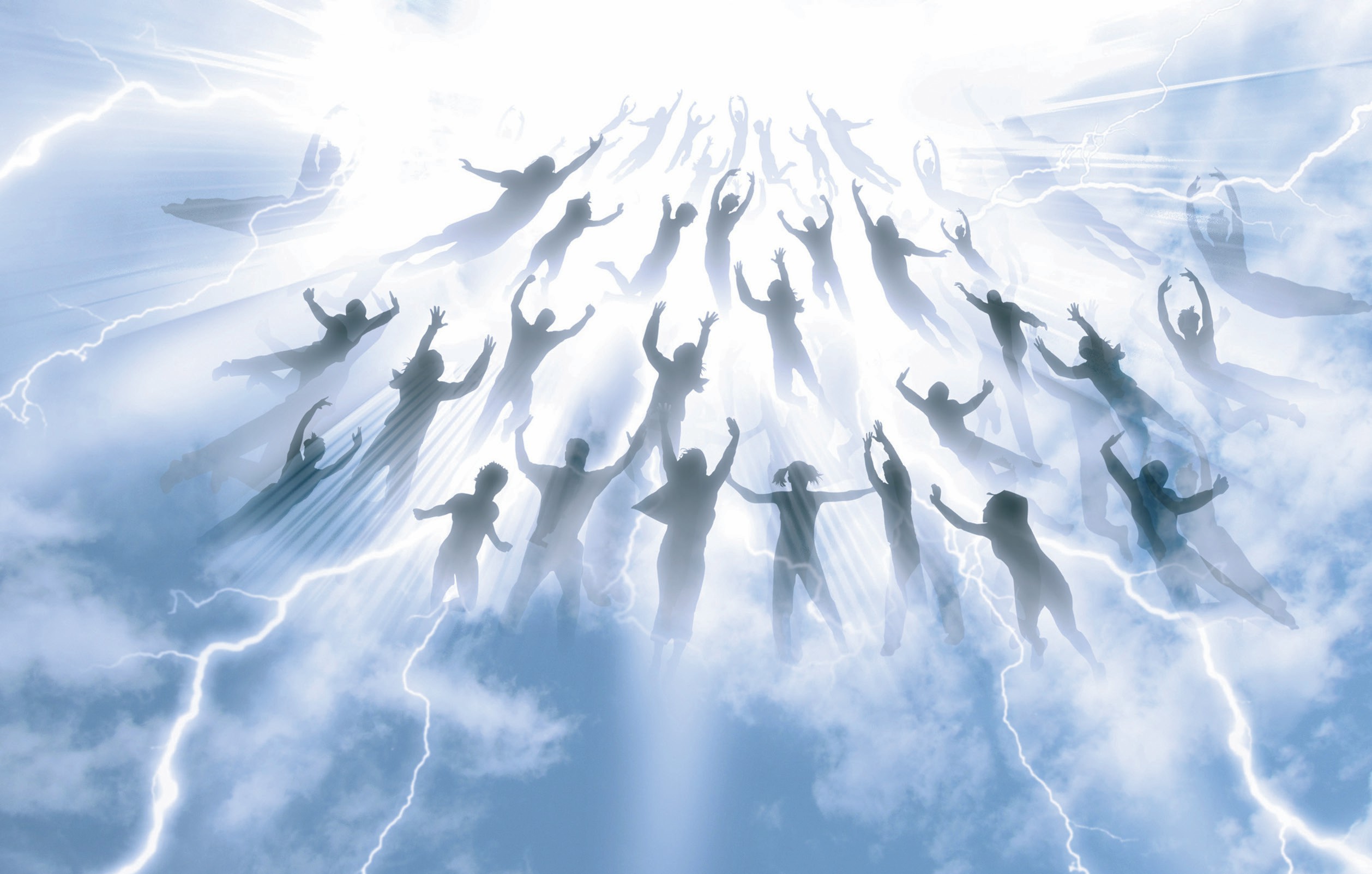
Can you name the current bestselling fiction series in the world? Harry Potter? The novels of Dan Brown? No, it’s a lengthy series, recently joined by the first of a trilogy of prequels, written by Tim LaHaye and Jerry Jenkins, called the Left Behind series. These books offer a fictionalised account of what may happen in the end times, including the rise of the Antichrist, Nicolae Carpathia, who becomes the secretary general of the United Nations, moves its headquarters to Babylon and lays the groundwork for mass destruction.
Sign of the times?
The Left Behind books are a literary sign of the times, reflecting the powerful influence of Protestant fundamentalism, predominantly in the USA but not without its supporters in the UK. If Tim LaHaye was speaking at Wembley Stadium, I imagine he would have no problem drawing a full house for several consecutive nights — perhaps not as many as Benny Hinn (who himself treads a fine line between fundamentalist and charismatic Christianity), but pretty impressive. In the UK, however, we are by no means as affected by the influence of fundamentalism as in the USA, where it has been established for many decades as a powerful force in politics and culture, associated with the religious right which emerged particularly in the wake of the Watergate scandal but had been active for many years.
George W. Bush’s second term in office owed much to the conservative religious vote, although their more drastic actions were something of an embarrassment to Bush. Today around 20% of Americans describe themselves as fundamentalist, about a quarter of whom are associated with assorted fringe churches and operate a kind of aggressive low-level activism, focused on pro-life issues, racism, antiSemitism, anti-feminism, militia movements, conspiracy theories, a hatred of democracy and the imminent destruction of America. The term evangelicalism is also often associated with fundamentalism, and although there are broadly three strands — fundamentalist, conservative and liberal — it is the first of these, known as the evangelical right, which is the fastest growing in the USA today.
Fundamentalism today
Before looking at the history of Protestant fundamentalism, let’s identify some of its more dramatic manifestations today. Interestingly, the name Paul Hill has found its way even into candidates’ exam papers. Described by the Army of God website as ‘An American Hero, of whom the world was not worthy’, Paul Hill, a former Presbyterian minister, shot and killed John Britton, an abortionist, at a Pensacola abortion clinic on 29 July 1994. This was less than 18 months after he had appeared on the Donahue television show to justify the murder of abortionist David Gunn, killed by Michael Griffin outside the same clinic. During his trial, the judge would not allow Mr Hill to explain to the jury the reasons why he took this action, and he was executed on 3 September 2003 at Florida State Prison.
The Army of God, which promotes an attitude of intolerance and hatred for all that they view to be anti-Christian, displays a clear hierarchical structure and what is in effect a chain of command. Paul Hill’s superior was the Reverend Donald Spitz, who labels himself as one of the Army of God’s ‘spiritual advisors’. The antiabortionist Christian terror cells operate under their banner, liaising via the internet. Within each cell, spiritual advisors such as Spitz coordinate and plan offensives, including abortionist murders, while remaining removed from active participation and the possibility of prosecution.
Militantly right-wing individuals like Spitz, who believe that their hate-filled views are the will of God, move through the devout Christian communities of America indoctrinating people like Paul Hill to become murderers.
Another easily identifiable source of radical fundamentalist Christianity is the Westboro Baptist Church. Its website is updated daily with news of hate campaigns and pickets, and it has gained worldwide notoriety, not least through Louis Theroux’s documentary The Most Hated Family in America.
Fundamentals
These are extreme cases, however, and it would be quite wrong to tar all Christian fundamentalists with the same brush. Most conservative fundamentalist Protestants separate themselves entirely from this kind of activity, while still actively supporting pro-life, traditional family values. The term ‘fundamentalist’ was coined in the early twentieth century following the publication between 1910 and 1915 of 12 paperback volumes containing essays on the Bible written by 64 British and American scholars and preachers. The ‘fundamentals’ identified as the minimum for Christian authenticity were:
■ biblical inerrancy
■ the divinity of Jesus
■ the virgin birth
■ the belief that Jesus died and rose to redeem mankind
■ an expectation of the second coming, or physical return of Jesus to initiate his thousandyear rule of the Earth, a theory generally known as premillennial dispensationalism
The history of fundamentalism
Hence, fundamentalism was identified with a strong emphasis on biblical truth, hostility to modern methods of critical study of the Bible and the inevitable impact of scientific developments, and a conviction that those who do not share their viewpoint are not true Christians. A firm conviction of biblical inerrancy leads to 6-day creationism, and for the early fundamentalists the real battlefield was the conflict between science and religion. Today, the battlegrounds are primarily moral, although the science–religion conflict has not gone away.
Fundamentalism in the USA traces its roots back to the Founding Fathers. In his book What if America Were a Christian Nation Again? (2005), D. James Kennedy calls for a return to the Christian traditions on which the USA was founded. Enumerating the causes of moral decline in the USA — primarily family breakdown, gay rights, gambling, conversions to Islam and abortion — he calls his readers to ‘get back on track before it is too late’ and to reclaim America as a genuinely Christian country.
Kennedy identifies Thomas Jefferson as nothing more than a ‘nominal Christian’ but one who nevertheless established America on Christian principles, a country that has, he claims, fallen victim to highly damaging moral relativism.
However, it was in the early 1800s that many of America’s fundamentalist churches — what some might call ‘cult churches’ — emerged as itinerant evangelists travelled around the country’s small farming towns with evangelistic side shows, of which the multi-million-dollar businesses of showmen such as Benny Hinn and Reinhardt Bonnke are the successors. Their backlash was against education and scholarship in the churches, and it was not only smalltime, semi-literate preachers who promoted the inerrancy of the Bible in the face of higher criticism. Three prophecy conferences were held between 1914 and 1918, which combed the Schofield Reference Bible for ‘signs of the times’, and fundamentalist Bible institutes, colleges and associations began to spring up across the USA as fundamentalist Christians fought against the scientific rationalism of the eighteenth and nineteenth centuries that had rejected the validity of a mythological interpretation of the world.
FUNDAMENTALISM IN THE USA TRACES ITS ROOTS BACK TO THE FOUNDING FATHERS.
Rapture
At the same time, an obsession with social breakdown and the destruction of civilisation had emerged. Fear of destruction was fictionalised by H. G. Wells in The War of the Worlds, but in reality the escalation of military technology led to the Great War in 1914 — the nightmare scenario that many had feared would be the consequence of humanity’s rapid progress.
For the conservative Protestant, however, the nightmare scenario took another form — the conflict they anticipated would be apocalyptic and eschatological, an approaching Armageddon, a battle between light and darkness, good and evil, which would end in the destruction of the Antichrist and the establishment of Christ’s millennial kingdom.
The front runner in the development of this thought was John Nelson Darby, an Englishman who found little support in Britain but tremendous reception in the USA, where he toured six times between 1859 and 1877. He taught that the depravity of the modern world could only end in its destruction, but out of a fiery ordeal true Christians — morally upright and believing in the inerrancy of scripture — would emerge to enjoy Christ’s victory.
The principles of Darby’s premillennial dispensationalism have become one of the hallmarks of modern fundamentalism. Premillennialists believe that scripture teaches that Jesus will return to rule on Earth for a thousand years before the final judgement.
Prior to this, a rapture will have taken true Christians to meet Jesus ‘in the air’, after which 7 years of tribulations will wreak havoc on the unbelievers left behind. Some will come to faith during that time, to be reunited with raptured Christians at the Glorious Appearing of Jesus.
Everyone else, however, will be damned for eternity. The period of the tribulations will be marked by the rise of the Antichrist, who will deceive those left behind with messages of peace and hope in a time during which God will pour out the judgements prophesied in the book of Revelation. The secret rapture of Christians that will enable them to avoid the tribulations is based on two verses of scripture in 1 Thessalonians 4:16–17: ‘For the Lord himself…will descend from heaven…Then we who are alive, who are left, will be caught up in the clouds…to meet the Lord in the air; and so we will be with the Lord forever.’
Associated with the rapture and the tribulations is the dispensationalist view that the Jerusalem Temple will be rebuilt before the Lord returns and that the Kingdom of Israel will be re-established. Essentially, premillennial dispensationalism sees the Church as God’s plan B, made necessary only after the Jews rejected Jesus. However, God’s promises to the Jews hold firm, and the real test of the Church will be in how well they have carried out their mission to Judaism. Interestingly, a dispensationalist interpretation of the parable of the sheep and goats in Matthew 25, described in the Left Behind books, understands the sheep to be those who have taken seriously the evangelisation of the Jews, and the goats as those who have not. The establishment of the temple will be the trigger of the war of Armageddon. Not surprisingly, the Arab–Israeli war of 1967 was thought by some to be a sign of impending doom, and 3 years later Hal Lindsey published the unlikely blockbuster The Late Great Planet Earth, which popularised premillennial dispensationalism for a new generation.
The leading exponent of premillennial dispensationalism in recent decades was Tim LaHaye (1926–2016), a prolific writer, teacher and broadcaster, and director of the Pre- Trib Research Centre which produces a huge amount of literature to further the cause of pretribulationism and a literal interpretation of biblical prophecy. As well as creating a range of media material, its members are involved in speaking at prophecy conferences and churches, and promoting three pretribulation ideals: godly living in an ungodly age, the evangelism of the lost, and worldwide missions.
Science vs fundamentalism
The Left Behind books are not universally loved, even in Christian circles. In his novel Survivors (2002), Dave McKay writes that the farright evangelicalism of the USA is frequently associated with the militia movement, based in the belief that America has a special Christian heritage that comes directly from God. While he notes that this is in direct opposition to traditional Christian pacifism, it is nevertheless promoted in popular Christian end-times fiction, notably the Left Behind series. McKay suggests that LaHaye and Jenkins were motivated by financial gain (LaHaye allegedly earned US$10 million per book), but failed to tell the truth revealed by biblical prophecy — that the end-time events will have nothing to do with the promises made by militia and survivalist cults so common among the far-right Christian movement. Nevertheless, a popular picture in the home of many Protestant fundamentalists today shows a man cutting the grass in the garden and looking on in astonishment as his born-again wife is raptured from an upstairs window.
If Darby captured the eschatological imagination of the late nineteenth-and early twentieth-century fundamentalists, the Scopes trial focused attention on the religion–science conflict in 1925. In 1920 the Democratic politician and Presbyterian William Jennings Bryan launched a crusade against the teaching of evolution in schools and colleges. He claimed that it was evolution that had led to the First World War, persuading the Germans that only the strong could or should survive. Bryan was not a millennialist or dispensationalist, but he was convinced that evolutionary theory was incompatible with morality, decency and the survival of civilisation.
He captured an audience ready to listen to him, particularly in the southern states which were already more conservative than the north.
Bills were introduced in Florida, Mississippi, Louisiana, Tennessee and Arkansas to ban the teaching of Darwinism, and were put to the test in Tennessee in 1925 when John Scopes, a young biology teacher, was brought to trial for teaching evolution in a class he took instead of the school principal. The American Civil Liberties Union (ACLU) sent a team of lawyers, led by Clarence Darrow, to defend Scopes, while Bryan defended the law. Darrow argued for free speech, Bryan for the rights of ordinary people who were sceptical of science and rationalism. Darrow destroyed Bryan on the witness stand, forcing him to admit that the world was far more than 6,000 years old, and that he had never read any higher criticism. Bryan claimed that he ‘did not think about the things I don’t think about’ and only sometimes thought about those he did.
Darrow emerged as the hero of the trial, and Bryan died a few days later as a result of his exertions. Nevertheless, Scopes was convicted, although the ACLU paid his fine. Fundamentalists closed their minds further still and creationism and biblical literalism became even more central. As Pentecostalism began to emerge as a powerful force in its own right, fundamentalists remained aloof from them, offended by their integrationist stance and compassionate inclusivism, and by their charismatic worship, most particularly speaking in tongues. Today, the most hard-line fundamentalists reject charismatic worship and Pentecostalism, although not all evangelicals are non-charismatic.
THE PRINCIPLES OF DARBY’S PREMILLENNIAL DISPENSATIONALISM HAVE BECOME ONE OF THE HALLMARKS OF MODERN FUNDAMENTALISM.
Moral America?
By the 1950s fundamentalism had become more isolated and muted, having lost its appeal during the Second World War. It was secure in a counterculture characterised by strict fundamentalist colleges such as Bob Jones University, and broadcasting and publishing empires that networked fundamentalists together. However, in the 1970s and 1980s it became a powerful force in the USA again, promoted by television evangelists and quasi-political groups such as the Moral Majority, founded by Tim LaHaye and fellow fundamentalist preacher Jerry Falwell. The religious right emerged, their goal to fight secular humanism and liberalism.
In 1988, fundamentalist pastor and Christian Coalition member the Reverend Pat Robertson stood against George H. W. Bush and has since continued to exhibit considerable power and control over many state Republican parties.
However, although the Monica Lewinsky affair was political gold for the Coalition, it failed to impose its Christian values on the American legal system.
Nonetheless, moral issues continued to be highly politicised in the USA, although Bush Jr, who claims to have been born again at the age of 40 after a period of impious behaviour in the form of alcoholism and drug addiction, played down his Christianity to gain votes from a wider spectrum of the voting population in 2000. In 2004, moral values seemed to carry the day, however, and in Bush’s first term, coinciding so infamously with the events of 9/11, he referred to challenging al-Qaeda as a crusade.
THE TENDENCY FOR RELIGIOUS FUNDAMENTALISM TO BE FANNED BY CRISES HAS BEEN SPECTACULARLY ILLUSTRATED POST-9/11.
The tendency for religious fundamentalism to be fanned by crises has been spectacularly illustrated post-9/11. Indeed, President Bush himself declared:
’ God told me to strike at al-Qaeda and I struck them, and then he instructed me to strike at Saddam, which I did… The advance of freedom…now depends on us… our calling, as a blessed country, is to make the world better.
After 9/11, Rudy Guiliani, the mayor of N York, claimed: ‘All that matters now is that ew you embrace America and what it’s all about… because we’re like a religion really.’
Unable to risk the political wilderness for doing so himself, Bush relied on the religious right to denounce the non-religious sector of America and to target minorities such as homosexuals, abortionists, pornographers and feminists as enemies of the USA and, to an extent, use them as scapegoats. This extreme religious right went so far as to publicly blame such minority groups for the World Trade Center attack. The prejudice and irresponsibility of fundamentalist American Christianity was highlighted by Jerry Falwell, a prominent televangelist with strong links to the religious political right, on a talk show in which he attacked secular and minority groups for being indirectly responsible for the World Trade Center terrorist attack:
‘Throwing out God successfully with the help of the federal court system, throwing God out of the public square, out of the schools. The abortionists have got to bear some burden for this because God will not be mocked. And when we destroy 40 million little innocent babies, we make God mad. I really believe that the pagans, and the abortionists, and the feminists, and the gays and the lesbians who are actively trying to make that an alternative lifestyle, the ACLU, People for the American Way — all of them who have tried to secularize America —I point the finger in their face and say ‘You helped this happen.’
RSReviewExtras
Get a revision PowerPoint on this article’s key topics at www.hoddereducation.co.uk/ rsreviewextras
References
Kennedy, D. J. (2005) What if America Were a Christian Nation Again?, Thomas Nelson.
McKay, D. (writing as Zion Ben-Jonah) (2002)
Survivors: You’ll be surprised who gets left behind,
Friends’ Learning Resources.
The documentary Jesus Camp (2006): www.imdb.com/title/tt0486358/