
Deprecated: mb_convert_encoding(): Handling HTML entities via mbstring is deprecated; use htmlspecialchars, htmlentities, or mb_encode_numericentity/mb_decode_numericentity instead in /mnt/storage/stage/builds/pugpig-site-subs-server/latest-1.2.0-1753096337.768322/pugpig-site-subs/content.php on line 225
Assisted dying in the UK Should the law be changed?
One of the key ethical questions at the heart of the contemporary moral climate concerns assisted dying. Jennifer Goodyer reflects on some of the legal and moral issues

There are two main types of assisted dying: assisted suicide and euthanasia. Under current legislation, assisted suicide is illegal in the UK, and many types of euthanasia are treated as murder or manslaughter, depending on the circumstances.
The law today
Assisted suicide
While the Suicide Act 1961 decriminalised suicide, it is still an offence to ‘aid, abet, counsel or procure the suicide of another’. The Act provides that a person found guilty of this crime may be imprisoned for up to 14 years.
Euthanasia
Neither the Suicide Act 1961 nor any other Act of Parliament explicitly refers to euthanasia, which can, therefore, be said to have no recognised status in UK law.
Active euthanasia, whether voluntary, non-voluntary or involuntary, is treated as murder or manslaughter because it is a form of deliberate killing, in which a person dies because something has been done to them to end his or her life.
In contrast, certain forms of passive euthanasia, in which a person dies because treatment has been withdrawn or refused, may be viewed as legal, although not specifically legitimised by statute. For example, voluntary passive euthanasia, in which a person dies because they have asked for treatment to be withdrawn, can be said to be legal because all mentally capable adults have the right to refuse medical treatment.
Non-voluntary passive euthanasia can also be viewed as legal in certain situations.This form of euthanasia occurs when a person dies as a result of treatment being withdrawn because there is a belief that this is what the person would want if they were able to articulate their wishes. Since the 1993 ruling in the case of Anthony Bland, a Liverpool FC supporter left in a persistent vegetative state following the Hillsborough disaster of 1989, doctors are permitted to withhold treatment and allow death to occur as long as this is deemed to be in the best interests of the patient. However, doctors must follow a strict procedure before withholding or withdrawing treatment.
Assisted dying in Scotland
The overview above relates to the law in England, Wales and Northern Ireland. The law in Scotland is subtly different. Notably, there is no Suicide Act in Scotland because committing suicide has never been illegal in Scotland. However, helping someone to end their life may or may not lead to prosecution for murder or culpable homicide, depending on the circumstances.
Attempts to change the law
There have been several attempts to clarify the law on assisted dying and to legalise a form of assisted suicide or voluntary active euthanasia. In England, Wales and Northern Ireland, the latest attempt was made by Lord Falconer and Rob Marris MP and centred on a limited form of assisted suicide. Their Assisted Dying Bill proposed that adults should be allowed to request a prescription for a lethal dose of painkillers which they would need to take by themselves to end their life. The bill provided that two doctors and a High Court judge would need to approve this request before it was granted. The bill was debated in the House of Lords in 2014 and in the House of Commons in 2015. Eventually MPs rejected it by 330 votes to 118.
There have also been attempts to clarify and change the law in Scotland. In 2013 the Assisted Suicide (Scotland) Bill was introduced which aimed to allow those with terminal illnesses to end their lives with the help of a doctor. The bill was rejected in May 2015 by 82 votes to 36.
Despite the failure of these attempts, the organisation Dignity in Dying continues to campaign for a change in the law and is gaining support from a variety of sources, including some religious groups.
Arguments in favour of legalisation
Assisted dying already happens in the UK
This is a pragmatic argument which contends that legalising some form of assisted dying would reflect what already happens in practice. Evidence suggests that assisted suicide and euthanasia already occur in the UK and that such instances are rarely prosecuted. Although in theory the law on assisted suicide is clear cut, in practice the issue is more complex.
In 2010, guidelines were issued to help the Crown Prosecution Service (CPS) decide which cases of assisted suicide to prosecute. These guidelines emphasise that cases should only be prosecuted if it would be in the public interest and emphasise that the motivation of those assisting the suicide — for example, compassion — should be taken into account.
Some people argue that the effect of the 2010 CPS guidelines has been to legalise assisted suicide ‘by the back door’. They point to the fact that since these guidelines were introduced the police have referred a number of cases to the CPS with firm evidence of assisted suicide which the CPS has chosen not to prosecute. Arguably, legalising a limited form of assisted suicide would provide clarity and allow for greater control and regulation.
A dignified death for those in great pain
During the debate on the Assisted Dying Bill, many MPs read out letters from constituents drawing attention to the poor quality of life of those with terminal illnesses. These letters stressed the great pain suffered by those in the final stages of terminal illnesses as well as their loss of independence and dignity. MPs argued, on their behalf, that instead of prolonging their suffering it would be better to allow them a dignified death.
THERE IS NO SUICIDE ACT IN SCOTLAND BECAUSE COMMITTING SUICIDE HAS NEVER BEEN ILLEGAL IN SCOTLAND.
Traditionally most religions are against assisted dying. But an increasing number of religious leaders echo this argument and believe that allowing those who are suffering to have a dignified assisted death is an important way of showing compassion, and is morally and spiritually permissible. For example, the group Interfaith Leaders for Dignity in Dying, which includes Christian and Jewish leaders, argues that there is nothing sacred about suffering in itself and believes that their faith impels them to support the legalisation of assisted dying in certain extreme situations.
Problems with suicide
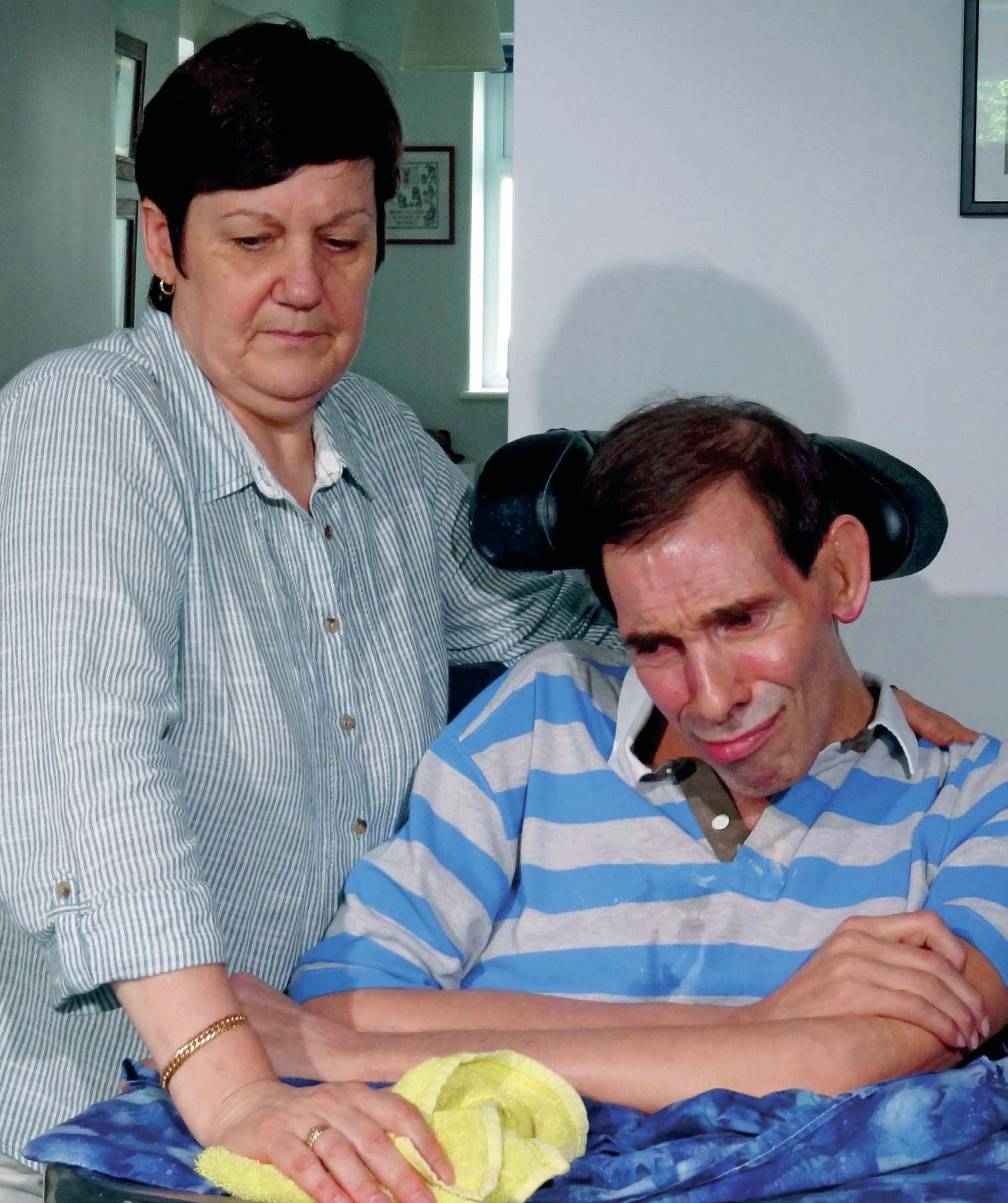
Also conveyed through letters from constituents read out by MPs was the argument that although suicide is legal in the UK, those who are suffering should not have to resort to it. Suicide is traumatic both for individuals and their families. Attempts are often unsuccessful, thereby exacerbating mental and physical suffering. In addition, some people suffering from terminal illnesses no longer have the capacity to commit suicide yet feel they should still have the right to decide when to die. In the words of locked-in sufferer Tony Nicklinson, who died in 2012: ‘Why should I be denied a right, the right to die of my own choosing, when able-bodied people have that right and only my disability prevents me from exercising that right?’
Human rights
Linked to this argument is the view that rational human beings are autonomous and should have the right and freedom to decide what happens to them, including when they should die. Campaigners for an assisted dying bill refer to the European Convention on Human Rights, and assert that the right to life should be mirrored in, or include, a right to death. There have also been calls for assisted suicide to be allowed under Article 8 of the convention, which states that people have a right to a private and family life.
Arguments against legalisation
Sanctity of life
Central in most religions is the belief that life is sacred, either because it is given by God or because it is, in some sense, divine. The Abrahamic religions accord a particularly elevated position to human life. This is due to associated beliefs in the free will and sentience of human beings and, in Judaism and Christianity, it is linked to the belief that humans are created in the image of God. The belief that human life is sacred entails the view that human life, even when painful, has intrinsic value and dignity and should be preserved. Consequently, many religious believers are opposed to the legalisation of all forms of assisted dying as they believe it would undermine the intrinsic worth of human life.
Slippery slope
According to the ‘slippery slope’ argument, once any form of assisted dying is legalised it is only a matter of time before more forms of assisted dying are legalised; people will begin to stretch the boundaries of the original legislation and use it to provide a legal basis for more and more instances of assisted dying. The fear is that, while the original legalisation may have good intentions, over time people will become desensitised to the problems which result from extending the legislation; events will snowball down a slippery slope until in the end a much broader form of assisted dying than was originally intended or desired will become legal. Arguably this is what has happened in Belgium, where original legislation to allow terminally ill adults to receive euthanasia was extended 12 years later in 2014 to permit euthanasia for terminally ill children, with parental consent.
A right to die or a duty to die?
Although the intention of assisted dying legislation is to give people the right to die, there is a fear that such legislation may eventually lead the most vulnerable in society to feel pressure or even a duty to die. The Archbishop of Canterbury, Justin Welby, emphasised this concern when he expressed his opposition to the bill. He noted that in the US states of Oregon and Washington between 40% and 60% of those who used legally prescribed drugs to end their lives cited concern that they would be a burden on their families as a factor in deciding to bring their lives to an end.
Doctors should preserve life, not end it
According to the International Code of Medical Ethics, ‘a physician shall always bear in mind the obligation to respect human life’. Legalising any form of assisted dying could be viewed as violating this principle; ending life is not usually regarded as a way of respecting it. Allowing doctors to end life would complicate the doctor/ patient relationship, leaving both confused about the responsibilities of doctors. At worst, legalising assisted dying could lead doctors to feel forced to end life against their beliefs or lead patients to suspect that their doctors would rather kill them than take responsibility for managing their individual needs with compassion.
Palliative care
Finally, some opponents of assisted dying, such as the SNP MP and breast cancer surgeon Philippa Whitford, argue that efforts should not be spent in helping people to die but in giving terminally ill patients a ‘beautiful death’ via excellent palliative care that effectively relieves pain and preserves human dignity. In October 2015 a report by the Economist Intelligence Unit ranked the UK as the best in the world for such care. Opponents of assisted dying argue that legislation could undermine this valuable work because it could divert funds and energy away from palliative care.
Many religious groups support this argument. For example, the Muslim Council of Britain argues that the concerns of those who wish to legalise assisted dying, such as the pain and loss of dignity felt by those suffering from terminal illnesses, would be better met by further improving palliative care and tailoring it to individual needs.
Human autonomy or human sanctity?
When weighing up the arguments, practical considerations about the current ambiguous state of the law and fear over adequate safeguarding for the vulnerable rank highly. However, perhaps the decisive factor when deciding whether or not to support a change in the law concerns the understanding of human dignity. Both proponents and opponents of a change in the law on assisted dying claim that their positions express and protect human dignity, but they disagree about what dignity means. Proponents argue that dignity entails autonomy and choice; opponents believe that the dignity of human life comes through its intrinsic value and should be protected in all situations.
THE DECISIVE FACTOR WHEN DECIDING WHETHER OR NOT TO SUPPORT A CHANGE IN THE LAW CONCERNS THE UNDERSTANDING OF HUMAN DIGNITY.
The ultimate choice is between human autonomy and human sanctity. Do we best uphold the dignity of those who are dying by respecting their autonomy and offering them the choice to die? Or do we do so by preserving life and its intrinsic value exclusively through the provision of excellent palliative care?