
Deprecated: mb_convert_encoding(): Handling HTML entities via mbstring is deprecated; use htmlspecialchars, htmlentities, or mb_encode_numericentity/mb_decode_numericentity instead in /mnt/storage/stage/builds/pugpig-site-subs-server/latest-1.2.0-1753096337.768322/pugpig-site-subs/content.php on line 225
stretch and challenge
Striving for certainty on science and religion
In the second of three articles on the origins of life, Peter Manning explores the role of natural selection and adaptation
That the debate between evolution and creation continues today in a way that sees them both as incompatible theories making factual claims about the world is in part driven by the modernist commitment to seeking certainty in knowledge. The clash between biblical literalism and atheistic materialism drew the parameters of the debate in such a way that science and religion have to be in a war for the truth. While fundamentalists locate facts in the literal word of the biblical text as the revelation of God, materialists see experience gained through the application of scientific method as the foundation of facts.
Both approaches claim their own kind of objectivity and interpret the way knowledge works differently. In the end both sides often express their views in an overall air of certainty which forgoes dialogue and perhaps a deeper and more honest engagement about the nature of evidence, reality and its possibilities.
Knowledge and truth
While creationist science is arguably not good science it does not help the scientific case when Richard Dawkins remarks:
‘If science has nothing to say, it’s certain that no other discipline can say anything at all.’
1991 Royal Institute Christmas Lecture
This statement cannot show itself to be true, as scientific method cannot prove it so. It echoes a view of knowledge called verificationism, developed in the 1920s by a group of philosophers called the Logical Positivists. Contemporary philosophy of knowledge in science has overwhelmingly rejected this approach since the 1960s. Dawkins arguably appeals to bad philosophy, however good a scientist he is.
Science works today within notions such as probability and the possibility of falsifying our ideas. Knowledge is open to revision and shows itself to have a better grasp of reality by its useful applications in the world and its power to explain and interrelate ideas we have already accepted as true (until shown otherwise). Against this, both scientific positivism and biblical literalism claim too sure a knowledge over the ultimate nature of reality and their certainty becomes a false certainty. Debate and the search for the truth of things is prematurely closed down — there is no need for dialogue as each side already proclaims it has the truth about the nature of things.
Competing certainties
Scientists like Dawkins need to appreciate that in rejecting religious belief because of the often bad arguments of creation science, deeper philosophical questions about the nature of reality, science and God remain to be argued intelligently. In as much as he fails to do this with the honesty of such scientists as Paul Davies, who is not a theist, then he looks like a scientific fundamentalist despite his claims not to be in The God Delusion (2006). Perhaps in their competing certainties, religious and scientific fundamentalists are in denial about the true nature of reality. Their way of life has become closed in on itself and is no longer open to the beguiling mystery of existence and all it has to teach us.
Natural selection’s limitations
At the beginning of their book What Darwin Got Wrong (2010), philosopher and cognitive scientist Jerry Fodor and biophysicist and molecular biologist Massimo Piattelli-Palmarini affirm their commitment to secular humanism. They are convinced by the historical account of the genealogy of species that macroevolution is true, though they question the idea that this is driven by natural selection as life adapts to its environment. Perhaps because much of the book challenges the conceptual coherence of natural selection as an explanation, its focus on language connected it with the linguistic arguments of Philip E. Johnson (see pp. 12–15) and the intelligent design movement in the minds of many of its reviewers.
To say the book caused a storm would be an understatement. Fodor and Piattelli-Palmarini, however, are in no way supportive of creationism — as atheists how could they be? The natural histories of evolution are pretty much self-evident and virtually impossible to deny. The Earth continues to burst with life. We live on a planet with 1.5 million known species, with estimates for all life on Earth ranging from 5 million to 100 million species.
A black box
Fodor and Piattelli-Palmarini argue that natural selection is in effect an explanatory black box because the theory cannot account for why living organisms so successfully respond to their environment in order to survive. Appealing to the fact of survival itself creates a circular argument, a tautology even, rather than deep insight. They see claims to natural selection as a one-dimensional argument that does not do justice to the rich diversity and complexity of life on Earth.
Darwin, although he thought the idea of natural selection was at the heart of evolution, also felt that adaptationism was not the whole answer. He felt there were further factors at play but left it to others to work out what these might be. However the specific arguments of Fodor and Piattelli-Palmarini have been critiqued, their book does call scientists to take this suggestion of Darwin seriously.
School textbooks often use the example of the survival of the peppered moth in industrial Britain as an example of evolution. But as there is no genetic addition involved, just a subtraction, peppered moths cannot be an example of core evolutionary processes. The finches of the Galapagos Islands are not an example either, as the beaks show development within species not across species. Darwin provided examples of the development of species through the illustration of dog breeding, but that requires a breeder to organise the selecting and breeding over generations. The personal agency involved in the breeding process means that it cannot serve as an adequate example of a natural intentionless process.
In short, a more complex and subtle theory is needed than that provided by natural selection.
Beyond the external environment
Natural selection has traditionally relied heavily on the idea of genetic mutations. But we know from birth defects, genetic disorders and infertility that mutations, if they have any immediate effect, are overwhelmingly disadvantageous for survival. Such mutations of DNA also stand in competition with the naturally evolved repair processes animals have for their DNA. Rather than chance mutation, when successful traits finally express themselves they are almost certainly highly interconnected within the organism and hence display in part a non-linear pathway to their expression. This can make charting straightforward connections between adaptive changes in response to specific environmental challenges hard to show. Richard Dawkins all but admits this problem in his book The Blind Watchmaker:
Why the Evidence of Evolution Reveals a Universe Without Design (1986, pp. 8–9) when he states that ‘the minimal requirement for us to recognise an object as an animal or plant is that it should succeed in making a living of some sort’. But succeed how?
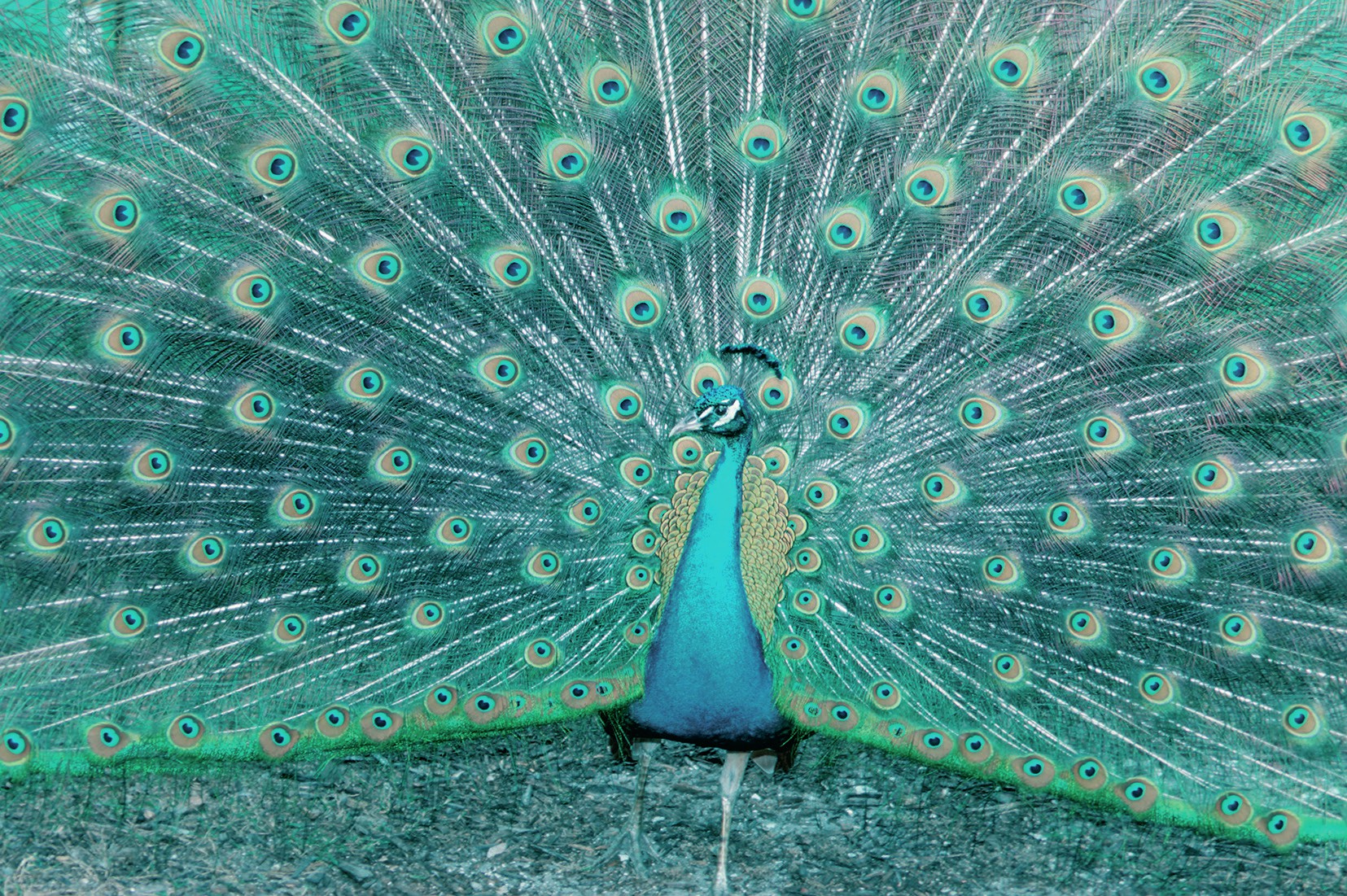
Giraffe necks are often used as an example of adaptation to fit an environmental niche by gaining access to an exclusive food source. But it could also be that long necks are to do with sexual selection and securing mates. After all, the peacock has an exaggerated plumage in order to secure mates by advertising its health. The driving reasons for adaptation are complex and not so clear. The expressed change will often be gradual, but depending on the connectedness of the gene to other systems, it can be dramatic.
Behind evolutionary changes lies a whole history of integration between systems operating within the species, across all biological levels: the molecular, genetic, cellular, and that of tissue and the organism. Each level also has its own complex interaction. Such internal dynamics makes the idea that external factors drive the development of adaptive mutations problematic.
Brain theory
The robustness of the organism may well allow hidden genetic variations to accumulate from one generation to the next in their DNA. Fodor and Piattelli-Palmarini reference the work of the Italian geneticist Edoardo Boncinelli to argue that important physiological changes can come about without being directly selected for. Some genes have a regulatory role in the development of multiple organs and are known as ‘master genes’. The otx1 ‘master gene’ is involved with the larynx, kidneys, external genitalia, inner ear and with how thick the cerebral cortex is.
It has been speculated that selective pressures acting on the kidneys (e.g. drought, purity of drinking supply) may have, in bringing about changes in the kidneys, also indirectly promoted growth in brain size as a secondary effect, or free rider, dragged along in the wake of kidney changes. The brain is commonly subdivided into three structural levels majorly focusing on three different types of behaviour: the reptilian brain (instinctual behaviour), the limbic brain (emotions and feeling), and the neocortex (thinking and higher levels of conscious awareness).
Primate brains are often larger relative to body size than in other mammals. This is especially so in monkeys and apes who also have a larger neocortex. The neocortex in humans represents 85% of brain weight. As Chris Stringer, research leader in human origins at London’s Natural History Museum, explains in his book The Origin of our Species (2011, p. 111), environmental complexity fails to justify the size of the human brain.
Social brain hypothesis
This has led to the development of the social brain hypothesis by Nicholas Humphrey and others. Brain size increases because social interaction and living in larger social groups requires complex social skills, needing ever higher levels of information processing by the brain. Whatever initially tipped the brain to increase in size from that of our small-brained Hominid ancestors, perhaps like Homo habilis 2 million years ago, it is hard to argue against brain growth finding some of its momentum in the social world rather than an overt challenge from the natural environment.
Fruit flies didn’t just pop into existence — they needed to evolve through time. But how does a wing get started? Experiments on fruit flies have shown the growth of secondary small wings by master gene manipulation. While such wings are useless for flight they do provide an increase in thermal energy. Sometimes changes in an organism may eventually open up new ways of it interacting in the environment. In other words, what is in effect the insect’s ‘solar panel’ increases in size in successive generations through phenotypic expression, eventually leading to a new usage opportunity for this appendage.
That fruit flies ended up flying is an unplanned consequence of adaptation for other reasons than the survival advantage conferred by flight. The evolutionary picture is more complex after all.
The tree of life
In On the Origin of Species Darwin uses the metaphor ‘tree of life’ to describe the evolutionary relationships, or ancestry, between species. This idea has been much developed since.
From the first cellular life around 4 billion years ago life has diverged along three distinct pathways: Bacteria, Archaea (single-celled microorganisms with no nucleus or any other subunits within their structure) and Eukarya (plants, animals and fungus). Each branch or pathway hosts its own multiple developments which we can trace through analysing the genetic codes of organisms to see how closely related different species are.
Through this we are able to see the vertical relationship between the branching of different species in the past. But this is not the whole story. From research on maize by Barbara McClintock in the 1940s and 1950s it became clear that genes could transfer from one species to another by being passed between them in the environment. Such ‘caught’ genes would then be inherited through subsequent generations.
Horizontal gene transfer
At first this idea of ‘catching’ genes may seem odd but viruses in their own way achieve this all the time at the cellular level. Such horizontal gene transfer has turned out to be so ubiquitous that it has been estimated that up to 45% of genes within our own species were derived from this process over evolutionary history. Horizontal gene transfer combined Bacteria genes and Archaea genes to create the Eukarya branch of life by making mitochondria. Plants owe their origins to the development of plastids through horizontal recombination between genes drawn from both the Eukarya and Bacteria branches. While looking at external features to talk of a tree of life makes sense, perhaps at the genetic level, Fodor and Piattelli-Palmarini have a point when they muse that a better metaphor than tree of life might be to think of a ‘bush of life’.
The laws of form
When we look at the internal construction of life we see an astonishing invariance in its organisational structure. From species to species the basic body plan remains the same. This is true of both external features such as the head, arms and legs, but also the layout of internal organs. For example, the diameter of capillaries is the same in all vertebrates. The genetic material upon which all cells rely is DNA. The genetic code is virtually universal. Replication, transcription and translation use the same basic mechanisms in all organisms. All proteins are constructed out of the same set of 20 L-amino acids. The list can carry on.
Such resistance to change from environmental forces indicates an internal biological programme, or modularity, that sets boundaries on the possibilities for future evolution. The basic body plan is strongly conserved from one generation to the next.
A mammal looks like a mammal, a fish a fish, a bird a bird and so on. Pigs will never fly as their evolutionary pathway has already closed the door on that possibility — too much would have to change, whatever the environmental challenge. Darwin’s original theory failed to address the powerful role of endogenous, internal factors.
Perhaps even more amazingly, although life can vary in size by 21 orders of magnitude from bacteria to whales, the scaling factors remain organised around multiples of a quarter. That is to say that cellular metabolism, metabolic rates (energy expenditure), heartbeat, blood circulation, mass and lifespan scales all work within the same underlying mathematical ratio. This marvel has been well explored by West, Brown and Enquist in their article ‘Allometric scaling of metabolic rate from molecules and mitochondria to cells and mammals’ (2002, Proceedings of the National Academy of Sciences of the USA).
The role of physics
Perhaps the fractal-like architecture of vascular networks used to deliver resources in organisms hints at underlying laws of physics within which biology finds its limits and possibilities. Over the last 10 years research by C. Cherniak has used computational simulations of detailed anatomical-physiological modelling of the nervous systems of the nematode, cats and monkeys to find that they possess virtually optimum efficiency in the interconnection between components. Fibonacci numbers are always a product of the two previous numbers (after starting with 0 and 1), such as in the sequence: 0, 1, 1, 2, 3, 5, 8, 13 and onwards. If we take the ratio of two successive numbers of the Fibonacci series and divide it by each number before it, a golden ratio emerges which is so-called because it represents an organisational constant. This is often found in nature in the arrangement of flower petals, seed heads in plants, pine cones and the structure of shells, to name but a few. That such configurations might occur by chance alone across so many life forms is almost beyond belief and chance. Natural evolution and the shape life takes perhaps owe more to physics than is commonly observed when the focus is on natural selection by adaptation.