
Deprecated: mb_convert_encoding(): Handling HTML entities via mbstring is deprecated; use htmlspecialchars, htmlentities, or mb_encode_numericentity/mb_decode_numericentity instead in /mnt/storage/stage/builds/pugpig-site-subs-server/latest-1.2.0-1753096337.768322/pugpig-site-subs/content.php on line 225
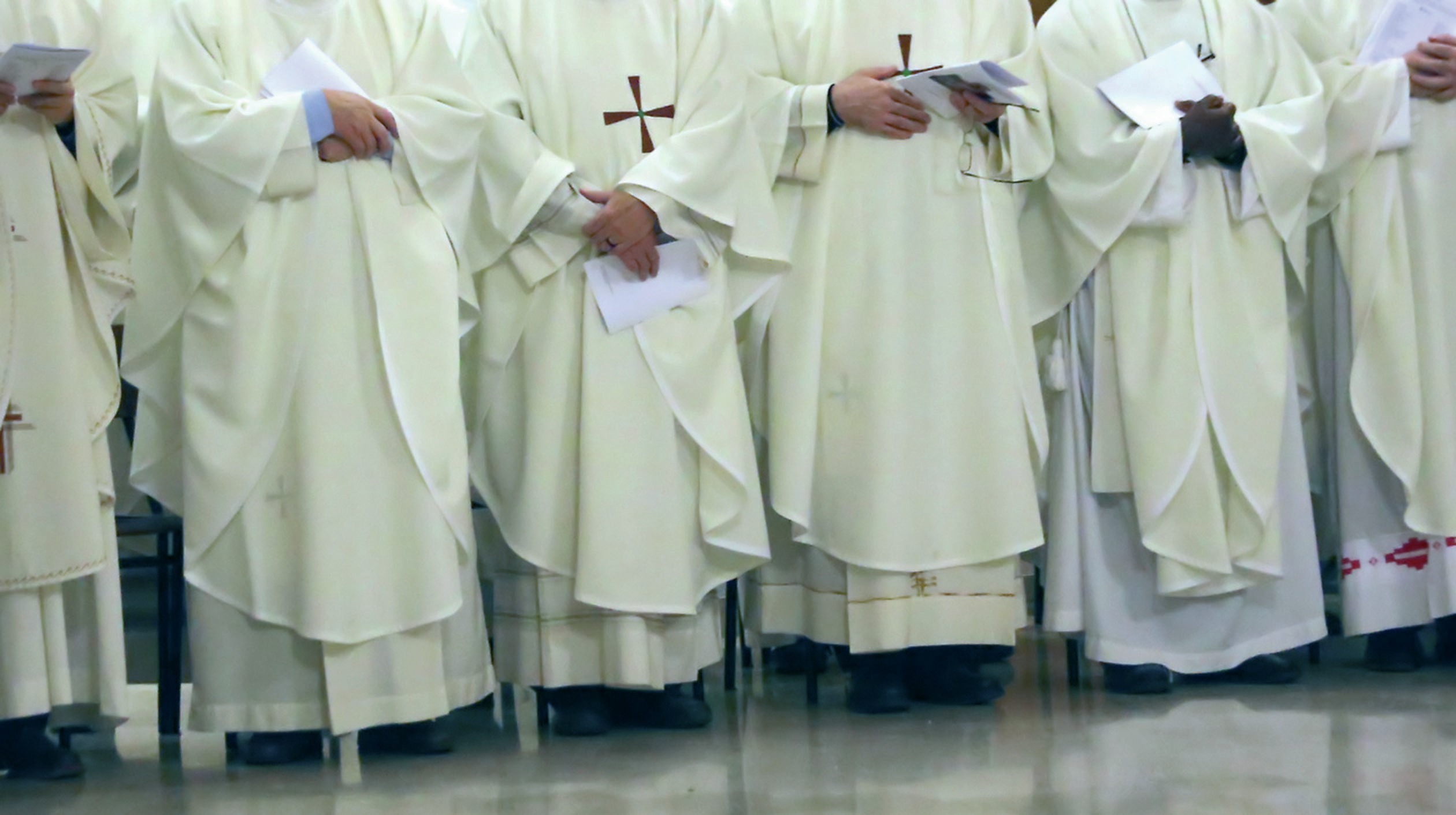
For Catholics, the pope is Christ’s representative on Earth and, as such, must be a male. Yet there is the mysterious legend of ‘Pope Joan’ who is said to have been the first, and only, female pope.
Nicknamed ‘Pope Joan’, legend has it that in the early Middle Ages this very talented Englishwoman disguised herself as a man, and rose to become pope around 850–53 CE. Calling herself John Anglicus, she is said to have spent many years in Athens where, disguised as a man, she became a talented scholar. Still disguised, she then went on to Rome, where she taught science and came to the attention of the learned men of the Church. She was said to be respectful and clever, and was eventually named as pope — a post she held for nearly 3 years.
Evidence or legend?
In his work Chronicon Pontificum in the thirteenth century, Martin of Opava wrote:
‘John Anglicus was Pope for two years and died in Rome. It is claimed that this John was a woman who as a girl had been led to Athens, dressed in the clothes of a man. A high opinion of her life and learning arose in the city and she was chosen for Pope.’
But not everyone was happy. Catholic scholar Bartolomeo Platina remarked that:
‘Pope John VIII (Anglicus) is said to have arrived at popedom by evil art, for disguising herself like a man, whereas she was a woman.’
The legend has a twist. Joan is said to have become pregnant and gave birth during a papal procession from St Peter’s to the Colosseum. She died (some say she was murdered) soon after and was buried near the spot. The chronicle of Jean de Mailly, Chronica Universalis Mettensis, dated around 1250, reported:
‘Concerning a certain female Pope, who is not set down in the list of popes because she was a woman who disguised herself as a man… . One day, while mounting a horse, she gave birth to a child. Immediately, she was bound by the feet to a horse’s tail and dragged through the streets and stoned by the people until she died.’
Denial
To this day, papal processions avoid this road, which has been named ‘shunned street’ and the Catholic Church has continually denied Pope Joan’s existence. Her name has never been included in the ‘List of Holy Pontiffs’ and a carved bust of her in Siena Cathedral was removed and destroyed by protestors in 1600. The 1910 Catholic Encyclopaedia stated that the line of male popes was chronologically correct and that ‘there is no room for the alleged Popess’. Equally, The Oxford Dictionary of Popes declares that: ‘there is no contemporary evidence for a female pope’.
However, even the Catholic Church admits that the legend of Pope Joan has been widely believed for centuries. Indeed, Peter Stanford, editor of the Catholic Herald and author of The Legend of Pope Joan: In Search of the Truth (2000), wrote:
‘Weighing up all the evidence, I am convinced that Pope Joan was an historical figure.’
What do you think?