
Deprecated: mb_convert_encoding(): Handling HTML entities via mbstring is deprecated; use htmlspecialchars, htmlentities, or mb_encode_numericentity/mb_decode_numericentity instead in /mnt/storage/stage/builds/pugpig-site-subs-server/latest-1.2.0-1753096337.768322/pugpig-site-subs/content.php on line 225
Priests Have you got what it takes?
Gordon Reid examines the demands of responding to a calling to ordination
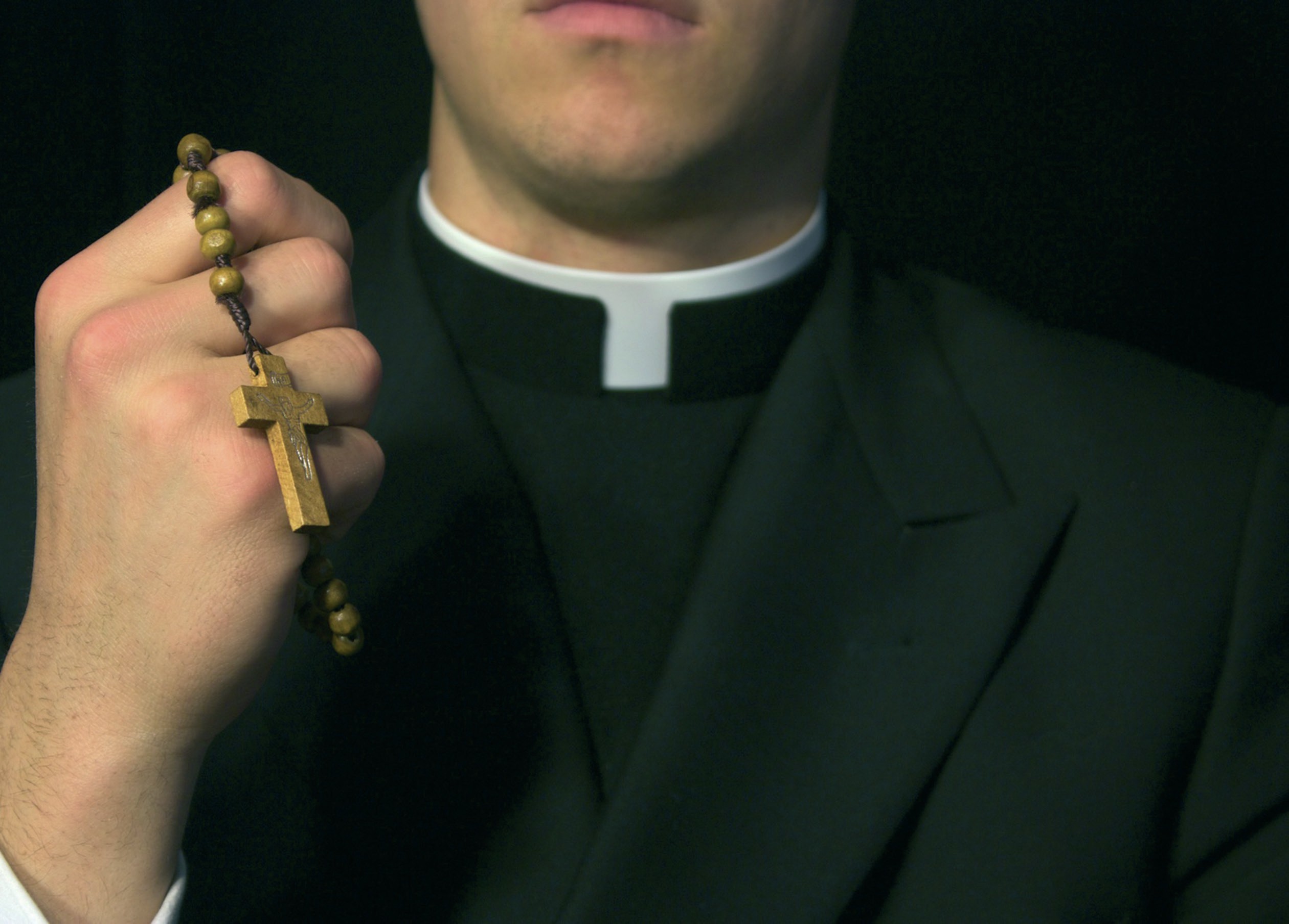
In Christianity, a priest is the mediator between God and humanity and has the authority to administer sacred and religious rites — the priest brings God to the ordinary people.
It takes 5 long and hard years for a priest to be trained, both physically and spiritually. What kind of person becomes a priest? Well, to begin with, would-be priests should be committed Christians who believe that Jesus has ‘called’ them to this work. They must have a real and deep love for God and be utterly devoted to following the teaching of Jesus Christ and sharing their faith with others. On a personal level, they should be friendly and caring, considerate, understanding, a good listener and someone with a genuine love and respect for all people.
The training
So far, so good? Now for the training. The would-be priest (‘candidate’) must first approach their local bishop for approval. If all is well, then the candidate undergoes a special selection process which includes a ‘period of discernment’, where a candidate seriously examines their religious faith and calling. The bishop makes the final decision and, if successful, the candidate will then train for the priesthood.
This involves 5 years of theological training at a church college, where they learn how to serve the church community and develop pastoral and liturgical skills. Towards the end of the 5 years, the candidate may apply to the bishop to be ordained as a priest and will then take on the role of church deacon, which is an ordained ministry in its own right, giving the candidate the authority to baptise and to carry out marriages. After 6 months, the candidate (‘ordinand’) will be ordained as a priest in a special service in which:
■ the people of God affirm that he/she is worthy
■ the bishop chooses the candidate to be a priest
■ the candidate takes vows and promises
■ prayers are said
■ the bishop lays hands upon the candidate’s head to symbolise the coming of the holy spirit with the gifts of love, authority and service
■ the bishop speaks the prayer of consecration and anoints the candidate with oil
Ordination
Ordination means becoming a priest — the representative of Jesus Christ on earth. St Teresa of Avila summed it up: ‘Christ has no body now but yours, no feet on earth but yours.’
The ministry of the Church is to continue the work of Christ and to prepare for the coming of the kingdom of God. Priests are linked directly to the original Church of Christ (the Apostolic Church) and this is symbolically expressed when the bishop performs the ‘laying on of hands’ on the newly ordained in order that they may carry out Christ’s work. Peter Fink in The New Dictionary of Sacramental Worship (1991) observed:
‘It is in function of this awesome commission of the church to some of its members that the church deems it proper, and indeed essential, to lay on hands and to entrust the minister and the ministry, to the power of God’s Spirit.’
So what is the difference between the role of a priest in the Protestant tradition and one from the Roman Catholic tradition? Perhaps the biggest difference lies in the concept of the ‘priesthood of all believers’, which gives to all believers, not just priests, the obligation to preach and spread the Christian faith:
‘You are a chosen people, a royal priesthood, a holy nation, a people belonging to God.’
1 Peter 2:9
This priesthood of all believers, which is mostly found in the Protestant tradition, means that every Christian should work for the kingdom of God. Most Protestant faiths reject the idea of the priesthood as a professional group of clergy that is distinct, in a spiritual sense, from the ordinary believers. Instead, Protestants regard the professional clergy as servants who act on behalf of the people.
However, the Catholic Church rejects this view and regards priests as having a unique spiritual and authoritative role which distinguishes them from the ordinary believers. As St Paul wrote:
‘Obey your leaders and submit to their authority. They keep watch over you…’
Hebrews 13 :17
Parish life
After ordination, it is in parishes where most newly qualified priests spend their lives —a parish is the area around a church and is seen as a community of God. The most important aspect of being a priest here is to help the people of the parish (parishioners) to discover God and to recognise and use the gifts God has given to each of them. The priest helps the people to grow in their faith and to be positive members of the community.
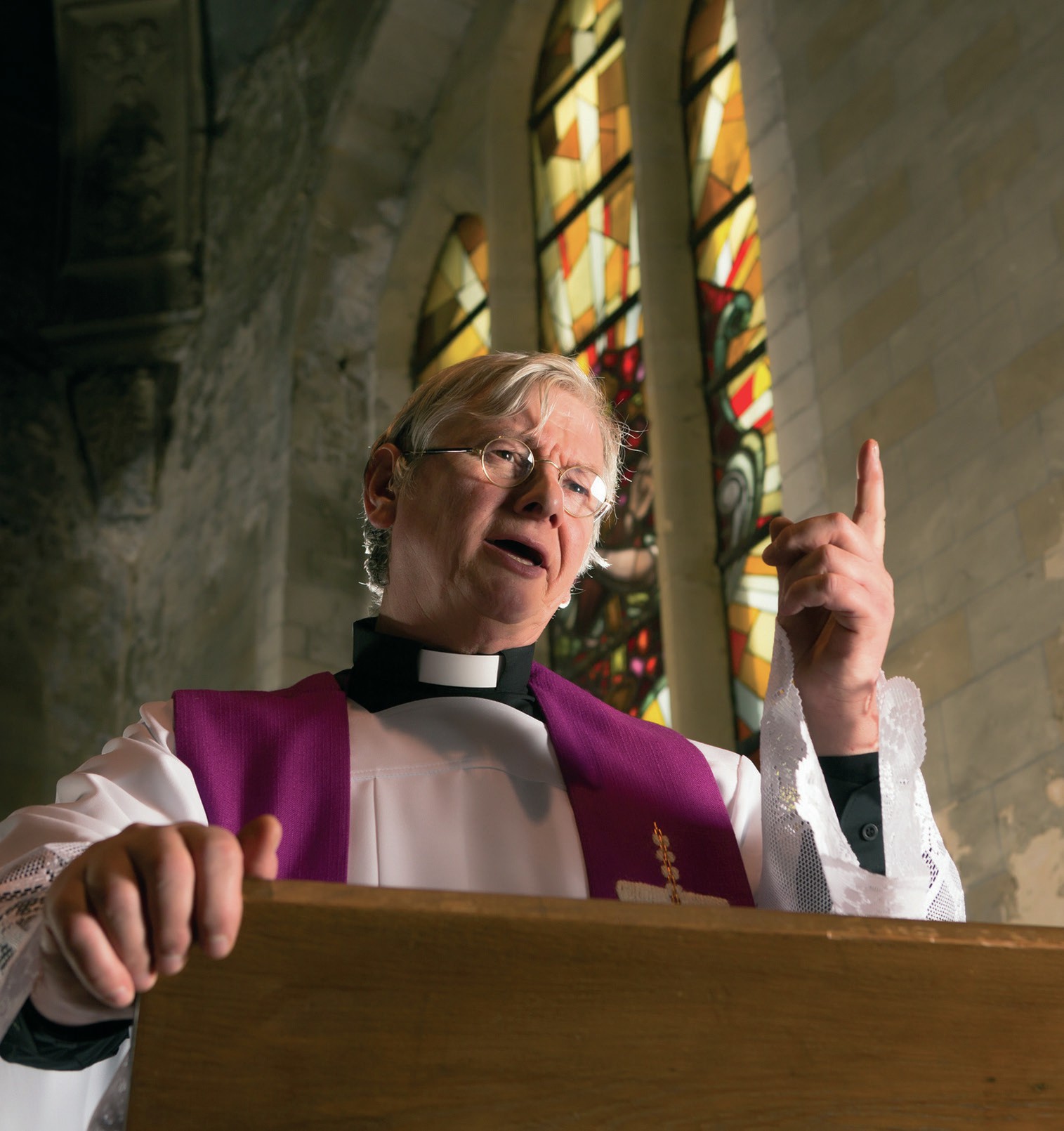
THE MINISTRY OF THE CHURCH IS TO CONTINUE THE WORK OF CHRIST AND TO PREPARE FOR THE COMING OF THE KINGDOM OF GOD.
WITHIN THE CHRISTIAN CHURCH, THERE HAS BEEN DIVISION AND CONFLICT OVER WHETHER OR NOT WOMEN SHOULD BE ALLOWED TO BECOME PRIESTS.
The priest is also responsible for the spiritual and pastoral welfare of the people and must try to create a loving, caring atmosphere where everyone feels that they are accepted and valued. Biblically speaking, the priest acts as a kind of shepherd, tending his flock.
How does a priest do this? Most importantly, by getting to know the parishioners, by visiting their homes, talking to them about their needs and problems, giving spiritual direction and, where necessary, ministering and praying with them. The priest also has more specific duties — to run the church, to lead funeral services, encourage youth work and to gather around him a team of parishioners who can help him and the church to carry out the work of God. Priests are servants acting on behalf of local Christians. This is based on the words of St Paul:
‘It was he who gave some to be apostles, some to be prophets, some to be evangelists and some to be pastors and teachers, to prepare God’s people for works of service, so that the body of Christ may be built up until we all reach unity in the faith and in the knowledge of the Son of God.’
Eph. 4:11–13
Can anyone become a priest?
In the Roman Catholic Church, priests must be men over 25 years of age, unmarried and celibate. In the Anglican Church, priests may marry and there are a number of women priests. In both traditions, priests are regarded as representatives of Christ, responsible for celebrating the Eucharist, leading worship and performing the sacraments in the name of the Church.
‘They are to preach God’s word, are people of deep and regular prayer, be steeped in sacred scripture, educators in the faith and work tirelessly for the glory of God through service to His people.’
Some priests have a special ministry that does not involve attachment to a parish — ’ for instance, priests in the armed forces, in hospitals and in schools and colleges.
So can anyone become a priest? Well, no, at least not yet. Within the Christian Church, there has been division and conflict over whether or not women should be allowed to become priests.
Women have traditionally been prevented from becoming priests because of the words of St Paul:
‘I do not permit a woman to teach or to have authority over a man; she must be silent.’
1 Timothy 2 :13
‘Women should remain silent in the churches.’
1 Cor. 14 :34
Today, there are women priests in the many Protestant denominations as well as the Church of England. The basis for this is the view that women may have had priestly ministries in the early Church and the Bible teaches that men and women are equal in Christ:
‘There is neither Jew nor Greek, slave nor free, male nor female, for you are all one in Christ Jesus.’
Galatians 3:28
‘In January 2015, the first woman bishop, Libby Lane, was appointed in the Church of England as Bishop of Stockport.’
The Roman Catholic Church refuses to ordain women as priests. The Catechism states ‘only a baptized man validly receives sacred ordination’.
The Roman Catholic view is that the Church should remain faithful to tradition and to the teaching of the New Testament, which, it claims, forbids the ordination of women because Jesus Christ chose only men as Apostles. In 1994, Pope John Paul II wrote in his letter ‘Ordinatio Sacerdotalis’ that:
‘The Church has no authority whatsoever to confer priestly ordination on women.’
Moreover, the Pontificial Biblical Commission observed:
‘The first Christian communities were always directed by men exercising the apostolic power…although the New Testament does not settle in a clear way whether women can be ordained as priests.’
In July 2010, the Vatican declared that a ‘attempted ordination’ of a woman would seen as a grave crime and any bishop ordaining a woman would, along with the woman, be excommunicated from the Church.
Want to be a priest? It’s not easy!