
Edexcel special
The resurrection
There are several anthology articles on the resurrection. Let’s look at the links between them and the importance of their presentation to evangelists
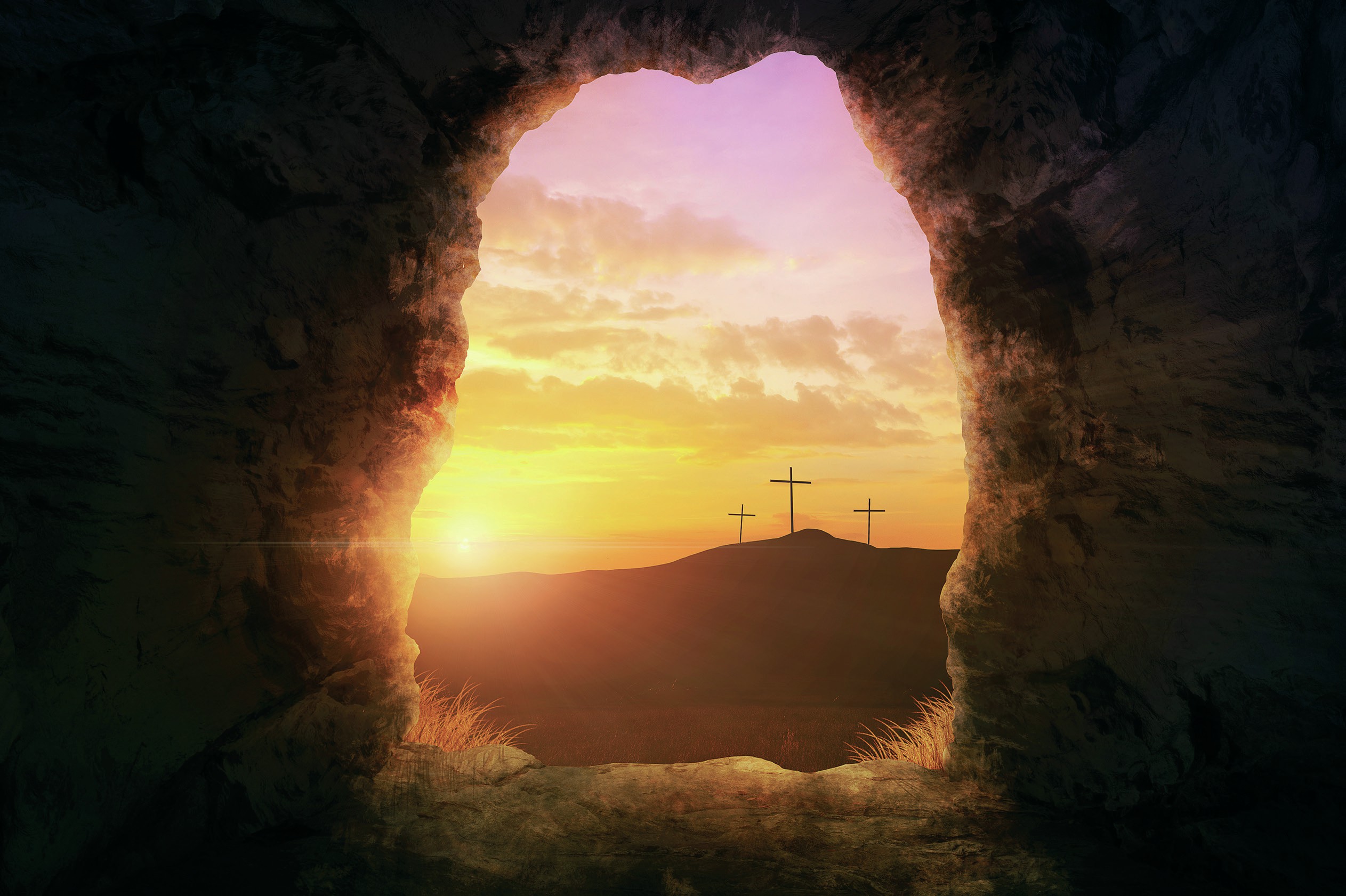
In the Synoptic Gospels, Jesus predicts his death and resurrection three times (Mark 8:31, 9:31, 10:34 and //s), and after the Transfiguration he warns the disciples to ‘tell no one until the Son of Man should have risen from the dead’ (Mark 9:9). None of the predictions attempts to explain how Jesus’ resurrection will be accomplished. The evangelists were not concerned with the mechanics of God’s miraculous activity, but rather with the reality of it, and the Gospel accounts of the resurrection do not attempt a description or analysis of what happened. The resurrection is not narrated, but proclaimed.
Although all four accounts are quite distinctive, enabling the evangelists to make use of the narrative to emphasise key themes that have run throughout their Gospels, there are significant links between them. All the Gospel accounts include:
■ the fact of the empty tomb
■ the visit of women (in John’s case Mary Magdalene only) to the tomb
■ information that Jesus has risen from the dead conveyed by angels or by a mysterious stranger
■ motifs of surprise, lack of recognition and disbelief
■ instructions or commissioning by Jesus
Not all the Gospel accounts can be said, strictly speaking, to include a resurrection appearance and in the Marcan account (the shortest, and possibly most reliable) the news that Jesus has been raised from the dead is not immediately believed by the disciples, male or female, although interestingly the women are more receptive than the men. The appearances of Jesus in Matthew and in John 21 appear to be of a figure that is of a more mystical and spiritual nature than in the other accounts where, for example, Thomas is invited to touch him, or where he eats broiled fish.
The key point of the passage and the article is about the nature of resurrection, bodily or spiritual, and how this is presented through different teachings, including those of Paul. It is ideas associated with this that need to be brought out in part (a) of your answer to the Unit 4 Implications question: what reasons and ideas are there associated with the empty tomb? In part (b) you should criticise and analyse the arguments about the nature of resurrection.
Box 1 The resurrection body
R. H. Fuller suggested that Paul’s readership in Corinth was anticipating not a bodily resurrection like Christ’s, but simply the opening up of a new existence made possible by their baptism —a present state, but not accompanied by any concept of future hope. Paul writes to them to correct this picture. The resurrection of believers will, like Christ’s resurrection, involve the resurrection and recreation of a body. However, the corruptible and perishable flesh will be transformed into something incorruptible, something that can only be created by God in the miracle of the resurrection.
Reid, G. and Tyler, S. (2003) ‘Life after death in the New Testament’ in A2 Religious Studies Synoptic Guide, Philip Allan Updates
Let’s look now at an example.
Question (a)
Examine the argument and/or interpretation in the passage. (30 marks)
Paragraph 1
Paragraph 1 provides an overview of the passage and the article.
Point
The passage examines the ideas about the resurrection and presents that debate about whether resurrection can be both physical/ spiritual.
Explanation
The debate about the nature of resurrection was one that was of great concern to the early Church. This is evident in early Christian writings of the time and in the early letters of Paul.
Evidence
■ Paul writes in 1 Corinthians 15 that belief in the resurrection of Jesus is vital to a genuine conversion to the gospel of Christ, yet it is clear that his message was quickly undermined by others.
■ The Gospel writers provide hints that they had an apologetic purpose in their resurrection narratives, but reinforce the point that the empty tomb is not better explained by alternative scenarios such as the disciples stealing the body.
Paragraph 2
Bodily resurrection: Jesus had a physical resurrection
Point
The early Christians believed that Jesus had a physical resurrection and this is what the earliest accounts of Christianity tell us.
Explanation
■ Jesus’ resurrection was an ultimate act of revelation whereby his true divinity was revealed but also the proof that it was through Christ that one would achieve salvation. Jesus’ resurrection is the final sign of his glory.
■ The salvation of humanity is connected with the resurrection. We are saved by Christ from hatred and greed but ultimate salvation is from destruction and death and it comes as human lives are united to the reality of God forever.
Evidence
■ The physical raising of Lazarus in John 11:
‘Jesus declares “I am the resurrection and the life. He who believes in me will live even though he dies and whoever believes in me will never die.”’
■ All four Gospels contain accounts of the empty tomb, which provides evidence for some people that Jesus was raised from the dead. Give examples of the similarities in the narratives and evidence of the physicality of Jesus’ appearances.
Paragraph 3
Bodily resurrection: Christ had a resurrection so the promise is the same for believers
Point
The debate about resurrection for believers in Christ centres on whether or not followers of Christ will experience the same type of resurrection as he did.
Explanation
■ There is a question as to whether the physical nature of the human person will stay the same and this could lead into a debate about the natural process of decay for a human body.
■ Debates about this existed in the very earliest Christian communities. Paul in 1 Corinthians 15:52 appears to be envisaging an entity that is identifiably bodily but, because of its spiritual nature, is crucially different from the physical body.
■ There is unity between the soul of individuals experiencing resurrection and the physical body (future eschatological emphasis?).
■ The writer of the article attests to the idea that the physical resurrection of the body will be ‘something that can only be created by God in the miracle of the resurrection’.
Evidence
■ 1 Corinthians 15:52: ‘the dead will be raised imperishable, and we shall be changed.’
■ Job 19:25–27: ‘I know that my redeemer lives, and that he shall stand at the latter day upon the earth: And though after my skin worms destroy this body, yet in my flesh shall I see God.’
■ Daniel 12:2 can be interpreted as accentuating the idea that there will be an end judgement when it will be decided whether people are to experience eternal life or not — future eschatology. ‘And many of them that sleep in the dust of the earth shall awake, some to everlasting life, and some to shame and everlasting contempt. And they that be wise shall shine as the brightness of the firmament; and they that turn many to righteousness as the stars for ever and ever.’
Paragraph 4
Spiritual resurrection: through immediate belief in Christ
Point
Exploration of the idea that physical resurrection of Jesus is enough evidence to prove to people that he was God and therefore the way to salvation.
Explanation
■ Jesus’ resurrection is a means by which we see Jesus equals God and therefore should believe in him.
■ Can the normal human person experience the same resurrection of Jesus if one of the aims of his resurrection was to show how much God loved us?
■ Humans would have eternal life with God although not in the same physical form.
■ The doctrine of bodily resurrection suggests that resurrection and eternal life depend on an act of God’s divine love. Bodily resurrection is the re-creation by God of the human individual, not as a physical being who has died but as a spiritual being. The early community of Corinth, the article states, believes this about the need for baptism.
Evidence
■ Paul’s readership in Corinth was anticipating not a bodily resurrection like Christ’s, but simply the opening up of a new existence made possible by their baptism — a present state.
■ Tasker (1960) believes the aim of Jesus’ death and resurrection was to show people/ followers that his resurrection symbolised the defeat of sin and the opening up of eternal life through salvation from sin.
■ ‘It was his claim to bestow upon believers the gift of eternal life by raising them from spiritual death which led to his crucifixion.’
Paragraph 5
Spiritual resurrection: being in union with God
Point
Jesus’ resurrection was a physical example of the unity created with God once the people had been brought back into right relationship with him.
Explanation
■ Jesus’ death and resurrection was to bring people back into union with God. It was the evidence the people of God needed that sin had been defeated and people could experience salvation if they believed in Christ.
■ It is one of the aims of Jesus’ resurrection — three things were accomplished by the resurrection appearances:
1 They vindicated his designated role as a true prophet, and as something more — the one chosen by God to act as and for God in human history.
2 They confirmed his continuing existence as the Davidic king whose rule would never end.
3 ‘They disclosed God’s final purpose for human lives and for the whole creation, that it would be renewed and transformed in a full spiritual union with God.’
Evidence
■ Ward: ‘The resurrection of Jesus reveals the destiny of humanity and the way in which that destiny is to be realised. It is an event of unique importance in human history… . The resurrection of Jesus is…a disclosure of the ultimate nature of reality as spiritual, and of the final goal of the material universe as the perfected unity of all things in God.’
■ Isaiah 25:8: ‘He will swallow up death in victory; and the Lord God will wipe away tears from off all faces.’
Now attempt this approach yourself for part (b) of the question, using the outline in Table 1.

Question (b)
Do you agree with the ideas expressed? Justify your point of view and discuss its implications for understanding religious and human experience. (20 marks)
This ‘Edexcel special’ is the responsibility of RELIGIOUS STUDIES REVIEW and has been neither provided nor approved by Edexcel.