
Deprecated: mb_convert_encoding(): Handling HTML entities via mbstring is deprecated; use htmlspecialchars, htmlentities, or mb_encode_numericentity/mb_decode_numericentity instead in /mnt/storage/stage/builds/pugpig-site-subs-server/latest-1.2.0-1753096337.768322/pugpig-site-subs/content.php on line 225
Jamieson’s Method and Moral Theory: Understanding the content
In this two-part article, Robin Harrigan shows you how to tackle Question 2 on Jamieson’s passage in the Unit 4 Implications paper

Edexcel A2 Unit 4: Implications — Philosophy of religion
Jamieson’s passage in the Edexcel GCE Religious Studies Anthology describes the work of modern ethicists and the ethics we can relate to in our everyday lives. He writes that ‘Moral theorising can be found on the highways and byways, practiced by everyone from bartenders to politicians’ (p. 136). By saying this he is reminding us of our own discussions on moral topics when we create moral theories or speculations. Should we tell on a friend who we know is cheating? What should we do about a racist comment?
When we talk about these issues we are taking part in the general ethical debate. Moral philosophers in the last 50 years have observed this debate and respect it as legitimate moral practice. They point out that this is what is relevant to most people. Consequently, they argue that traditional ethical theories such as those covered at A-level — utilitarianism, situation ethics, natural moral law, Kantian ethics — are not so relevant in the moral debate. In his article, Jamieson attempts to explain the reasons for this change in emphasis.
Question (a)
Examine the argument and/or interpretation in the passage. (30 marks)
The introduction
Jamieson explains that ‘In this article —I will be mainly concerned with questions about moral theory rather than questions in moral theory’ (p. 134). The words about and in are key to understanding what he is saying. About means taking the overview of moral theories as a whole rather than looking into the detail of each moral theory. This is what contemporary moral philosophers have been doing. Jamieson is not looking at questions in moral theory and so he will not be analysing and explaining the different theories.
Instead he will test the assumptions on which moral theories are based and explain why these are being called into question. He identifies certain philosophers who have been made anxious by and are sceptical of the traditional view of ethical theories (Bernard Williams) or who identify their ‘schizophrenic’ nature (Michael Stocker), and suggests that modern moral philosophy ‘serves up a cafeteria of conflicting moralities’ (Alasdair MacIntyre). He is not intending to find solutions about these disputes but he will ‘gesture’ towards what he takes to be the truth.
The nature of moral theories
Jamieson calls those that dispute moral theories the anti-theorists, and he identifies the main issue of dispute — the dominant conception.
This is the assumption (thing that is taken to be true without proof) that was never questioned by traditional moral theorists. The dominant conception is the term used for the core ideas that ethical theories are created around — i.e. the rightness or wrongness of the agent (person taking the moral decision), the action (what you do morally) or the outcome (consequence). You will know that utilitarianism and situation ethics are concerned with outcome, Kantian ethics focuses on agents, and natural moral law and divine command ethics are about moral actions.
In the exam essay, you might usefully explain your understanding of some of these theories. The reasoning behind an ethical theory is usually either legal (to do with laws and rules) or economic (to do with the amount of benefit to be gained from the moral decision). Often the dominant conception is not made obvious (it is implicit), but people like the nineteenth-century philosopher Henry Sidgwick and the twentiethcentury professor of ethics at Harvard John Rawls have written about it. (Both these philosophers are also mentioned in Schneewind’s passage in the anthology.)

The anti-theorists
The anti-theorists object to the dominant conception because they think that morality comes from the ground up — from ordinary people, not academics and not God. They draw on the ethical ideas of Hume and Aristotle in their analysis. G. E. M. Anscombe in the midtwentieth century pointed out that there is no basis to associate legal reasoning with morality because there is no divine lawgiver, God. Alasdair MacIntyre and Bernard Williams both agree that morality does not have authority any more because society is so diverse, being multicultural and liberal. Both agree that modern moral philosophy is a matter of intuition, but this does not help us choose which is the better intuition in a moral dilemma.
Anscombe and MacIntyre are modern exponents of virtue ethics and in the exam essay you could explain your understanding of the theory here. The ethical language section of the ethics course is also relevant, particularly intuitionism and emotivism because the antitheorists accept that the first response to an ethical dilemma is a personal one, either intuitive or emotive. The naturalistic fallacy and its discussion of what is good is also pertinent, as is relativism and subjectivism.
FOUNDATIONALISM IS A LINEAR SYSTEM OF THEORY BUILDING WHICH STARTS WITH A FOUNDATIONAL BELIEF THAT IS SELF-EVIDENTLY TRUE
Reconciling theory and practice
At the end of the passage Jamieson suggests a way to reconcile the traditional ‘theory’ view of ethics with the modern ‘practice’ view. He agrees that in everyday life we hardly ever use moral theories. However, we often refer to them, as well as religious beliefs and cultural outlooks, to defend our moral practice. He says, ‘It is a way in which our “better self”…sometimes tries to carry the day.’ When we reflect deeper we use theories or ‘theory fragments’.
To expand on this section in the exam essay, think about how the theories might be useful in making everyday moral decisions such as whether you should hand in money you have found. Using an actual example of a moral dilemma can help direct thinking. What would someone do instinctively? How different would this be from the utilitarian, the Kantian or the virtue ethicist? What would influence the moral decision?
The methods of moral theorising
As with the dominant conception, Jamieson goes on to consider the assumptions that are the basis for creating a moral theory. If the basis is sound then the theory can be universal (apply to everyone). The two most influential systems that are used to construct moral theories are foundationalism and coherentism — the latter currently being the most popular.
Foundationalism
Foundationalism is a linear system of theory building which starts with a foundational belief that is self-evidently true (assumed to be true). For example, Jeremy Bentham based his theory of utility on the assumption that man is motivated by pleasure or pain. Jamieson uses the example of a man called John who thinks that it is wrong to kill his next-door neighbour based on the self-evident principle that it is wrong to kill people gratuitously. This is the foundationalist justification for John’s belief system. Other foundational beliefs might be based on human nature, reason, the universe or a divine lawgiver.
The problem with foundationalism is how to be sure that the truth is self-evident. It may be proved wrong, as was the case with Bentham. Men are motivated by more than just pleasure and pain — ambition, for example. Jamieson explains that we can find self-evident truths that are logically sound, such as ‘all ravens are ravens’, but such truths ‘are not rich enough’ to lead to a full-blown moral theory applicable to all moral situations.
Coherentism
Coherentism is more popular because it is based on not one but several connecting ideas that work together to form a sound basis. For example, Kant’s categorical imperative is based on several ideas that link together to undergird the moral theory. Jamieson points out that the influential modern form of coherentism is John Rawl’s method of reflective equilibrium, which is a way of coming to a solution based on a series of formulation and revision of ideas.
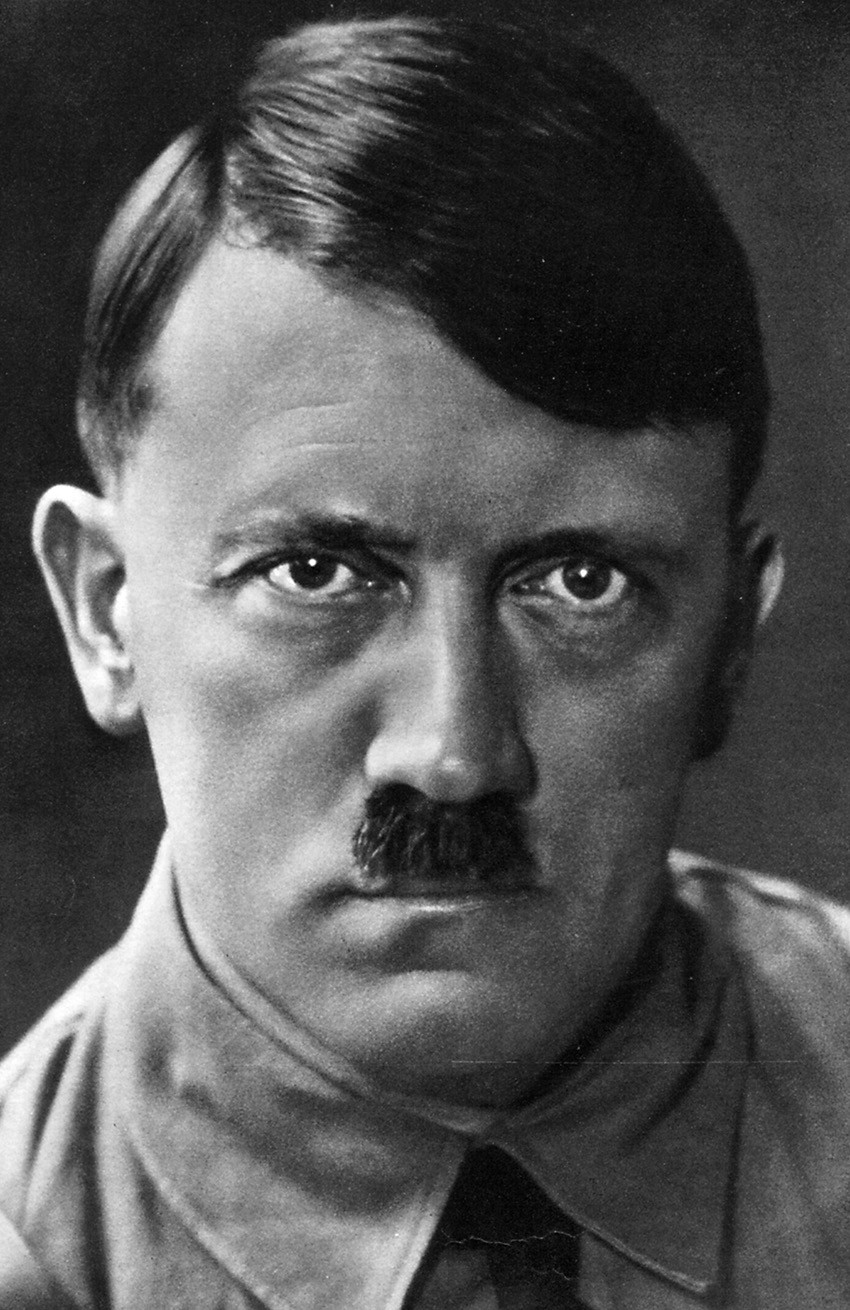
The problem with coherentism is that even after careful consideration a set of beliefs can still be wrong and they don’t have ‘probative force’ (cannot be proved to be true). A horrific example that serves to prove this point is Hitler’s fascist political philosophy which he obtained as a result of Mein Kampf (‘My Struggle’) —a bleak version of a reflective equilibrium.
You can show your understanding of moral theorising by explaining what beliefs the traditional moral theories are based on, and also explain how the conflicts between objectivists, subjectivists and relativists can exacerbate the foundationalists’ and the coherentists’ views.
Under the heading ‘other questions of method’ Jamieson says that these systems have similarities, such as the inability for either coherentism or foundationalism to guarantee change, which is an essential element of ethical theory. Here you could bring in the issues of cultural relativism and ethical egoism to show your understanding of why change is necessary.
Another similarity is that they have the same goal, which is the ‘identification of a defensible set of moral beliefs, convictions, dispositions, and purposes’ or in other words ‘intuitions’. This leads on to Jamieson’s final discussion — that of the role of examples.
The role of examples
The passage finishes with Jamieson’s ideas on the value of using examples —a common technique by ethicists to explain their theories. Jamieson calls them ‘intuition pumps’ because they evoke intuitional responses. Think of all the examples you may have come across, such as:
■ J. S. Mill’s satisfied pig/dissatisfied Socrates
■ Joseph Fletcher’s examples based on real-life situations
■ Kant’s axe murderer at the door
■ Bernard Williams’ Jim and the Indians
■ the ‘trolley problem’, introduced by Phillipa Foot and expanded by others
Jamieson explains the four kinds of example used in moral theorising: literary, ostensive, hypothetical and imaginary. You could find examples of each of these. However, Jamieson finds the use of imaginary examples problematic because they suspend the laws of physics and evoke fantasy worlds, making them an inadequate tool to draw out realistic intuitions. He uses the example of Tooley’s cat, where Michael Tooley asks us to imagine killing a kitten which has previously been injected with a chemical designed to give it a human brain when it matures. Tooley concludes that killing the kitten is morally equivalent to killing a foetus. Jamieson disputes this moral equivalency to prove his point that we cannot trust our intuitions when thinking of such an imaginary situation. We can only trust our intuitions if we fully grasp the parameters of the story.

The conclusion
Jamieson’s brief conclusion is very helpful because in it he lays out his own views: ‘that moral theories are derivative of moral theorizing, that moral theorizing is part of everyday moral practice, that both foundationalism and coherentism are problematical, and that appeals to imaginary cases are often misleading and unreliable’. These are his opinions and they are what you will be evaluating in question (b), the AO2 section of the exam paper (see pp. 18–21).
References
Edexcel, GCE Religious Studies Anthology, www.edexcel.com