
Notice: Trying to get property 'display_name' of non-object in /mnt/storage/stage/www/wp-content/plugins/wordpress-seo/src/generators/schema/article.php on line 52
Measuring earthquakes - Hachette Learning Magazines Skip to main content

This link is exclusively for students and staff members within this organisation.

Unauthorised use will lead to account termination.

Previous

The Haiti earthquake 10 years on

Next

Lundy Island A conservation success story

geographical skills

Measuring earthquakes

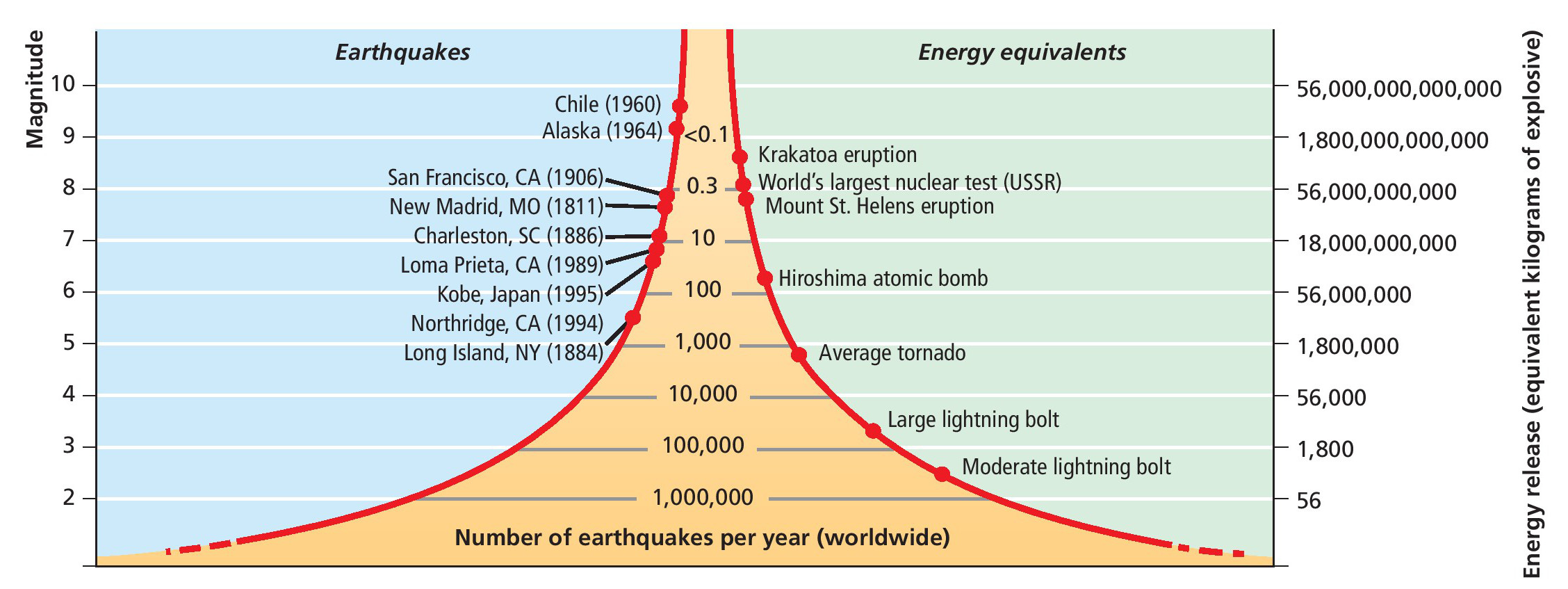
Tectonic hazards feature in all GCSE geography specifications and this exciting part of your course will involve taking a closer look at global tectonic events. This Geographical Skills column aims to equip you with an understanding of how earthquakes are measured using two scales — the Moment Magnitude Scale and the Mercalli Scale.

Figure 1 The Moment Magnitude Scale

Go to www.hoddereducation.co.uk/ wideworldextras for a homework activity on this topic.

Earthquakes happen when there are movements in the Earth’s crust, most commonly at tectonic plate boundaries. When two plates meet or pass one another, they can get stuck and this builds pressure between the two plates. When this pressure (or stored energy) is released, intense vibrations (also known as seismic waves) are released, causing an earthquake.

Your organisation does not have access to this article.

Sign up today to give your students the edge they need to achieve their best grades with subject expertise

Subscribe

Previous

The Haiti earthquake 10 years on

Next

Lundy Island A conservation success story