
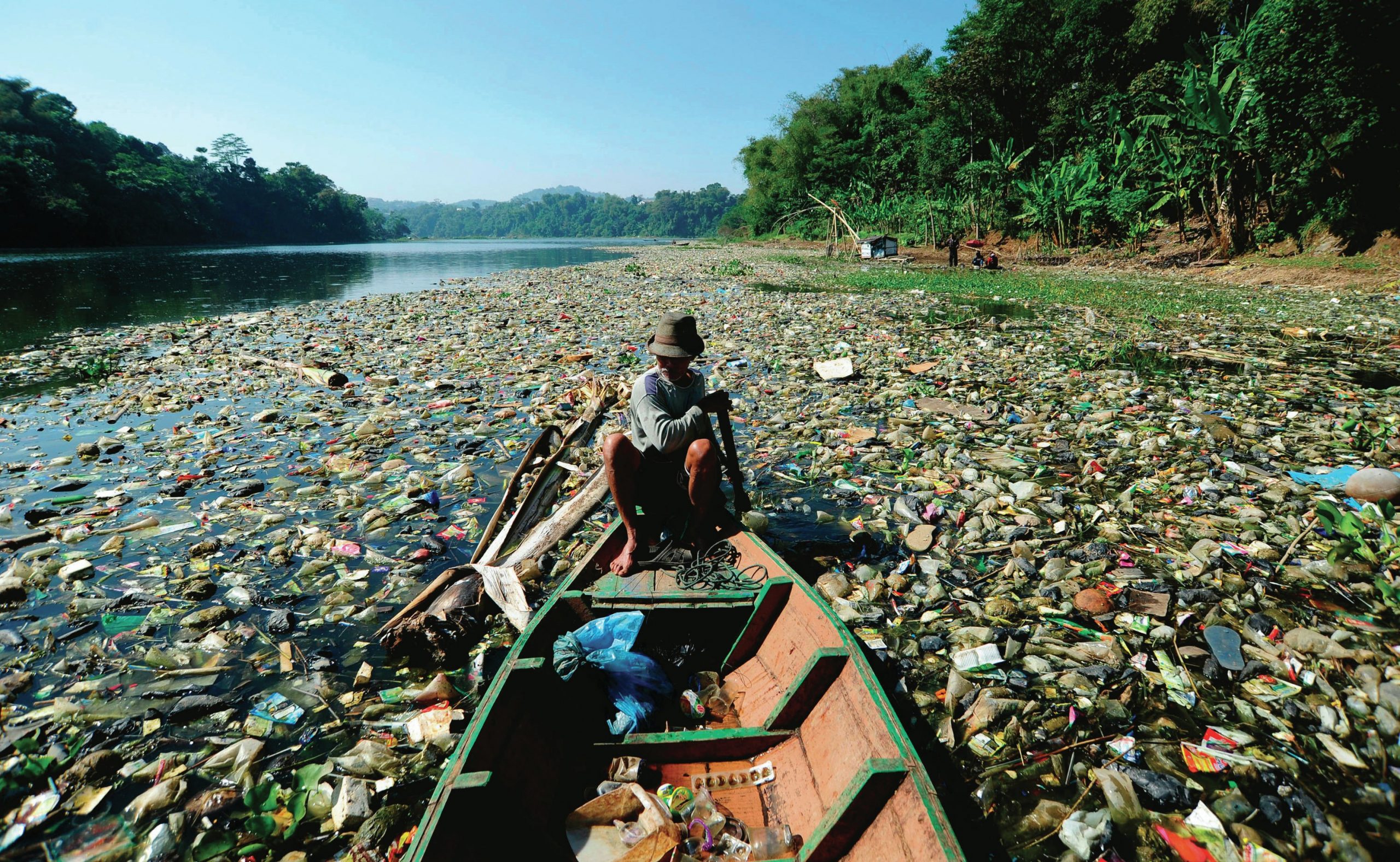
Plastic pollution is one of the biggest problems facing the world today. Around 275 million tonnes of plastic is generated each year around the world. Plastic takes a long time to biodegrade and can remain in the environment for hundreds of years. Many plastic items are designed to be used once and are then discarded, and much of today’s used plastic ends up in rivers, lakes and oceans.
The World Economic Forum estimates that around 8 million tonnes of plastic enters the ocean from rivers every year. This poses a danger to wildlife as animals can become trapped in plastic or can ingest microplastic particles, which may do even greater harm. If plastic pollution levels continue to rise, there may be more plastic than fish in the oceans by 2050. Around 90% of the plastic in our oceans is thought to come from just ten rivers, eight of which are located in Asia. Rivers often have large numbers of people living close to them but many lower-income countries (LICs) and newly industrialised countries (NICs) have inefficient, or even non-existent, waste management systems. This often results in high levels of plastic being disposed of in nearby rivers with a devastating impact on water quality and wildlife.
Your organisation does not have access to this article.
Sign up today to give your students the edge they need to achieve their best grades with subject expertise
Subscribe