
Deprecated: mb_convert_encoding(): Handling HTML entities via mbstring is deprecated; use htmlspecialchars, htmlentities, or mb_encode_numericentity/mb_decode_numericentity instead in /mnt/storage/stage/builds/pugpig-site-subs-server/latest-1.2.0-1753096337.768322/pugpig-site-subs/content.php on line 225
Love and death in Othello and The Loved One
Pete Bunten compares the ways in which Shakespeare and Waugh present the interconnectedness of love and death

Exam links
AQA (A): Paper 1 Shakespeare
AQA (B): Paper 1 Aspects of tragedy
Edexcel: Paper 1 Drama: Tragedy
Love and death might seem to be polar opposites. Nevertheless, literary narratives have frequently woven the two tightly together. At the opening of Romeo and Juliet, the Chorus explains that the play will culminate in the death of a ‘pair of star-crossed lovers’. In another Shakespearean tragedy, Othello (1604), and Evelyn Waugh’s satiric novella The Loved One (1948), the two love stories are shadowed by death throughout.
The intricate connection between love and death was explored by Sigmund Freud in The Interpretation of Dreams (1900) and an essay ‘Beyond the Pleasure Principle’ (1925). Freud used the terms Eros and Thanatos to identify and distinguish the two forces, which he saw as diametrically opposite. Eros, named after the Greek goddess of love, here represents the life instinct, which includes the sexual and the self-preservation instincts. Thanatos, named after the Greek god of death, is the unconscious drive towards destruction. This drive may at first be turned self-destructively inwards, but may also take an outward form of violent aggression. It is not difficult to see the relevance of these two terms to a reading of Othello, and also to recognise more generally the ways in which psychoanalytical theories may provide challenging and productive methods of interpreting literary texts.
Much later psychoanalytic study has been devoted to the complexity of the relationship between Eros and Thanatos. This complexity is represented in Keats’ ‘Ode to a Nightingale’, where the poet finds himself ‘half in love with easeful death’. The phrase threads itself through The Loved One, and its sentiments seem to be in some ways evoked in the mournful ‘willow scene’ in Othello that precedes Desdemona’s death.
The world of death in Othello
In Othello, love and death are interlocked from the beginning. The play is set in a world driven by conflict and combat. As early as the second scene Iago boasts that ‘in the trade of war I have slain men’ (1.2.1). The threat of a Turkish fleet dominates the minds of the Venetian senate. Othello’s life has been spent in military service, and even his wooing of Desdemona was effected through his stories of ‘the battles, sieges, fortunes/ That I have passed’ (1.3.129–30). The success of Othello’s wooing, however, is a crushing blow to Desdemona’s father, Brabantio, and the death of his paternal love for her is evident when he proclaims to the senate that his daughter is now dead ‘to me’. The wider significance of this remark becomes tragically clear at the end of the play when Gratiano, in a speech over Desdemona’s dead body, announces Brabantio’s own death, a direct result of the anguish caused by his daughter’s marriage:
Thy match was mortal to him, and pure grief Shore his old thread in twain. (5.2.204–5)
Even the foolish Roderigo, the hapless suitor of Desdemona, joins in this general chorus of love and death. He tells the scornful Iago that, driven by the pangs of unrequited love, he intends to ‘incontinently drown myself’. He does no such thing, but his later death can be regarded as a direct result of his hopeless passion.
The wrecking of the Turkish fleet seems to remove both the present military danger and all obstacles to the celebration of Othello and Desdemona’s love. However, when Othello greets Desdemona at the beginning of the victory celebrations, he expresses the intensity of his love in terms that connect love and death in rather unsettling ways:
If it were now to die, ‘Twere now to be most happy; for I fear My soul hath her content so absolute That not another comfort like to this Succeeds in unknown fate. (2.1.183–87)
Desdemona echoes his fate-tempting sentiments, and Othello becomes unwittingly prophetic a few scenes later when he says:
Perdition catch my soul But I do love thee! And when I love thee not, Chaos is come again. (3.3.90–92)
Chaos, and death, are indeed on their way, trampling over the ashes of his love.
Death in the world of The Loved One
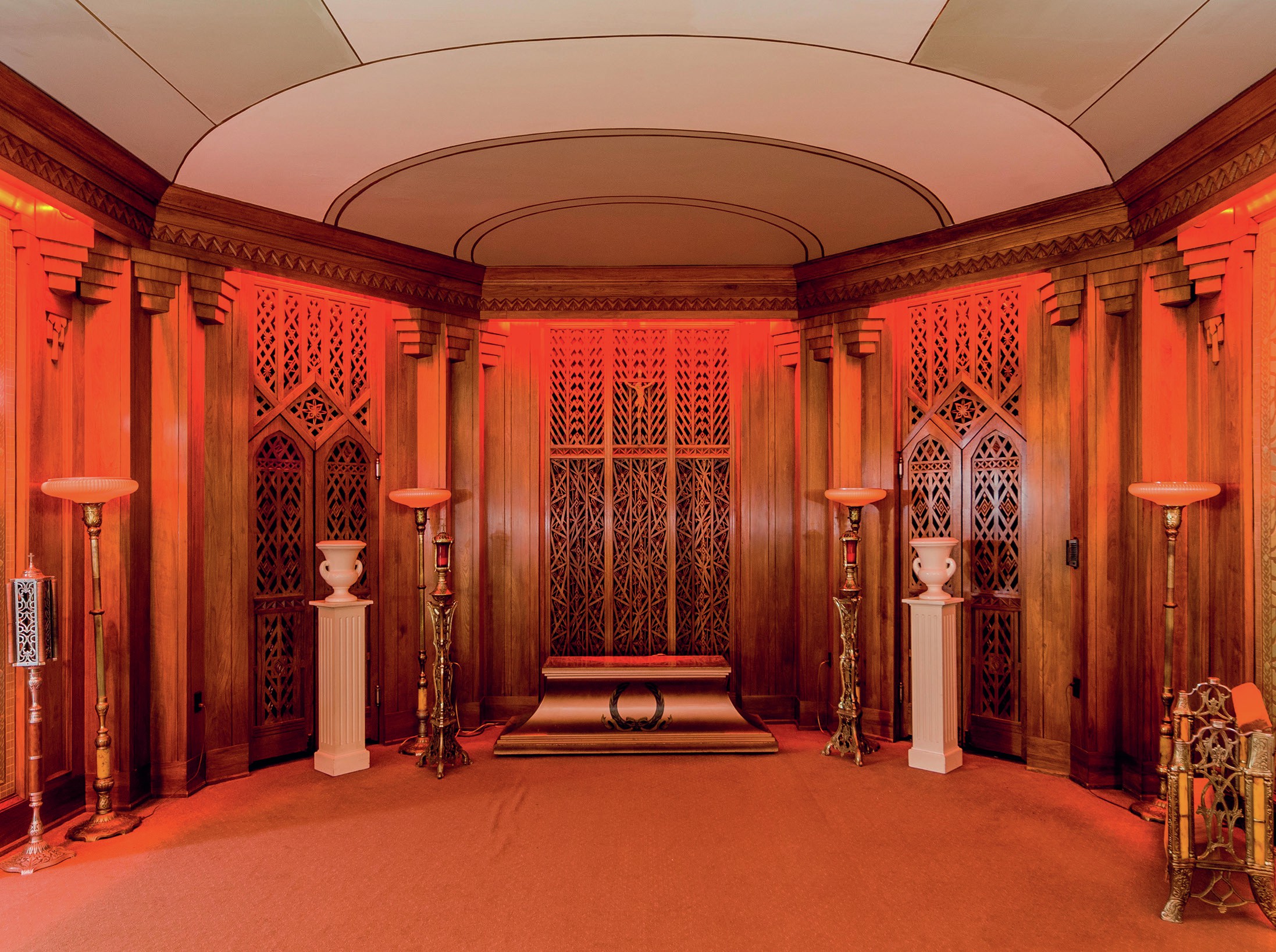
Death is equally ubiquitous in Evelyn Waugh’s The Loved One, but it operates within the narrative in a very different way. The novella is set in California, and was inspired by Waugh’s visit to Hollywood in 1947. He came to view much of Californian culture with a mixture of distaste and horror, and found a suitable focus for his contempt in local funeral practices. In a preface to the 1965 edition, Waugh referred to ‘the sprawling, nondescript ugliness of Los Angeles’, and sardonically claimed that his expedition was only made tolerable by the discovery of ‘the unsurpassed glories of the cemetery which I have here named “Whispering Glades”’. Jessica Mitford’s The American Way of Death (1963) was equally scathing (from a journalist’s perspective) about the commercialisation of the American funeral industry. Tony Richardson’s 1965 film of The Loved One was, in fact, partially inspired by Mitford’s exposé.
The central character of The Loved One is Dennis Barlow, an ex-patriot English poet, struggling to make a living in this alien environment. The death of a friend, Sir Francis Hinsley (the first of the two suicides that book-end the narrative), leads Dennis to Whispering Glades, a mortuary and cemetery where death is sanitised and mortality — as far as possible — denied. There he meets and becomes fascinated by the beautiful Aimee Thanatogenos, employed by the mortuary as a cosmetician.
The corpses brought to the mortuary are subjected to a process of cosmetic surgery, in theory designed to make their appearance lifelike and serene. To Dennis, however, as he views the body of Sir Francis, the results are frighteningly repellent: ‘the face which inclined its blind eyes towards him — the face was entirely horrible; as ageless as a tortoise and as inhuman; a painted and smirking obscene travesty’ (Ch. 5). Under these unlikely circumstances a love triangle develops, where Dennis’ rival is the grotesque Mr Joyboy, the senior mortician of Whispering Glades. From one perspective, therefore, Aimee is ‘the loved one’ of the title, but the phrase is also used by the mortuary as a euphemistic reference to the recently departed.
Aimee and Desdemona
As she is in many ways an innocent victim of love, Aimee might be seen to have much in common with Desdemona. Both are subject to the manipulations of others. Aimee is courted by Mr Joyboy through — in a sense — the language of death. He puts smiles on the faces of the embalmed corpses he sends to her for cosmetic painting. Dennis, ironically, does something rather similar. He courts the poorly educated Aimee by sending her love poems, in theory his own creations, but in fact written by dead poets and lifted from the Oxford Book of English Verse. His first choice is Keats’ ‘Ode to a Nightingale’, with its expressed desire ‘to cease upon the midnight with no pain’, a phrase which, as Aimee recognises, is ‘exactly what Whispering Glades exists for’ (Ch. 5). As Whispering Glades strives to remove the pain associated with death, so it removes any of death’s dignity. Waugh implies that there is also no dignity in Aimee’s later death. She chooses suicide as a means of escaping the dilemma of choosing between two different lovers.
Aimee’s surname, Thanatogenos, is significant. Thanatology is the study of death. Thanatism is the belief that at death the soul ceases to exist. Aimee and her love story are enclosed within a world of death, but for Waugh, a devout Catholic, hers was a world whose attitude to love and mortality lacked grace and spiritual meaning. Desdemona’s name is also suggestive. It is a version of the Greek dusdaimon, meaning unfortunate. However, we are likely to respond to her fate in a very different way from that of Aimee. The Loved One depicts a world devoted to falsehood, where nothing is real. Waugh’s acerbic comic style deliberately withholds sympathy from his characters. There are certainly elements of comedy in Othello — in many ways Iago plays out the familiar comic role of the trickster — but the death of Desdemona’s love has the pathos and sense of waste characteristic of dramatic tragedy. The tragic momentum of the play is tied to Desdemona’s increasing isolation and vulnerability. Even when she is not on stage, she is the focus of the action.
Othello’s death-marked love
By the end of Act 3, Othello has seemingly determined to murder Desdemona, but the speeches in which he sets out his intentions convey an inability to separate the ideas of death and love. ‘I will withdraw/ To furnish me with some swift means of death/ For the fair devil’ (3.3.473–75), he says to Iago. And later, he cannot detach his thirst to be revenged on Cassio from his love for Desdemona: ‘I would have him nine years a-killing. A fine woman, a fair woman, a sweet woman!’ (4.1.177–78). Iago also forces Othello to acknowledge this connection, but only to enforce the brutality of his revenge:
OTHELLO: Get me some poison, Iago, this night. I’ll not expostulate with her, lest her body and beauty unprovide my mind again — this night, Iago.
IAGO: Do it not with poison; strangle her in her bed, even the bed she hath contaminated.
OTHELLO: Good, good! The justice of it pleases; very good! (4.1.197–202)
The symbolism of the bed is telling, and later insisted upon by Othello: ‘thy bed, lust-stained, shall with lust’s blood be spotted’, he says to Desdemona as he prepares to kill her (5.1.36). What the marriage bed represents has changed — from a stage for romantic love to a scaffold for execution.
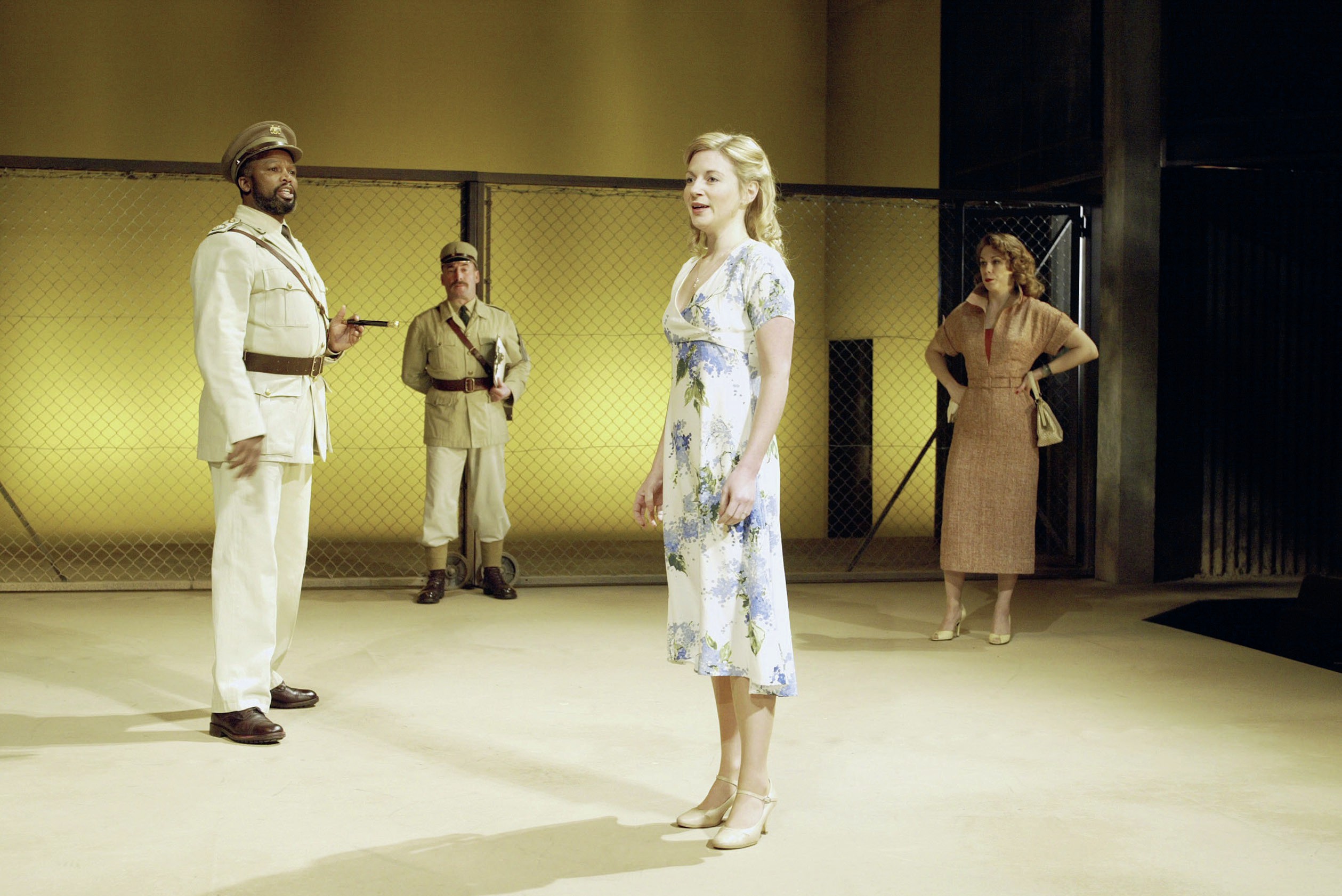
Othello’s relative unfamiliarity with the world of love has often been remarked upon. He acknowledges it himself, scorning the ‘light-winged toys of feathered Cupid’ (1.3.265– 66), and admitting that he lacks ‘the soft parts of conversation that chamberers have’ (3.3.261–62). In contrast, the world of death is familiar to him, and it is possible to see his headlong rush into brutality and revenge as a journey into territory where he feels more at home.
Spiritual significance
What is certain is that the worlds of death and love in Othello never lack spiritual significance, the absence of which is so apparent in The Loved One. There is nothing heroic about Dennis. He is callously indifferent to the feelings of others (‘“I never thought her wholly sane, did you?”’ he says of Aimee to the grieving Joyboy), and happily works in a socially subordinate version of Whispering Glades —a pet’s cemetery — which he puts to macabre use in the final chapters. As Aimee’s love life was without ultimate purpose, so her death is given neither dignity nor meaning. The same cannot be said of the deaths of Othello and Desdemona. Torn between love and death, Othello never fails to see the seriousness of both. At one point, it is almost as if he sees death as a means of re-establishing his love: ‘I will kill thee/ And love thee after’, he says to the sleeping Desdemona (5.2.18–19), and further insists that he ‘would not kill thy soul’ (5.2.32). Desdemona, however, sees the flawed contradiction in his blind and self-exculpatory thinking: ‘That death’s unnatural that kills for loving’ (5.2.43). Othello has chained love and death together: Desdemona, pleading for her life, insists on the essential distinction between them.
Nevertheless, Othello finally recognises what he has done, the classic anagnorisis of the tragic hero: ‘When we shall meet at count,/ This look of thine will hurl my soul from heaven’ (5.2.271–72). This is not a world where the soul has no existence, nor a world where love is a transient thing. Nor is it a world where taking a life will not be accountable in the afterlife. Othello’s final words acknowledge how he has entwined love and death to terrible effect, and the ultimate justice of the nature of his own death: ‘Killing myself, to die upon a kiss’ (5.2.355).
RESOURCES
Bushell, R. (2008) Tragedy: a Short Introduction, Blackwell Publishing.
Littlewood, I. (1983) The Writings of Evelyn Waugh, Basil Blackwell.
Mitford, J. (1963) The American Way of Death, Simon and Schuster.
Myers, W. (1991) Evelyn Waugh and the Problem of Evil, Faber and Faber.
Wallace, J. (2007) The Cambridge Introduction to Tragedy, Cambridge University Press.