
Deprecated: mb_convert_encoding(): Handling HTML entities via mbstring is deprecated; use htmlspecialchars, htmlentities, or mb_encode_numericentity/mb_decode_numericentity instead in /mnt/storage/stage/builds/pugpig-site-subs-server/latest-1.2.0-1753096337.768322/pugpig-site-subs/content.php on line 225
Atonement Fiction and metafiction
The postscript to Ian McEwan’s 2002 novel obliges us to rethink what we have been reading. Cicely Havely raises some of the tricky questions this brings to light
Exam links
AQA (A): Paper 2 Love through the ages
AQA (B): Paper 2 Elements of crime writing
Edexcel: Paper 2 Prose: Childhood
Most readers agree that Atonement is an utterly compelling read — until the short, final section explodes everything that has gone before by telling us that the novel we are coming to the end of has been written by Briony, one of its characters. She has kept alive two other characters who had ‘actually’ been killed — partly because this is what her readers want: ‘Who would want to believe that they never met again…except in the service of the bleakest realism?’ (London 1999). What tumbles Atonement into an Escher-like conundrum of staircases simultaneously going in different directions is that the wronged lovers are a part of Briony’s ‘real life’, resurrected in her fiction as an ‘atonement’ for what she repeatedly calls her ‘crime’.
At-one-ness
‘Atonement’ has various meanings: conciliation, unification, at-one-ness. It is a crucial concept in Christianity, Islam and Judaism: all three faiths require their followers to make reparation for wrong-doing in order to restore their closeness to God. So when, on the next-to-last page, Briony refers to herself as ‘God’ with ‘an absolute power of deciding outcomes’ in her novel, we may be tempted to look to religion for an explanation of what she means.
But what follows is hardly clarity: ‘No atonement for God, or novelists, even if they are atheists’. Perhaps we should remember that Briony has by this stage been diagnosed with incipient dementia —a dark joke about what it is to be a writer. Is it next to insane to imagine that fiction can put real wrongs right?
In a very useful short book that contrasts the techniques of realism and modernism, James Wood says that the novel is ‘explicitly about the dangers of failing to put oneself in someone else’s shoes’ (2018, p. 177). Inhabiting another’s shoes sounds intriguingly close to at-one-ness. It is what the young Briony is trying to do when she pressures Lola to identify Robbie as her rapist in Chapter 13. Even when she gets it wrong, as a writer she is attempting a oneness with others.
A writer’s apprenticeship
We do not have to expect that examining how a writer explores the workings of fiction will reveal any kind of consistent thesis. Novelists are not obliged to explain themselves. What first alerts us to Atonement’s half-hidden depths is the inclusion of a budding writer among the characters. An infallible sign of metafiction at work is writing about writing, fiction about the fictional. This text is littered with reflections on the power and slipperiness of words. A mere four letters help to send Robbie to gaol. Briony constantly refers to the construction of her story. Though at one level we understand the novel’s crucial event as a young girl’s misunderstanding, as metafiction it can be read as an account of a vital stage in the novelist’s apprenticeship. As a writer, Briony must learn how to forge a narrative out of what she does not fully understand.
Familiar tropes
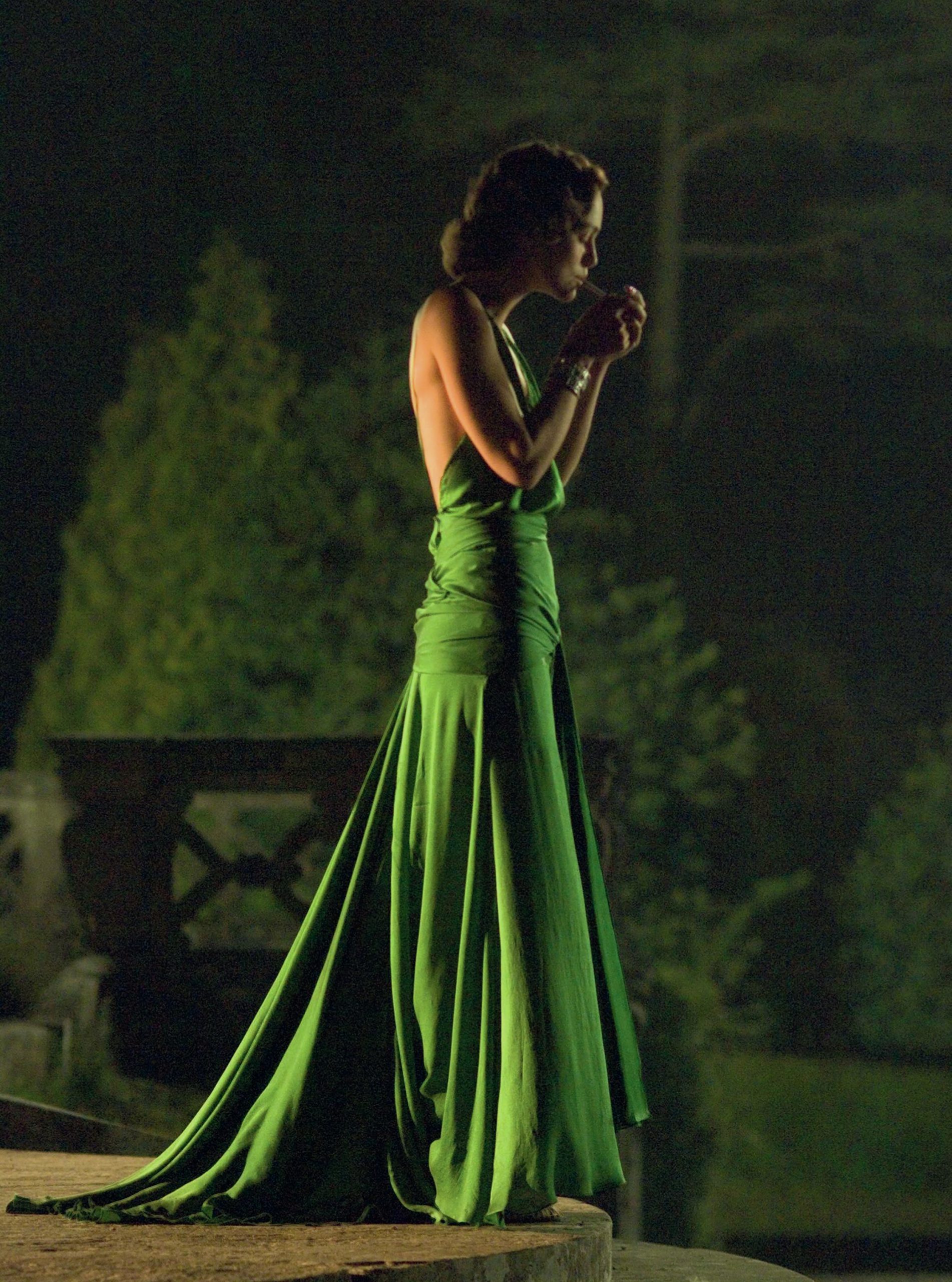
Although at the metafictional level, Atonement can be daunting, in many respects it seems designed to please those readers who shy away from ‘the bleakest realism’. Its country house aesthetics (the flowery landscapes, the rare artefacts, the gorgeous clothes) are familiar, even slightly too familiar. The bulk of the novel is in many ways neither more nor less than a very superior romantic saga. Perhaps this is the fictional genre in which Briony has made her name.
The country house is also the setting for umpteen whodunnits, though the violent act here is a rape and not a murder. But Atonement distorts the familiar components of the genre. Robbie is not who done it, and Briony’s false solution and the consequent miscarriage of justice become the central crime, rather than the rape of a child.
It is uncomfortable to think of child sexual abuse as a literary commodity, but the Amazon website includes a large category of ‘Best Sellers in Child Abuse’ and it has become a fruitful trope for many upmarket novelists, such as Toni Morrison, Margaret Atwood, Jeanette Winterson, Edward St Aubyn and Sarah Waters. Most tend to keep the secret suppressed, until the bombshell revelation explodes what has been hidden. But here too McEwan’s treatment goes against the grain. In the 1930s and 40s a child’s testimony was likely to have been discredited or swept under the carpet. Atonement seems to imply that the pendulum may have swung too wide, and that a child witness may be unreliable. Appalling cases emerged in the 1990s of children being coerced into giving accounts of abuse that were totally untrue. Lola was raped (she is too young to consent) but she is also coerced into a false identification.

Part 1’s oddities
There are many aspects of the end of Part 1 that draw attention to the oddities of this crucial episode. Why do the other points of view disappear, leaving Briony as the exclusive witness? Why does Robbie not put up more of a defence? Why does Cecilia have so little to say? It may be that McEwan simply wanted to avoid the familiar rigmaroles of the ‘police procedural’, though he is happy to make use of other well-worn tropes, such as the comic village bobby, and the ‘leering’ (Ch. 8) Danny Hardman who is all too readily suspected but never fully represented (Ch. 13). Some of the most important elements of the story are flagrantly unoriginal: the misplaced letter echoes Tess of the d’Urbervilles, while Robbie follows a long line of poor relations and upstart lovers from Austen’s Mansfield Park to Lawrence’s Lady Chatterley’s Lover. These are the building blocks of fiction, some worn out, some with life still in them, others — like the abuse of children — brand new but in danger of becoming a fictional stock-in-trade.
Chaos and planning
Like many fictional sleuths, Briony at first both gets things wrong and forces a false coherence on events. Parts 2 and 3 of Atonement re-enact a similar contrast.
Part 2’s shambles
The retreat to Dunkirk is an instance of a misleading story being made out of getting things wrong, on an epic scale. All the familiar elements of writing about war are here in Briony’s account: the individual under fire, comradeship and muddle, peril and gallows humour, moments of respite. But historically the retreat to Dunkirk is a notorious example of how an alternative story can be forced upon the truth.
Part 2 ends on the beach, before the remains of the British army were evacuated by the navy and the famous flotilla of ‘little ships’ — barges, fishing boats, pleasure craft. This aspect of what was essentially a near catastrophic defeat is what has allowed the episode to be represented in the national myth as a triumph of endurance and resourcefulness when it was more like a disorganised shambles.
Part 3’s organisation
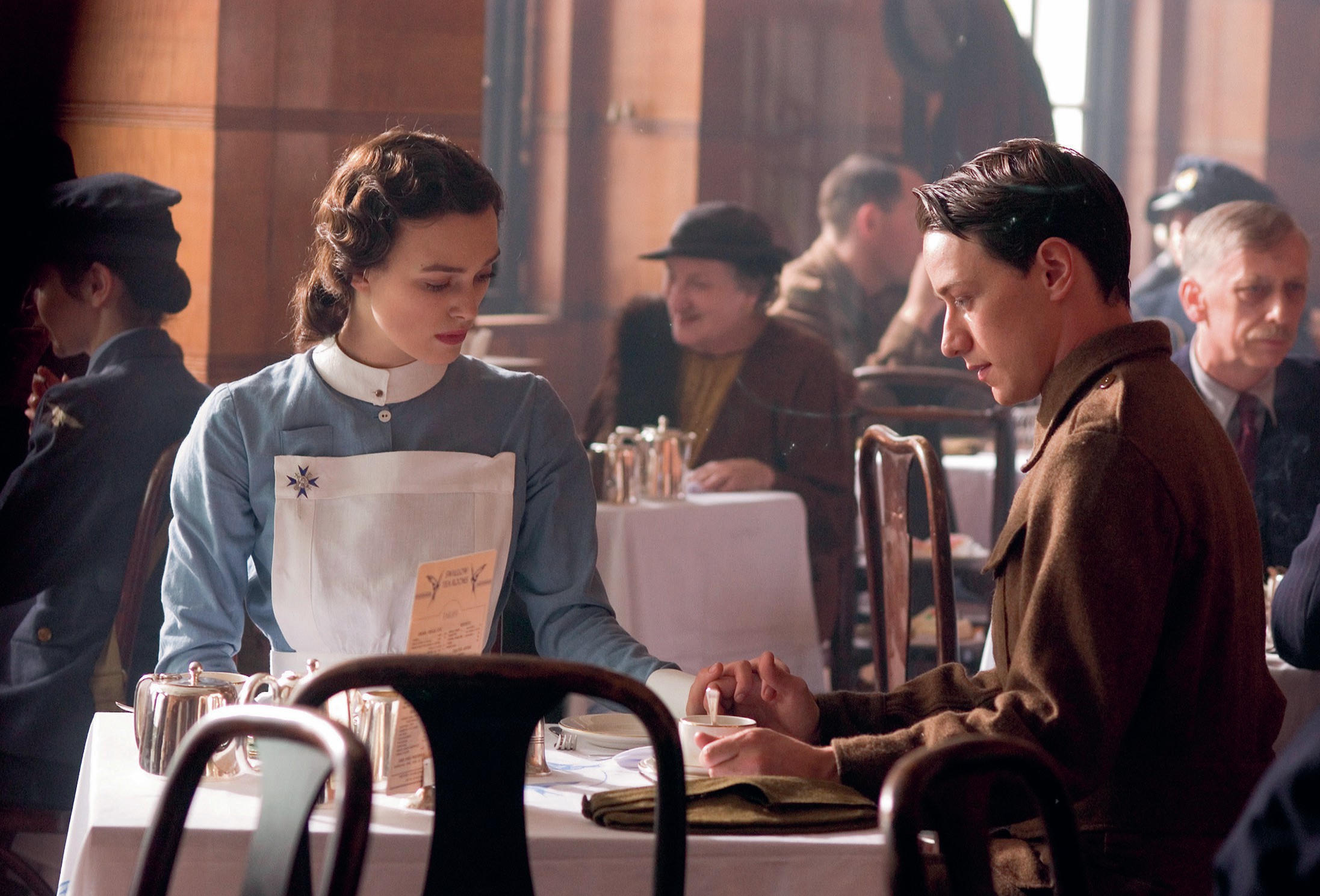
In contrast, the preparations to receive casualties in London hospitals that Briony records in Part 3 are a masterpiece of organisation, though there is an unmistakeable satiric tinge to many of the details:
A broom improperly stowed, a blanket folded with its label facing up, a starched collar in infinitesimal disarray, the bed castors not lined up and pointing inwards…all silently noted, until…the wrath would come down…
But if the same meticulous planning had been in place for the retreat, countless lives might have been saved. Dealing with its casualties is the only part of the whole sorry Dunkirk episode that is seen to work.
It may be that McEwan has been inadequately generous about his indebtedness to Lucilla Andrews’ No Time for Romance (1977) — her impressive memoir about nursing in wartime. In the short final section of Atonement, Briony readily acknowledges her reliance on the witness testimony and expertise of her sources. Andrews was a successful writer of ‘hospital romances’ —a genre that literary buffs generally scoff at — and there is little trace of satire in her account of the rigorous discipline that prepared for the aftermath of the retreat.
Eventuality planning
In Atonement this foresight is partly the doing of Jack Tallis (Briony’s father), who works behind the scenes in the obscure Department of ‘Eventuality Planning’. He also works behind the scenes in McEwan’s elusive pursuit of how we make stories. The name of his department could also be a description of the novelist’s trade. A nice additional touch is that when he is at home (Ch. 10) he is mostly to be found in the library, surrounded by books.
In Chapter 12 we learn that it is his business to calculate what might happen in the course of the imminent war, based upon what is already known. It is a technique still widely used by institutions to provide themselves with a degree of futureproofing by trying to imagine what might happen — including the very worst-case scenarios — and how they might cope. There are obvious parallels with the building of fiction.
Expectations
Despite his wife’s objections, Jack has also plotted a future for Robbie. Not only does his wife disapprove, his benevolent plans come to grief when Briony misreads what she sees. Experience suggests that whatever we might plan for, what life delivers is arbitrary. The strictures of literary art demand something better. We may not insist on wedding bells, we may not even demand redemption, but we do expect some form of closure.
Miss Prism in Act 2 of The Importance of Being Earnest tells her pupil that ‘The good end happily, and the bad unhappily. That is what Fiction means.’ Even when the good end unhappily (Tess of the d’Urbervilles or The Ghost Road) the prior narrative has been constructed to make such deaths fitting. So maybe Briony is wrong to claim that only the ‘bleakest realism’ could cope with Robbie’s and Cecilia’s deaths. Maybe what she (and her own creator, Ian McEwan) are indulging is their impulse to keep alive the creation they have been at one with. Many authors admit that they cannot bear to kill off their favourites.
Reliability
The surface layer of Atonement is a dense but not a difficult read. The rethinking (which the postscript expects from us) is a maze, a rabbit warren — even a minefield — that no one should be ashamed to find highly confusing.
Being wrong does not in itself make Briony an unreliable narrator. She could be said to reliably recount her wrongness. But a degree of unreliability is essential to any mystery story. Her discovery that she was wrong is one of Atonement’s oddest omissions. It is the hinge on which the narrative turns and yet it is almost invisible. We may hardly notice it because from the beginning we have been presented with other points of view. We know she was wrong — or do we?
Two things change Briony’s mind: her father’s letter telling her that Lola and Paul are to be married, and the letter from ‘CC’ rejecting the first draft of her novel —a made-up letter from the real Cyril Connolly, a perceptive and respected literary critic of the time. But why should either event persuade her? Perhaps the rejection letter is an artful way of suggesting that Briony’s eyes are opened to the possibility of an alternative narrative, but if it nudges her conscience, she gives no account of the process. Paul is an unpleasant character —a profiteer — but marrying Lola in no way proves that he is her rapist. She might have married him for his money. Briony’s change of heart is even more of a hunch than her original misinterpretation of events. It should be shocking that Cecilia switches blame from Hardman to Paul so readily, but the shift passes without comment — and besides, she is dead.
Culpability
Many accounts of Atonement refer to the original misinterpretation as Briony’s ‘lie’, but that is no more appropriate than her own term — ’crime’. The text insists on her sincerity. But does sincerity rule out culpability? Is the sincerity of someone’s belief more valid than the accuracy of their judgement? The questions that Atonement raises are of vital importance as ‘spin’ and ‘fake news’ dominate the headlines.
RESOURCES
Reynolds, D. (2019) Island Stories: Britain and its History in the Age of Brexit, William Collins.
Robinson, R. (2010) ‘The Modernism of Ian McEwan’s Atonement’, in Modern Fiction Studies, John Hopkins University Press, Vol. 56, No. 3: https://muse.jhu.edu/article/392853
Wood, J. (2018) How Fiction Works, Picador.