
Deprecated: mb_convert_encoding(): Handling HTML entities via mbstring is deprecated; use htmlspecialchars, htmlentities, or mb_encode_numericentity/mb_decode_numericentity instead in /mnt/storage/stage/builds/pugpig-site-subs-server/latest-1.2.0-1753096337.768322/pugpig-site-subs/content.php on line 225
Why did Jesus have to die?
Any student of the New Testament must be able to answer this question, and there are several ways of approaching it. Kay Plowman examines some of the key issues
AQA: 7062B Christianity OCR: H573/03 Developments in Christian thought Edexcel: 9RS0/03 New Testament Studies WJEC/Eduqas: A120PA A Study of Religion
As C. S. Lewis observed:
‘We are told that Christ was killed for us, that his death has washed out our sins and that by dying he disabled death itself. That is the formula. That is Christianity.’
The death of Jesus has caused problems ’of interpretation for both believers and scholars. In essence, two key issues need to be resolved: theologically, how Jesus’ death is to be understood in terms of what happens spiritually on the cross; and historically, the role played by the political and religious authorities and the situation at the time of Jesus’ ministry. These issues are made particularly challenging because theologically Jesus’ death is depicted in the Gospels as a divine necessity and the political circumstances of it could therefore be interpreted as merely part of a divine plan over which the protagonists have no control. Is this a fair interpretation of events?
Tyler and Reid (2008) note that the historical/ political and the religious/theological reasons for Jesus’ death are ‘inevitably interlinked, as the Gospel writers demonstrate how the divine plans and purposes are revealed in the working out of the political manoeuvrings in the last weeks of Jesus’ life’. This is certainly true, as we will examine later, but for most Christians who know only the basic outlines that the Gospels afford us of the historical circumstances of the life and death of Jesus, it is understanding the theology of Jesus’ death which comes before a closer examination of the history.
Cosmic consequences
Tyler and Reid write that ‘the death of Jesus has great religious and theological significance that believers claim has consequences for the whole of creation’. Why ‘the whole of creation’? For Christians, the reason that Jesus had to die goes back to the events of the Fall in the Garden of Eden. Humanity disobeyed God and as a consequence the whole created order fell from perfection, as an epistemic distance opened up between God and humanity and the natural order was spoiled. Nothing humans could do in the years of salvation history that follow could close that gap — not the law, the prophets, exile or the destruction of Solomon’s temple. But God’s best is to come. Augustine claimed that the Fall was a ‘felix culpa’ (a happy fault), because it allowed for the sending of Jesus to redeem humanity back to God. Paul writes in Romans 3:23–24: ‘For all have sinned and fall short of the glory of God, and all are justified freely by his grace through the redemption that came by Christ Jesus.’
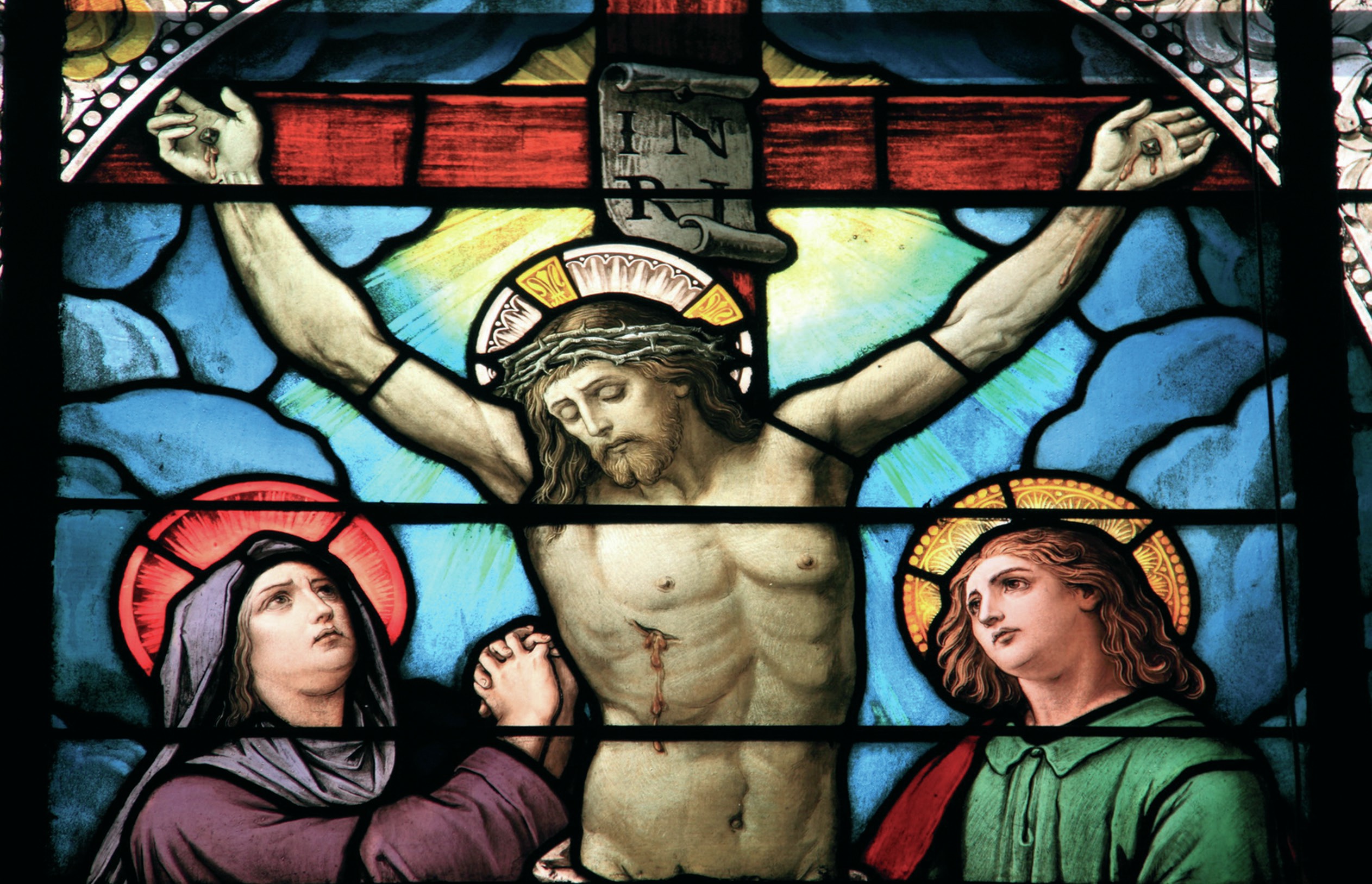
This is justification by grace — God brings humanity back to himself through an act of mercy, love and undeserved favour by becoming incarnate in his son, Jesus Christ. Jesus’ death on the cross corrects the act of disobedience and it closes the gap between God and humanity, restoring the perfection that God originally intended but which was lost through Adam’s disobedience: ‘For just as through the disobedience of the one man the many were made sinners, so also through the obedience of the one man the many will be made righteous’ (Romans 5:19).
Symbols and models
C. S. Lewis writes in Mere Christianity (2016) that ‘This is Christianity. Any theories we build up as to how Christ’s death did all this are quite secondary; mere plans or diagrams to be left alone if they do not help us.’ However, it is clear that theories which attempt to explain what was actually accomplished by Jesus’ death are a vital part of Christian thinking. Tyler and Reid observe that ‘Much of the language is symbolic’ and this is not surprising. The only way that it can be described and explained is through symbolic language, because it is a metaphysical truth. Theologians from Paul onwards have depended on symbolism to express what the death of Jesus means.
Furthermore, the biblical writers were compelled to find meaningful ways of understanding Jesus’ death because crucifixion was a barbaric and scandalous punishment, reserved for criminals against the Roman regime.
Crucifixion was associated in the Jewish mind with the cursed man hung on a tree — ‘If a man is being hung on a tree, make sure that he is buried the same day because he is under the curse of God’ (Deut. 21:23) — giving another reason for the biblical writers to find ways to make Jesus’ death comprehensible. As Morna Hooker (2004) explains: ‘The first task of the early Christian preachers was to deal with the problem of Christ’s death — to explain how someone executed as a criminal had been vindicated by God.’
Defeat of evil
The image of Jesus’ death as a defeat of evil is a simple symbol that can be traced throughout the Gospel accounts of Jesus’ ministry. His death is the culmination of a ministry that has been characterised by a spiritual battle against the forces of evil when Jesus casts out demons, raises the dead and heals the sick. On the cross Jesus takes control over evil, sin and death, defeating their power forever. Despite the horror of Jesus’ crucifixion, it is a moment of glory, a triumphant victory over evil and sin, a moment when in Luke’s Gospel he continues to offer forgiveness and reconciliation to his executioners and to one of the criminals crucified with him (Luke 23:34, 45). Jesus’ death was a defeat of the power of Satan: ‘He disarmed the rulers and authorities and put them to open shame, by triumphing over them in him’ (Colossians 2:15). This triumph over evil undoes the damage done in the Garden of Eden and takes back control from Satan.

An example
Jesus is also depicted as an example of humility and love as he hangs on the cross. The love expressed on the cross is that love to which all disciples are called to aspire. Although he could claim divine authority and power, he identified with sinful humanity in order to set the disciples an example to follow: ‘And being found in human form, he humbled himself and became obedient to the point of death — even death on a cross’ (Philippians 2:7).
This is what disciples are called to do — to abandon earthly ties to possessions, human relationships and security, and even to death, if that is what is required of them: ‘Whoever comes to me and does not hate father and mother, wife and children, brothers and sisters, yes, and even life itself, cannot be my disciple. Whoever does not take up his cross and follow me cannot be my disciple’ (Luke 14:26–27). Jesus can only make this demand of disciples if he has set the same example of sacrifice and commitment, and the generous, sacrificial and courageous lives of hundreds of Christians over the centuries that followed are testimony to the power of the example of Jesus’ death.
Sacrifice
However, the most powerful symbol for Jesus’ death and that most deeply rooted in the culture of Judaism is sacrifice. Sacrifice for the Jews of the early first century CE was the lifeblood of the Jerusalem temple and of what it meant to be able to stand sinless before God. To make a sacrifice in the temple was the ambition of every Jew of every economic class. The whole temple system supported the business of sacrifice. Thousands of hereditary priests kept the temple going 24 hours a day in scenes of carnage and excess as millions of animals were destroyed to bring atonement between God and sinful humanity. Only the high priest could enter the holy of holies, and on the day of Yom Kippur all the sins of Israel were wiped clean as the high priest entered the presence of God to atone for the whole nation. If he himself were to be found unworthy, the rope tied around his waist served to pull him out without anyone else entering the sanctuary and defiling it.
The sacrifice of Jesus on the cross for the sins of the whole of humanity rests on this model, but it surpasses it in what it accomplishes. The New Testament writers almost certainly understood Jesus to be the new Passover Lamb, whose blood seals the new covenant between God and humanity, just as the blood of the lamb which marked the doors of the Israelites saved them from death. But Jesus is more than this. He is not just the sacrifice but the high priest who offers it, and there is no likelihood that he will be found unworthy. Never again will a living sacrifice be necessary, and, ironically perhaps, the destruction of the temple in 70 CE brought to an end the sacrificial and priestly system that had extravagantly existed on the riches of the temple for so many years. The purpose and redemption of humanity back to God is paid in blood as it had been for centuries of temple sacrifice but this time it is a perfect sacrifice made for one and all.
‘For Christ did not enter a sanctuary made with human hands… Nor did he enter heaven to offer himself again and again, … But he has appeared once for all at the culmination of the ages to do away with sin by the sacrifice of himself.’
Hebrews 9:24– 26
THE MOST POWERFUL SYMBOL FOR JESUS’ DEATH AND THAT MOST DEEPLY ROOTED IN THE CULTURE OF JUDAISM IS SACRIFICE
Why believe?
If it is true that humanity’s relationship with God is restored by Jesus’ death, then the New Testament makes the implications clear: there is no need for further sacrifices and that which has been accomplished has universal power. Gentiles, and those on the fringes of society, are brought to relationship with God, and all sins will be forgiven for time and eternity. But even if Christianity teaches that his death has implications for everyone, where do nonbelievers stand? After all, it is hardly unusual to reject belief in the saving power of Jesus’ death as vacuous nonsense or because it runs counter to other long-held cultural or religious beliefs. There is no proof for the theological nature of what his death accomplished, nor, indeed, for the Resurrection. What proof could possibly be decisive?
So why do Christians accept it? For some, the idea that Jesus died for our sins has become a cultural meme, a well-loved paradigm that they have grown up accepting with little thought. However, there are many cultural memes that people grow up accepting as truth, but this does not mean they are correct — slavery, racism, sexism and homophobia all amount to memes which societies have promoted unthinkingly over the centuries, so this is by no means a certain way of knowing the truth. For some, belief in the power of Jesus’ death and the meaning it has to their lives may come about by way of a revelation or epiphany. These experiences are personally significant and deeply meaningful to those who encounter them, and the individual may not feel the need to persuade others.
For Blaise Pascal, belief was a gamble of faith; for Paul it was the means by which humanity is justified and made right again with God where the law has failed. But because understanding what Jesus’ death was for involves grasping something metaphysical, the symbols and models have long played a vital role in clarifying this divine mystery. Some of the models, such as blood sacrifice, might have little to offer today in terms of relevant insight into Jesus’ death, but perhaps we can culturally understand the idea of an innocent party taking the punishment for the sins of another, guilty person.
Paying the debt
C. S. Lewis observed:
‘What possible point could there be in punishing an innocent person instead [of guilty humanity]? On the other hand, if you think of a debt there is plenty of point in a person who has some assets paying it on behalf of someone who has not.’
People are seen as being so weighed do by the burden of sin that they cannot be freed from it by their own actions, and so Jesus has to die in place of humanity. Because humanity had rebelled against God the only way they could be forgiven was through perfect repentance — what C. S. Lewis called ‘undergoing a kind of death’. Only a perfect person could offer that kind of repentance, so ironically it has to be offered by the one person who does not need to repent: ‘But we need God’s help in order to do something which God, in his own nature, never does at all — to surrender, to suffer, to submit, to die.’ By becoming a man in his son Jesus Christ (the Incarnation), God does what he could not otherwise do, and in that sense he pays human debt and suffers for humans what he otherwise need not have suffered himself.
But what of the historical viewpoint? Is it in any way more satisfactory? The theological explanation demands faith to grasp its complexities, and for Richard Dawkins it is simply absurd to argue that Paul was responsible for the ‘sadomasochistic’ doctrine of the Atonement by which Jesus died ‘a horrible death for a symbolic sin committed by non-existent individuals’. We would expect Dawkins to be extreme in his approach, but nevertheless the contribution of the political and historical situation alone cannot explain the death of Jesus.
Historical implications
At the time of Jesus, Israel was under Roman occupation. Although politically without identity, and with the Herods as only puppet kings with no genuine power, Jews had been allowed to keep their religious identity and the temple, and were exempted from serving in the Roman army. In return the Jews were subject to taxation and they lost key powers such as the power to pass the death sentence (the ius gladii) while the religious officials in charge of the temple — the chief priests and the Sanhedrin — became the ‘political eyes and ears of Rome’ (Rivkin 1984). Consequently, the Jewish officials were alert to anything that could jeopardise their fragile relations with Rome and their remaining religious authority.
In a politically turbulent time and region, the Jewish authorities were committed to putting down potential rebellion, identifying popular and possibly dangerous charismatics who drew crowds, and making a show of their reluctant but necessary obedience to Rome.
Not all charismatics were politically motivated, but the Jewish authorities were still challenged by them.
‘It was not easy for the authorities to decide what to do about charismatic leaders who preached no violence, but even the most nonpolitical of charismatics took his life in his hands when he preached the good news of God’s coming Kingdom.’
Rivkin 1984
Like John the Baptist before him, Jesus quickly emerged as a popular charismatic who drew crowds and so presented a real threat to both the Pharisees and the Sanhedrin.
Even though Jesus was not preaching violence, the chief priests were aware that for the Romans there was no distinction between revolutionaries and religious charismatics: ‘The charismatics were politically dangerous because their teachings and eloquence attracted crowds — and crowds were unpredictable and therefore dangerous’ (Rivkin 1984). Fear of Roman reprisal was driven sky high, with fear of losing the temple at the top of the agenda, and Jesus’ cleansing of the temple is almost certainly the catalyst for his arrest. Reza Aslan (2013) observes:
‘So revelatory is this single moment in Jesus’ brief life that it alone can be used to clarify his mission, his theology, his politics, his relationship to the Jewish authorities, his relationship to Judaism in general and his attitude towards the Roman occupation.’
An expedient death
It is almost without question, then, that Jesus died as a matter of political and religious expediency. When he stands before Pilate, the title ‘King of the Jews’ is indicative of the focus of the trial since Jesus never used it himself, but it is the title that would be guaranteed to indicate a potential, if not actual, insurgent to Pilate.
As Rivkin notes, when Pilate asks ‘Are you the King of the Jews?’ he would not be deflected by ‘such Delphic answers [from Jesus] as “You have said so”’. Once Jesus had been identified as a popular charismatic, there was nowhere else for the process to conclude but on the cross.
To reduce Jesus’ death to political expediency, however, is not acceptable to the majority of mainstream Christians, since the implications offer a serious threat to their faith. But the theological interpretation that has survived for centuries is not undermined by the political situation of the time. Rather, it served as an essential backdrop so the divine plan could be fulfilled. Jesus had to be perceived as (and very likely was) a political rebel so that he could die for the salvation of humanity, so the two issues are inextricably linked and there is no need to surrender one in favour of the other.
The Resurrection
The New Testament writers had one more ball in their court: the Resurrection. The Resurrection was crucial because it revealed significant spiritual truths which only the victory of the empty tomb could do. The scandal of the cross was redeemed, and whatever happened in the hearts and minds of those who believed that they had somehow experienced the risen Jesus, it was the sign that marked the completion of God’s saving work. Morna Hooker (1994) writes:
‘Our writers are unanimous in insisting that Jesus died in accordance with the will of God. They might have explained it otherwise… but no! They believed that God was in control of the world, and that what happens there must be seen as part of the divine purpose.’
References
Aslan, R. (2013) Zealot, Westbourne Press.
Hooker, M. (1994) Not Ashamed of the Gospel, Wipf and Stock.
Lewis, C. S. (2016) Mere Christianity, William Collins.
Rivkin, E. (1984) What Crucified Jesus?, SCM.
Tyler, S. and Reid, G. (2008) Advanced Religious Studies, Philip Allan Updates.