
Deprecated: mb_convert_encoding(): Handling HTML entities via mbstring is deprecated; use htmlspecialchars, htmlentities, or mb_encode_numericentity/mb_decode_numericentity instead in /mnt/storage/stage/builds/pugpig-site-subs-server/latest-1.2.0-1753096337.768322/pugpig-site-subs/content.php on line 225
stretch and challenge
The self in the modern mind
Peter Manning explores the complex and important issues of free will, determinism and the self
AQA: 7062B Christianity
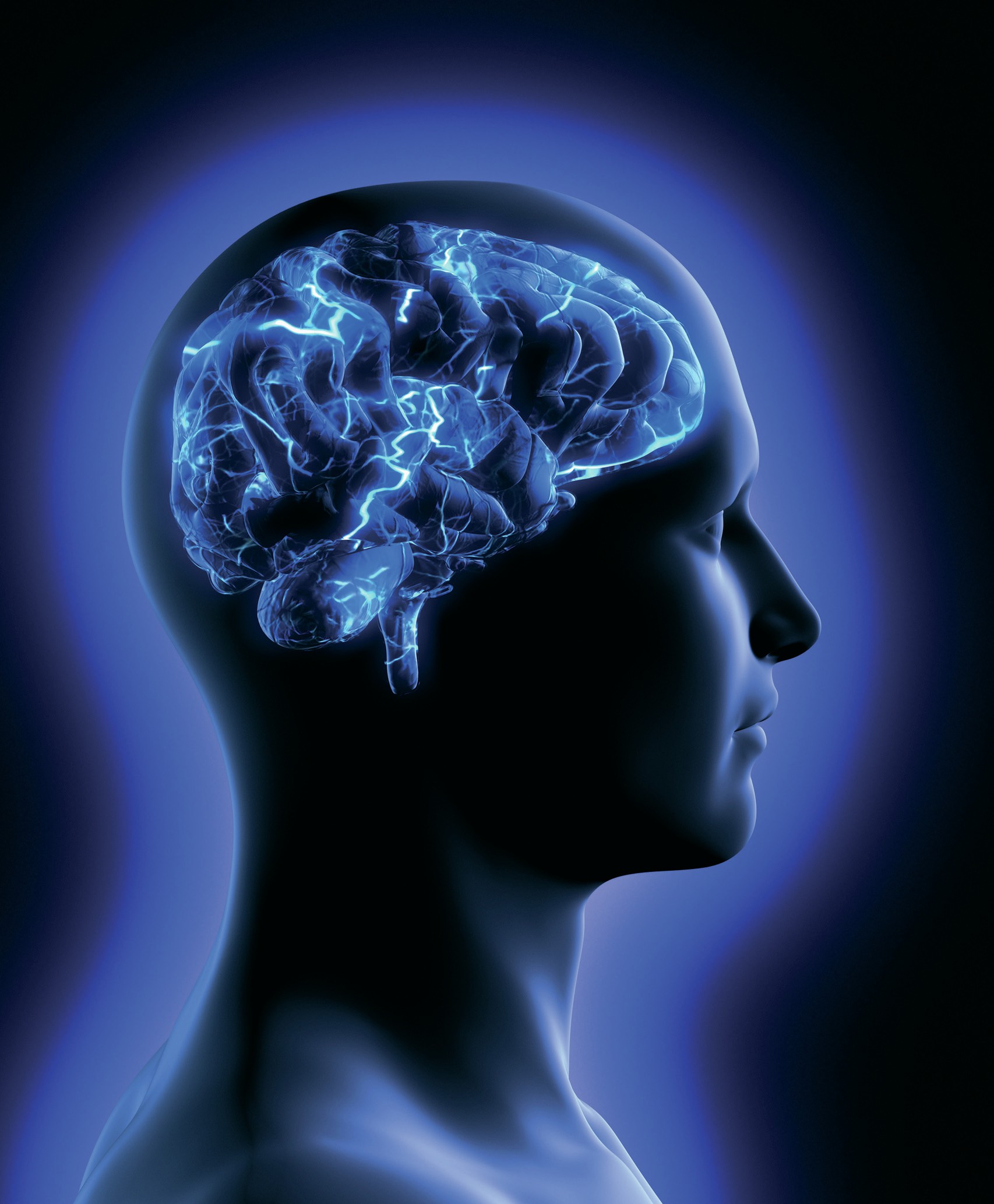
Every day we wake up. At first there is nothing, and then we become aware of the world. From that moment we seem to be constantly making decisions about what to do. What to wear? What to eat? What to do with the day? The experience of making choices implies that there is a self with a memory of the past, awareness of the present and creative imagination about the anticipated future. Choice implies the motivation, or will, to do one thing rather than another. Choice needs a home and we find it in the mind. But what is this mind? We can slice and dice the body and brain all we like but where is the mind by which we know things? Without the mind the very idea of choice seems problematic and without that how can we exercise our free will? If there is no such thing as the mind or free will then what becomes of knowledge?
Plato and the non-unitary self
Our understanding of the world and human nature has in large part been shaped by views expressed in the ancient philosophy of the Greeks. With Pythagoras we see a commitment to our physical world existing due to a separate reality that keeps it in existence which has much to do with mathematics. From Zeno we get a commitment to a world of unchanging forms that can be understood by reason. From Heraclitus we get a focus on a world of perceptual experience and its constant change.
Working within this philosophical context, Plato argues that the changing physical world exists apart from the world of eternal and unchanging ideal forms that are revealed to the mind. The ideal forms serve as the template to which the existence of forms in the physical world are related. Ideal forms are imperfectly expressed in this world in notions of beauty, justice, mathematical concepts and everyday objects. There is a commitment to a dualism between mind, the world of ideas and their ideals and that of the physical world. In relation to the physical world, Plato thought that the universal and eternal truths of all aspects of life, including ethics, can only be truly grasped through mathematics.
Whether or not Plato literally believed in the immortality of the soul and reincarnation is a point of scholarly contention. That problem aside, his theory of mind is subtle and non-unitary. The mind, for Plato, is divided into three different aspects that influence each other:
■ First, we have our base instincts and desires which are focused on keeping our bodies alive and well.
■ Second, there is reason, which sets limits on our desires, controls our actions and through which knowledge is gained.
■ Finally, the part of the self that is termed ‘spirit’ might best be described as the motivation and commitment to a purposeful action such as fighting for justice or your country, or pursuing actions that protect the wellbeing of the self.
A commitment to dualism between mind and the physical world was continued in the thinking of Descartes.
Descartes’ mind–body dualism
Descartes developed an interactionist view of the self, albeit with a different focus from that of Plato. For Descartes, the body is made up of physical substance, which relates to the mind and its mental events, which is made up of non-physical substance. This is known as substance dualism in the philosophy of the mind– body problem. Both mind and body can cause events in the other. Physical illness can make us depressed; our mind can will us to go on holiday. Our physical body acts as a sensory extension of our mind into the physical world. Physical laws operate on the body in a mechanical way in all creatures but humanity also has a mind. We have a mind that in some unexplained way can causally will things to happen in the physical world through our bodies. We are not causally determined automatons like other creatures. As free beings we have our own individual autonomous self. Descartes’ view of free will can be understood as a form of libertarianism. Libertarianism is a belief in the mind as enabling us to act in the world as free agents without physical causality or external constraint determining our actions.
We might doubt the existence of mind, but if we do, everything we know and existence itself would have to be doubted. But this, Descartes reasons in his Discourse on Method, would be absurd. In his famous phrase ‘I think therefore I am’, Descartes finds the foundations of knowledge in our personal experience of the conscious reasoning self. It is through this self that we are able to discover certainty in knowledge by means of geometry and further developments in mathematics.
Descartes works within the legacy of the Pythagorean tradition and its exaltation of mathematics that also influenced Plato. As there are universal truths to be known, there must be an immaterial mind to contemplate such knowledge. In the foundations of knowledge, we secure the ground upon which we establish the existence of a mind with free will. The mind and mathematics stand apart from the physical world even as they act within it. Descartes, like Plato, is arguing for a dualistic view of the self and knowledge in relation to the world.
Newtonian physics
Isaac Newton (1642–1727) was heavily influenced by Descartes and took his focus on mathematics to new heights with the discovery of general scientific laws. Both believed in an eternal God of creation to underwrite the existence of mind and mathematics, rather than Plato’s idea of Ideal Forms. Newton, through his wonderful discoveries, showed that the laws of physics affirmed a world of cause and effect in which the universe looked like a mechanistic machine put in place by God. Just like a vast clock, if the mechanisms of operation could be grasped then knowledge would advance.
However, scientific knowledge about the physical world gradually became exalted above that of beliefs in the immaterial world of the soul and its mind in a way not expressed by Descartes or Newton. Leibniz’s expression of deism, in which God as creator made a self-sustaining world with perpetual motion built into it, opened the door to the question of why belief in God or anything beyond the physical world was needed.
In contrast to physics and its successful application of knowledge through technological developments, the understanding of soul and mind looked as hopelessly speculative as trying to understand God. Science seems incapable of grasping the mental world within its experimental and mathematical net, however much first-person introspection may say it exists. Even if we could articulate some kind of coherent idea of mental conscious substances, the problem remains about how such non-physical substances are to be related to physical substances. Once we commit to mind–body dualism it seems that our ability to understand the self, consciousness and free will becomes more problematic and mysterious, rather than easier.
Hard determinism and reductive materialism
In light of the intellectual failure of dualism, the mind–body problem is dissolved into non-existence by a view of free will called hard determinism. Nothing exists beyond the physical world, and all explanations for human behaviour must be resolved within the context of physical cause and effect relationships. Free will does not exist. Science demands that knowledge must be observable, testable (at least in theory) and submit to laws of cause and effect. Materialism is embraced for the physical world and the human self in a way that echoes the mechanistic notions in physics from Newton’s day. Hard determinism has found its strongest expressions within behavioural and biological reductionism.

The behaviourist perspective associated with B. F. Skinner developed as an influential school of thought during the twentieth century. All animals, including humans, are conditioned (programmed) by their environment. This can be through classical conditioning whereby behaviour is prompted by associating an experience with something present in the environment. Behavioural outcomes can also be caused by operant conditioning, learning by punishment and reward. In either case, behaviourism ignores the mind, denies free will, and focuses on factors present in the environment and how they alter behaviours. Conscious experience and first-person reports are ignored as being subjective. Which is to say that our inability to observe mental cause and effect relationships in a way that enables mathematical modelling means that any mental experiences must have physical causes outside of the experience of mind. Observable behaviour, and not the introspection of first-person experience, is therefore the proper object of study for psychology.
Biologically-based hard determinism has best been summed up by Francis Crick as follows: ‘You, your joys and sorrows, your memories and your ambitions, your sense of personal identity and your free-will, are in fact no more than the behaviour of a vast assembly of nerve-cells and their attendant molecules’ (Crick 1994). Neuroscientist Susan Greenfield declares that ‘We are but sludgy brains’ (Greenfield 2001). Colin Blakemore states that:
‘The human brain is a machine which alone accounts for all our actions, our most private thoughts, our beliefs… . All our actions are products of the activity of our brains. It makes no sense (in scientific terms) to distinguish sharply between acts that result from conscious attention and those that result from our reflexes or damage to the brain.’
Blakemore 1994
What this collection of quotes from eminent ’ academics illustrates is that there exists in our cultural life an influential view of humanity as nothing but the product of physical levers pulling our strings in machinelike ways.
Neurobiology
Kant argued that for us to be able to experience the world there has got to be a fundamental unity within the experiencing subject, the self, to allow the world to be perceived. The phrase Kant uses for this is the ‘transcendental unity of apperception’. However, in clinical neuropsychology many studies of people suffering a wide range of abnormalities in their conscious experience of the world seem to undermine the idea that there is a mental self to which experience may be presented.
Sufferers of Cotard’s syndrome cannot relate to the existence of a specific part of their own body any more. In extreme cases patients can tell you their life story but don’t feel alive and believe they are dead. In another condition, called transient epileptic amnesia, patients lose all sense of personal identity for a short period of time (from minutes to half an hour) even though they can often still interact with the environment. Alien hand syndrome involves hand movements by one side of the body without the person being aware of or in control of them. This condition is reported in a number of patients who have had the neural network connecting the right and left brain hemispheres cut in order to control severe epilepsy. People who are diagnosed with dissociative identity disorder seem to have multiple selves with different likes, dislikes and memories. In each of these conditions we witness either an absent or fragmented self in which it is not clear where or what the person’s ‘true self’ is. The self seems to depend on many neurological elements, in which case does talk of a ‘self’ make any sense, for it seems without definitive location?
The illusory self
The mind, T. H. Huxley argued in the 1880s, is a by-product of the physical world and its chains of cause and effect relationships. Mental states, in as much as they may exist, have no causal relevance to the brain or our actions. Such a view of the mind–body relationship is known as epiphenomenalism. The philosopher Westerhoff stated in an article in New Scientist (February 2013) that ‘…in a very fundamental way we are not real. Instead, our self is comparable to an illusion — but without anybody there that experiences the illusion.’ Such a conclusion has echoes of Heraclitus’ argument in ancient Greece that the world of perception was subject to constant change. But in a world of flux there is no stable point upon which to anchor the self or knowledge. This opens the way for postmodern philosophy and its fragmented self.
The fragmented self in language
Jacques Lacan (1901–81) was a French psychoanalyst and philosopher of the self who explored the idea of the hiddenness of the self from itself. The language others use about us creates a complex, varied, social identity which is the ‘I’ in the world beyond the embodied self. It is within this context that the ‘ego’ (conscious self) conceives of itself and responds to the world. Both this hearing about the self and its response is done through language that has its own fluidity. Lacan was influenced by Ferdinand de Saussure (1857–1913). Saussure argued that words are signifiers used to talk about aspects of reality, the signified. But language use is a creative and fluid enterprise in which words and their meaning are always open to multiple uses and interpretations.
The French postmodern philosopher Jacques Derrida (1930–2004) argued that any understanding is open to the challenge of différence. The verb différer can mean both ‘to defer’ and ‘to differ’. Multiple interpretive possibilities create ambiguity, or shifts in meaning. Meaning is open-ended due to, as Derrida might say, difference deferred. In such a context the certainty of the autonomous self’s existence that Descartes declared with ‘I think therefore I am’ seems lost in a sea of subjectivity and language use. Nothing is fixed or stable. With the loss of the self, to talk of the mind and free will is problematic to say the least.
Michel Foucault (1926–84) saw in western discussions of the self what he termed a ‘discursive practice’ which defined and pursued language in culturally relative ways. He calls the Enlightenment ‘a momentary fold in the fabric of knowledge’ and declares in his book The Order of Things (1966) that ‘As the archaeology of our thought easily shows, man is an invention of recent date. And one perhaps nearing its end…like a face drawn in the sand at the edge of the sea.’ An autobiography of the self was produced by St Augustine (354–430 CE), and Montaigne (1533–92) produced a philosophy meditating on the reflective life of the self. But it was Descartes who moved consciousness as self-awareness to the centre of philosophy of knowledge and what it means to be human. We do not see this focus on the present moment of awareness stressed in the philosophy of Plato and Aristotle. It is within the context of Cartesian philosophy that we generate the problem of free will.
Mind and free will as meaningless
The eliminative materialism of philosopher Paul Churchland goes further than epiphenomenalism, as it denies concepts such as God, mind, person and free will any conceptual coherence in science. Such terms belong to folk psychology and the world of cultural life, and have no scientific foundation. Mind is not reduced to physical causation as in hard determinism but rather excluded from scientific understanding altogether. As postmodern philosophy has already signalled, the mind, self and free will are social constructions without any depth in reality.
Is this then truly the end of the self and free will or can another way forward be found?
References
Blakemore, C. (1994) The Mind Machine, Penguin Books.
Crick, F. (1994) The Astonishing Hypothesis: the Scientific Search for the Soul, Simon & Schuster.
Greenfield, S. (2001) Brain Story: Unlocking Our Inner World of Emotions, Memories, Ideas and Desires, BBC.