
Deprecated: mb_convert_encoding(): Handling HTML entities via mbstring is deprecated; use htmlspecialchars, htmlentities, or mb_encode_numericentity/mb_decode_numericentity instead in /mnt/storage/stage/builds/pugpig-site-subs-server/latest-1.2.0-1753096337.768322/pugpig-site-subs/content.php on line 225
The ethics of abortion
The status of the foetus is perhaps the most important issue when dealing with questions about abortion. Jennifer Goodyear examines this crucial topic
AQA: AS Unit A Religion and Ethics 1 Edexcel: Unit 2: Religious Studies — Investigations OCR: Unit G572: AS Religious Ethics
If abortion is murder it is difficult to see how it could ever be morally defensible, not least because intentional killing is condemned by almost all societies and religions. But how should one go about deciding whether it is murder? One important, perhaps the most important, consideration is whether the foetus is a human person. There are two main possible answers, both entailing a moral view about abortion:
■ The foetus is a person, either from conception or from some point in its development. Those who hold this view are likely to view abortion as murder from the point at which the foetus is considered a person because personhood entails value and rights.
■ The foetus is not a person because personhood begins at birth. Those who subscribe to this view are less likely to view abortion as murder because the foetus does not have the same value and rights as the mother.
However, there is a further possible answer, less often discussed but equally tenable:
■ The foetus is a potential person but, crucially, with the same value and rights as an actual person.
Those who hold this view believe that the foetus is not an actual person but still has the right to life and ending this life deliberately is murder.
Therefore a discussion of whether abortion is murder must take into account both (a) whether the foetus is an actual human person and (b) whether potential life has the same value as actual life.
Is the foetus a human person?
‘The foetus is a human person’
There are several views on when the foetus becomes a human person.
From conception
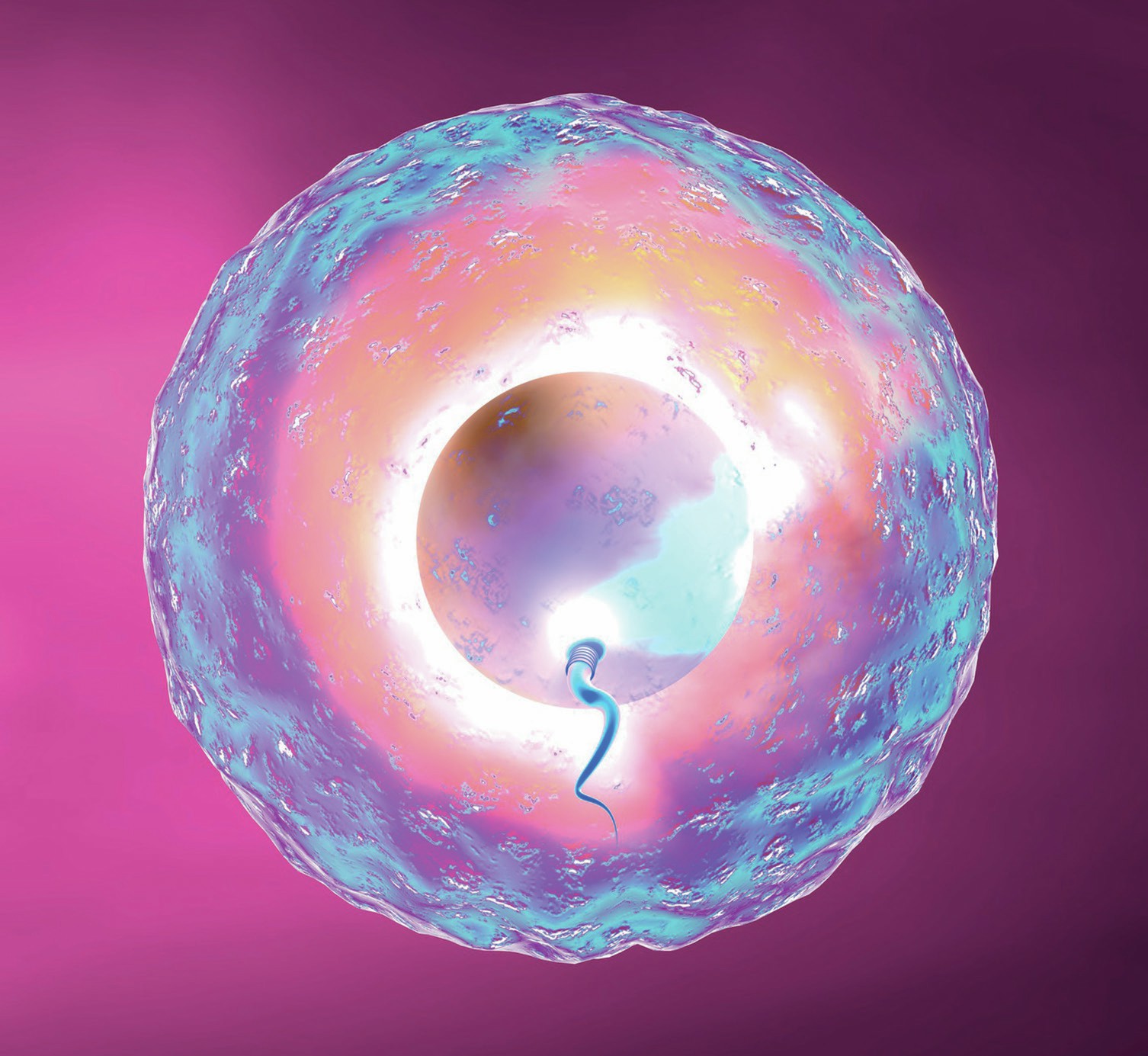
There are both religious and scientific reasons for holding this view. From a religious point of view, if ensoulment begins at conception this must also be when the foetus becomes a human person. This has been the predominant view within the Roman Catholic Church since at least the seventeenth century. From a scientific point of view, personhood may also be regarded as beginning at conception because from the moment of fertilisation all the coded genetic material is present.
As Jonathan Glover observes, one of the main problems with this view is that referring to the fertilised egg as a person overstretches the ordinary definition of what we consider to be personhood. Although there may be continuous development from this point, this is not sufficient to ascribe personhood. As Judith Jarvis Thomson notes, an acorn, given the right conditions, will continuously develop to become an oak tree but this does not make it accurate to refer to the acorn as an oak tree. Additionally, at conception it is unclear how many embryos will form, as monozygotic twins can split at any time during the first 2 weeks after conception.
From the emergence of the primitive streak
The primitive streak is the earliest sign of the embryo. The attractiveness of this position derives from the fact that from this point it is clear how many individuals will emerge and which cells will go on to form the placenta and which the human embryo or embryos. However, the arguments of Glover and Thomson apply to this view as much as to the view that personhood begins at conception.
THERE ARE SEVERAL VIEWS ON WHEN THE FOETUS BECOMES A HUMAN PERSON.
From the emergence of consciousness
A popular view is that human personhood is bound up with consciousness. The argument runs that when the foetus shows signs of consciousness (e.g. movement, response to stimuli), it may be regarded as a person. The two main problems with this view are that it is not clear what counts as consciousness and that newborn babies are less conscious than other animals and yet many would be reluctant to argue that animals are persons in the same sense as humans. Additionally, it could be argued, based on a certain definition of consciousness, that the foetus is more conscious than a newborn baby and yet few would argue that a newborn baby is less of a person than a foetus.
From the point at which it is viable A popular view is that the foetus is a human person from the point at which it becomes viable or, in other words, could potentially survive on its own independently of the mother. This used to be associated with quickening, when the mother first felt the foetus move, but it is now known that feeling movement for the first time and viability are not connected. For many this is a persuasive starting point of personhood because it explains why many people feel there is little difference between a foetus in its late development and a newborn baby: both have reached a developmental point at which they can live without total dependence on the mother.
There are two main objections to viability as the decisive moment in the development of personhood. First, the age at which the foetus becomes viable is constantly reducing parallel with medical advances. This is problematic because personhood then becomes something unstable and constantly shifting. Indeed, the only way to establish whether a foetus was a person would be to deliver the baby and see if it survived. Second, as Glover points out, if physical independence is a necessary condition of personhood, then many children and adults who are dependent on medical treatment or technology would no longer be deemed persons.
SURELY PERSONHOOD SHOULD BE SOMETHING INTRINSIC TO US AND NOT ARBITRARILY DICTATED BY THOSE AROUND US?
‘The foetus is not a human person’
This view is an extension of the belief that one only becomes a person at birth. The fact that we date our age from our birth rather than our conception or due date implies that we recognise that birth is the pivotal moment in becoming a human person. Birth is when we are welcomed into a family and recognised by our community.
However, surely personhood should be something intrinsic to us and not arbitrarily dictated by those around us? Also, the sense of loss experienced by those who miscarry a child implies that personhood begins before birth and that the foetus is an unborn child rather than simply a bundle of cells with the potential to be a person.
Does potential life have the same value as actual life?
‘Potential life has the same value as actual life’
Again, there are several views to consider.
Comparison with newborn babies
The main argument for this position derives from a comparison between foetuses and newborn babies. A newborn baby is completely dependent on its mother for survival and is not yet self-aware, capable of rational thought etc. As such, a newborn could be viewed as a potential person rather than an actual one. However, we do not usually think of newborn babies as having less value than older children or adults. Therefore, this implies that potential human persons do have the same value as actual ones and, by extension, that foetuses have the same value as actual human beings/ persons.
The criticism of this view centres on the fact that some ethicists really do think that newborn babies do not have the same value as older children/adults precisely because they are only potential human beings/people. As a result, these ethicists argue that infanticide is acceptable, or at least less morally reprehensible, than killing older children/adults.
For example, in 2012 a group of medical ethicists linked to the University of Oxford, including Alberto Giubilini and Francesca Minerva, argued that babies are not ‘actual persons’ and do not have a ‘moral right’ to life. The authors concluded that ‘what we call “afterbirth abortion” (killing a newborn) should be permissible in all the cases where abortion is, including cases where the newborn is not disabled’.
When does potential life become actual life?
Another argument for the view that actual life has the same value as potential life stems from the difficulties facing anyone who wants to argue that potential life does not have the same value as actual life. To make their position tenable, it would be necessary to identify when potential life becomes actual, which is extremely difficult, given that the development of the foetus is continuous from the moment of fertilisation and the fact that there is very little difference between full-term foetuses and newborn babies.
However, simplicity is not always desirable. Just because it is difficult to establish when potential life becomes actual, this does not mean it is impossible or that it is acceptable to sidestep the issue in order to simplify the debate. Also, if potential life has the same value as actual life, this throws up other problematic issues such as what, precisely, should count as potential life?
‘Potential life does not have the same value as actual life’
Potential kings are not actual kings
The strongest argument for this view comes from a consideration of the ordinary way in which we tend to differentiate between actual and potential beings. There are many examples of society making a distinction between actual and potential beings and between the value and rights ascribed to each. For example, a 10-yearold is a potential voter and has the potential right to vote, but they don’t get the actual right to vote until they reach their 18th birthday and become eligible to vote. Similarly, an heir to the throne is a potential king, but he doesn’t have the rights of a king until the present monarch dies.
The criticism of this argument centres on the view that the foetus is unique. With the other examples we are not talking about the right to life (arguably we are in the case of the acorn but most people would accept that foetuses are not directly comparable with acorns). Even if we cannot agree about whether the foetus has the exact same rights as an actual human being, it could be argued that the foetus has some basic rights as a potential human being, including the right to life.
Contraception and abortion
A second argument for the view that potential life does not have the same value as actual life is presented by Jonathan Glover, who argues that if potential life has the same value as actual life then there is no real difference between contraception and abortion. If the foetus is a potential human person and has value as such, surely the sperm and egg are also potential human beings/people and should share the same value as foetuses? Most people would not think of the sperm and the egg in this way and yet there is no clear logic to prevent this conclusion. If we do not think of the sperm and egg as potential human people with the same value as actual human people, then we should not think of the foetus in this way either.
Jonathan Glover recognises that this argument may be criticised by emphasising that the foetus is a person who has already got started. The sperm and egg are potential life but the foetus has life with potential. Arguably only life with potential has life, although this remains a controversial point.
Personhood: the only consideration?
Although the debate around personhood, as described above, is crucial to establishing whether abortion is murder, there are other important considerations, including the debate concerning the rights of the foetus vs the rights of the mother. Even if the foetus is a person or a potential person with value and rights this does not automatically mean that abortion is murder. Feminist writers such as Judith Jarvis Thomson have argued that abortion is a form of self-defence to which a woman is entitled due to ownership of her body and her overriding right to control what happens within it. According to Thomson this argument not only applies in cases of rape or where the mother’s life is in danger but in all situations of unwanted pregnancy.
Another consideration is whether abortion could, in certain situations, be a form of mercy killing rather than murder. For example, if it is known that the baby will be born seriously disabled and will have a short and painful life, aborting the baby could be viewed as antenatal euthanasia.
RSReviewExtras
Go to www.hoddereducation.co.uk/ rsreviewextras for a revision PowerPoint on this article’s key concepts.