
Deprecated: mb_convert_encoding(): Handling HTML entities via mbstring is deprecated; use htmlspecialchars, htmlentities, or mb_encode_numericentity/mb_decode_numericentity instead in /mnt/storage/stage/builds/pugpig-site-subs-server/latest-1.2.0-1753096337.768322/pugpig-site-subs/content.php on line 225
AQA special
Salah and saum The Five Pillars (part 2)
Richard Gray continues his series looking at the Five Pillars within Islam
AQA AS Unit K World religions 2: Islam 1 The way of submission
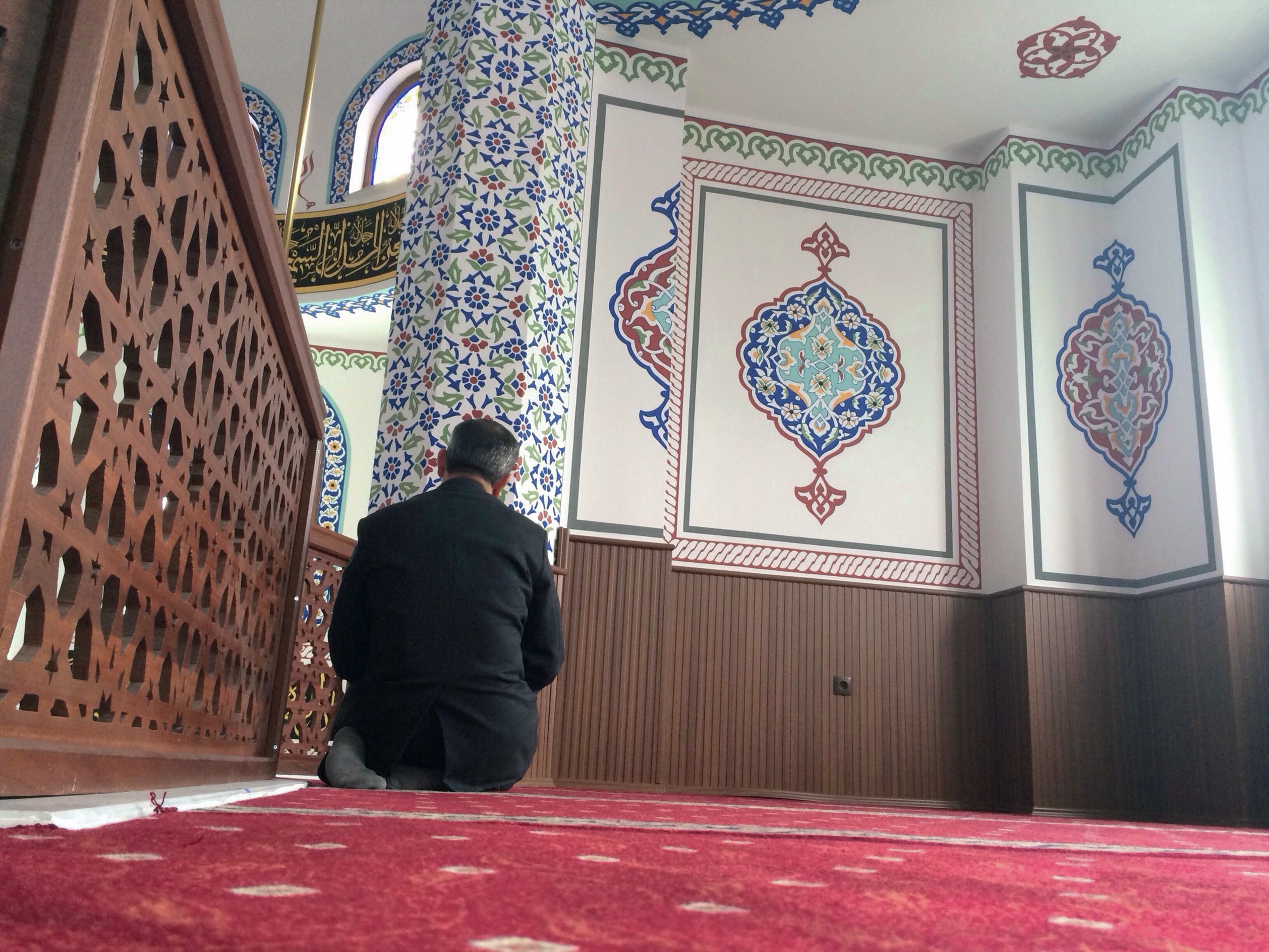
This series considers each of the Five Pillars of Islam and explores their practical and theological nature. Here we deal with the Pillars of salah (prayer) and saum (fasting), and their significance in the development of the ideal Muslim character and Muslim community (Ummah).
AO1 checklist
• Concept of ‘Pillar’.
• The Five Pillars.
• The significance of the Five Pillars for Muslims, including their contribution to the development of the ideal Muslim character and the Ummah.
Salah
‘Prayer is the pillar of religion; to neglect it is to prepare the downfall of religion.’
Hadith
At any given moment, day or night, any prayers are witnessed by angels. While communication with God is a central feature of most forms of religion, for Muslims prayer is also an outward expression of submission to God. The scholar Elias states, ‘As such, salah is not prayer in the sense of a personal conversation with God, but rather a ritual obligation which must be fulfilled to reaffirm one’s relationship with God.’
Prayer is obligatory five times a day for a Muslim. It is the Sunnah that gives the precise details of how a Muslim should offer prayers, but it is the Qur’an that states ‘bow down, prostrate yourselves and adore your Sustainer’.
Prayer must be performed with ‘intention’ (niyati), meaning with the correct attitude and state of mind as one prostrates before the one true God. Humility and total outpouring of self to God are part and parcel of this act of submission.
Reasons for prayer
There are many reasons for prayer. Prayer may be a pure act of gratitude towards God, thanking him for all his actions. It can also be a way of acknowledging total dependence on God and of confirming complete and absolute trust in him.
God conscious
In essence, prayer means that a Muslim is becoming more God conscious and hence gradually more spiritually aware — prayer can be seen as a form of personal spiritual development and growth. The Muslim scholar Esposito observes, ‘It [prayer] strengthens the conscience, reaffirms total dependence upon God, and puts worldly concerns within the perspective of death, the last judgment, and the afterlife.’
Prayer is a reminder of God’s greatness. Humans are prone to forget and therefore constantly need waking up to prayer. It is no coincidence that the call to prayer in the morning often includes the phrase: ‘It is better to pray than to sleep.’
A public and private experience
As well as bringing the individual close to God, prayer brings the community together to form not only a physical closeness but also a collective, spiritual show of strength. The practice of communal prayer on Fridays builds up a (religious) community. It signifies the unity of the Ummah and the essential equality therein.
In this sense, prayer is simultaneously a public ritual while remaining a private experience. The idea of a personal ‘barrier’ or ‘boundary’ (sutrah) that clearly marks out a personal space for prayer underlines this and it is considered bad manners to pass in front of someone who is praying.
Submission
Most of all, prayer typifies the action tantamount to being Muslim — that is, submission. Prostration indicates submission. A Muslim is ‘one who submits’. In this respect prayer is the giving of oneself totally to God and includes a resignation to the futility of any effort to appease beyond blind obedience — in the words of the scholar Turner, to ‘express one’s total and utter impotence before One who is omnipotent’. It is a total feeling of insignificance in face of the almighty; the quintessential numinous experience.
Types of prayer
There are many types of prayer but the term salah (or salat) usually refers to the five prayers established by Muhammad. The times of the five prayers are based on the sun, as follows:
1 daybreak (al-fajr)
2 noon (al-duhr)
3 afternoon (al-asr)
4 sunset (al-maghreb)
5 evening (al-isha)
However, the times are not precisely followed and according to Elias this is quite intentional in order to ‘consciously disassociate Islam from any form of sun worship’.
Although prayer is obligatory, Allah is merciful and exceptions are allowed. Young children, travellers and the incapacitated are excused, although where possible those that miss prayers are expected to catch up at a later date.
Absolute purity
Prayer must be performed in a state of purity. In ordinary circumstances, the ritual purification is known as wudu, which means ‘minor ablution’ and includes washing the mouth, nose, ears, face and whole head, extending to arms, hands and finally feet. However, the actions are once again done with intent and reflect respect for Allah as underlined by a state of absolute purity. The scholar Sultan observes, ‘Wudu literally wakes the soul up from the remembrance of anything other than God.’
Wudu has to be repeated if a person’s state of purity is interrupted and spoiled. Going to the toilet or producing emissions from the body such as wind and vomit make this necessary.
The ‘major ablution’ or ghusl is performed after acts of a sexual nature or menstruation, and involves washing under clean, running water. Sometimes ghusl is performed before Friday prayers.
Practicalities
Muslims are ‘called to prayer’ through the adhan (call to prayer) that is declared publically from a minaret (tower) in the mosque by the muezzin (person calling prayers).
During prayer, the Qur’an is recited, including some formulas in praise of God known as takbir (allahu akbar or ‘God is the greatest’). This is all done facing the direction of the Ka’aba via the qiblah, a wall especially designated for this purpose of direction.
The practical features of prayer are known as rakahs, sometimes translated as ‘movements’ or ‘units’. Each rakah is a set procedure and involves:
■ statement of intent and recitation involving the qiyam (the very first chapter of the Qur’an) and standing before God
■ bowing (ruku)
■ prostration (sujud)
■ sitting up to announce tashahud and salam
At the end of prayer the tashahud is declared, blessing all believers and, like the shahadah, announcing acceptance of Muhammad as prophet. Finally, greetings of peace (salam) are offered to the recording angels on either side of a worshipper’s shoulders.
There are different numbers of rakahs for each part of the day. Midday, late afternoon and late evening prayers have the most (four), whereas morning has two rakahs and early evening has three.
Other prayers
Salah is only one type of prayer. It depicts the actions of obedience and submission rather than a description of intimate spiritual experience. Other types of prayer include:
■ tahajjud: night prayer, extra prayer during the night
■ nafila: extra prayers, before or after the five obligatory ones
■ du’a: ‘cry’ or ‘cry of the heart’, a personal prayer or period of private devotion
■ use of tasbih (subhah): 99 or 33 beads on a string recalling the names of Allah or glory, thanks, and God is most great
■ wird: ritualised, private prayer concentrating on the recitation of the Qur’an
Saum
Fasting in general is seen as a virtuous act. It is a form of discipline often used by religions to enable a more focused period of devotion and contemplation. Turner states, ‘Fasting, with its implicit attack on man’s animal appetites and carnal cravings, is seen as another way of purifying the self and bringing the recalcitrant soul into line.’
Fasting is not new. It existed long before Islam in other religious traditions both east and west: ‘You who believe, fasting is prescribed for you, as it was prescribed for those before you, so that you may be mindful of God’ (2:183). Sharing the Judaeo–Christian heritage meant also sharing in its practices. Fasting, however, was made more a priority and arguably situated in its proper context by Muhammad.
Although fasting can be done at any time, it is prescribed during the month of Ramadan between the hours of dawn and dusk. The exact moment of the fast begins traditionally when it is possible to distinguish clearly between two strands of black and white cotton — ‘eat and drink until the white thread of dawn becomes distinct from the black’ (2:187). Fasting involves nothing entering the mouth during these hours, not even water. According to Maqsood:
‘Muslim fasting involves deliberately cultivating a peaceful and prayerful attitude of mind, and undergoing the physical discipline of giving up all food, liquid, smoking and sexual intercourse during the hours of first light of dawn to sunset for the entire month.’
Being mindful of God
Fasting is to be mindful of God, and many practices within the month of Ramadan beyond the fast underline this fact. The physical regulations surrounding fasting serve only to fulfil spiritual goals — for example, Muslims are expected to say extra prayers (tarawih), and often read the Qur’an more, sometimes even completing it during the month. Esposito confirms, ‘In Islam the discipline of the Ramadan fast is intended to stimulate reflection on human frailty and dependence on God, focus on spiritual goals and values, and identification with and response to the less fortunate.’
Pregnant women, young children, the elderly and sick, and travellers can be excluded, although travellers usually make up the fast later. As the Qur’an says: ‘Fast for a specific number of days, but if one of you is ill, or on a journey, on other days later’ (2:184).
There are disparities in the length of time for the fast throughout the world due to the variances in daylight hours across the globe. Indeed, this is one reason why, according to Turner, ‘to describe a typical Ramadan fast day would be impossible, as all communities differ, at least in the detail.’
Nothing must enter the mouth during the fast. Some Muslims go as far as spitting rather than swallowing saliva, and do not clean their teeth so as to avoid swallowing water. Others refuse oral medication and insist instead on medical injections.
Beyond eating, drinking and smoking, violence and sexual acts are also forbidden. In practice, this includes the thoughts of such acts as well as the deeds. As Elias observes, ‘Not only is one supposed to refrain from these things but also from thinking about them.’
Ramadan as a happy time
Nonetheless, despite all the forbidden thoughts and actions and the sacrifices, Ramadan is not a negative month. Ramadan has a purpose of being mindful of God and should therefore be a happy time. It is a time for joyful discipline and celebration, for blessings and spiritual reward, and the mood should not be sombre. Nonetheless, there needs to be balance and the evening breaking of the fast is not a time for gorging — gorging is not being mindful of God, it is making food and drink a priority. Indeed, some Muslims choose to go on retreat (I’tikaf ) for up to 10 days in order to concentrate more on spiritual matters.
The fasting lasts for one full month and is broken by one of the biggest festivals across the globe — Eid-ul-Fitr. This is a time for celebration, usually with large parties and a meal. Families unite, as does the Ummah. Gifts are given and cards sent. The most significant aspect of Eid-ul-Fitr, however, is the gift of money to the poor.
Benefits of Ramadan
The health benefits of fasting in general are well known in terms of detoxifying the body and resting the stomach. However, in Ramadan there is also a focus on healthy eating. It is a time of community and togetherness, discipline and submission— it is God’s will that Muslims fast. The attention, therefore, is always on Allah. God comes first and must always take priority in every aspect of life. Fasting, then, typifies obedience to God’s will and follows the example of Muhammad and prophets before him, such as Jesus.
There are spiritual benefits during Ramadan: extra prayers are offered in an attempt to be more God conscious, and it is a time for reflection and empathy with the poor who are in a constant state of hunger and need. It is also an opportunity to read the Qur’an more. In fact, the most significant night of the year for Muslims is celebrated during Ramadan — the ‘Night of Power’ (Laylat al-qadr), which is when the Qur’an was first revealed to Muhammad. Overall, according to Waines, Ramadan ‘is important as a period of reflection and spiritual discipline, of physical endurance and sharing with others’.
The difference in length of daylight hours around the globe and the consequent practical disparity in demands for Muslims have led to much discussion. Turner cites arguments resulting from such discussions, such as the proposal that, due to the divine wisdom of Islam being based on a lunar calendar, every 33 years the month of fasting will have passed through all seasons for all peoples around the world. It is the bigger picture that triumphs.
The benefits of Ramadan can be summarised by three aspects:
■ the literal and physical application of discipline and obedience
■ the reflective and moral aspect of avoiding sins, being more aware of actions and generally becoming more sensitive to the needs of others
■ the spiritual aspect of becoming more God conscious in every aspect of daily life with the result of becoming closer to him
This ‘AQA special’ is the responsibility of RELIGIOUS STUDIES REVIEW and has been neither provided nor approved by AQA.