
Deprecated: mb_convert_encoding(): Handling HTML entities via mbstring is deprecated; use htmlspecialchars, htmlentities, or mb_encode_numericentity/mb_decode_numericentity instead in /mnt/storage/stage/builds/pugpig-site-subs-server/latest-1.2.0-1753096337.768322/pugpig-site-subs/content.php on line 225
Interpretations: Embracing philosophy and psychology
Peter Manning explores some interpretations of religion offered by psychology and philosophy
All boards: Philosophy of religion options WJEC RS1/2: Introduction to religion in contemporary society
Accounts of what Sigmund Freud (1856–1939) and Carl Jung (1875–1961) have to say about religion can often sound strange — their theories seem groundless, contrived and unjustifiable if read without a wider context to help us understand them. Yet when their ideas are put within their philosophical context they gain new life and coherence, as I hope to show in this article.
However, it is also true that accounts of the psychology of religion often stop with Freud and Jung even though psychology as a discipline has left them far behind and embraced what evolutionary psychology has to offer in explaining religion. This article also therefore seeks to extend the psychology of religion debate to encompass this new attempt to explain what religion is to the human mind.
RSReviewExtras
Go online (see back cover) to test yourself on philosophy and psychology.
Religion as a relic
Darwin’s theory of evolution has revolutionised how modern humanity conceives of the world and our place within it. It is perhaps therefore no surprise that the Victorian anthropologists E. Tylor (1832–1917) and J. Frazer (1854– 1941) sought to explain religion as having progressively developed through human history from animism, to polytheism, and eventually to monotheism. Each successive form of religion makes the religious realm more human-like and more powerful. Religion and its false myths have culturally evolved over time. The appeasement through religious rituals and beliefs in spirits, the gods or the God, gave humanity the feeling of influence over things that otherwise were found troubling.
Religion can be explained as serving the functional purpose of lessening our fears about life, its uncertainties, and the stark reality of death. Such rationalistic explanations for religion were rejected by Freud because in a scientific age rational modern man should have been able to let go of religion, and this had not happened. Instead of an external focus on history and culture, Freud argued that an inward examination of the human psyche (mind) was needed to understand the persistence and universality of religion.
Looking inwards
Such a turn inwards had already started in the world of philosophy. The German philosopher Hegel (1770–1831) had argued that the universe was the absolute spirit or God that became self-aware in sentient beings. Religion marks the attempt of human beings to articulate and relate to the manifestation of the eternal spirit through themselves. In The Essence of Christianity the philosopher Ludwig Feuerbach (1804– 72) rejected the notion of absolute spirit or God in Hegel but kept the concept of religion as a witness of human striving to find ways of expressing the limits and depth of human nature — what we are as a species.
For Feuerbach the three key attributes of human nature were reason, will and love. Within this context Feuerbach proposed a developmental explanation for religion, with more primitive societies having polytheistic beliefs focused on the struggle for survival, while developed societies fulfil more spiritual and ethical concerns through a monotheistic belief system. In monotheistic religion reason, will and love find their infinite expression in the creation of the idea of the God. Although religion was part of the process of growing towards self-knowledge about the nature of humanity and the world, in a rational, scientific age man will mature beyond the need to use religion to express reason, will and love. Feuerbach influenced Freud’s thinking on religion, but they differed in that Freud didn’t think religion would disappear with social progress because religion was deeply embedded in our very nature as a species.
Freud’s general psychology is focused on how experience shapes our minds in childhood in ways that become unconscious to us even as they determine our future personality and behaviour. For Freud the way children deal with their earliest relationship, to their mother and father, is the cause of religion. A way of giving deeper expression to the ‘species nature’ that Feuerbach had alluded to is provided. Although Freud’s theory as originally stated is sexist in its focus on males, and is stated in overly sexualised terms, the essence of it boils down to a quite simple claim. The young child feels jealousy towards their same sex parent’s affection and attention from the opposite sex parent, who the child wants to focus on them alone.
DARWIN’S THEORY OF EVOLUTION HAS REVOLUTIONISED HOW MODERN HUMANITY CONCEIVES OF THE WORLD AND OUR PLACE WITHIN IT.
Oedipus complex
The young boy realises, however, that the father is more powerful than him and he is therefore in fear of falling out with the father even as he wants to replace him in the affections of the mother. A resolution of the child’s psychic crisis is found by the boy identifying and building a relationship with the same sex parent while repressing sexual feelings until puberty, when such feelings of love and affection can be directed towards romantic possibilities outside the family. This theory is called the Oedipus complex after Oedipus, who in Greek mythology unwittingly murdered his father and married his mother.
On the basis of these early relationships between child, mother and father, Freud imagines in his book Totem and Taboo (1915) that in primal societies humans lived in extended family groups in which the dominant male father held exclusive rights to sexual access to females within the group. To avoid being driven off by the father once they reached puberty, the sons rebel and kill the father but feel fear, shame and remorse for what they have done as the father was also loved by them. As a way of working through and dealing with their feelings they set up various rituals and rules by which the group must live. These rituals and rules develop in complexity and abstraction over time. Religion is thus a form of Oedipus complex. Religion is a product of internal psychic forces making themselves manifest in the world, and is therefore a side effect of human nature and its complex innate drive to relate to others.
In the 1930s the British anthropologist Evans-Pritchard (1902–73) provided what is now the classic critique of the developmental theories of Tylor and Frazer in arguing that we don’t have access to the kind of historical evidence that would prove such theories of religion to be true. Although Freud’s is an internalist account in that it starts with the psyche, we also have no way of checking his claim that religion started from some outworking of the Oedipus complex in the primal past. Freud’s idea of the Oedipus complex is also hard to operationalise and test scientifically and is widely disputed. If religion started as a primitive error we have no way of proving it. These approaches are highly speculative and are dismissed by most modern psychology, anthropology and philosophy.
DEFENCE MECHANISMS ARE UNCONSCIOUSLY PROGRAMMED WAYS OF BEHAVING AND THINKING
Religion as psychological projection
Feuerbach, in his later book The Essence of Religion, drops talk of the developmental role of religion and instead focuses on the idea of desire. Religion, its spirits and gods, are the invention of man faced by an often indifferent world that is not the way we would like it to be. Human beings desire happiness, and religion becomes a means of projecting or controlling this desire. Such imagined fantasies of wish fulfilment are seen as misguided and unhelpful for humanity.
This is a restatement of the view of the founder of modern scientific method, Francis Bacon (1561–1626), who argued that people and society have all sorts of ‘idols and false notions’, ‘idols of the tribe’, which prevent them from understanding the way the world truly is. Although science can help us get to grips with reality, Bacon suggests humanity has an innate drive to create meaning, relationships and significance in the natural world in a way that infuses it with our desires and personifications rather than understanding the world as it truly is.
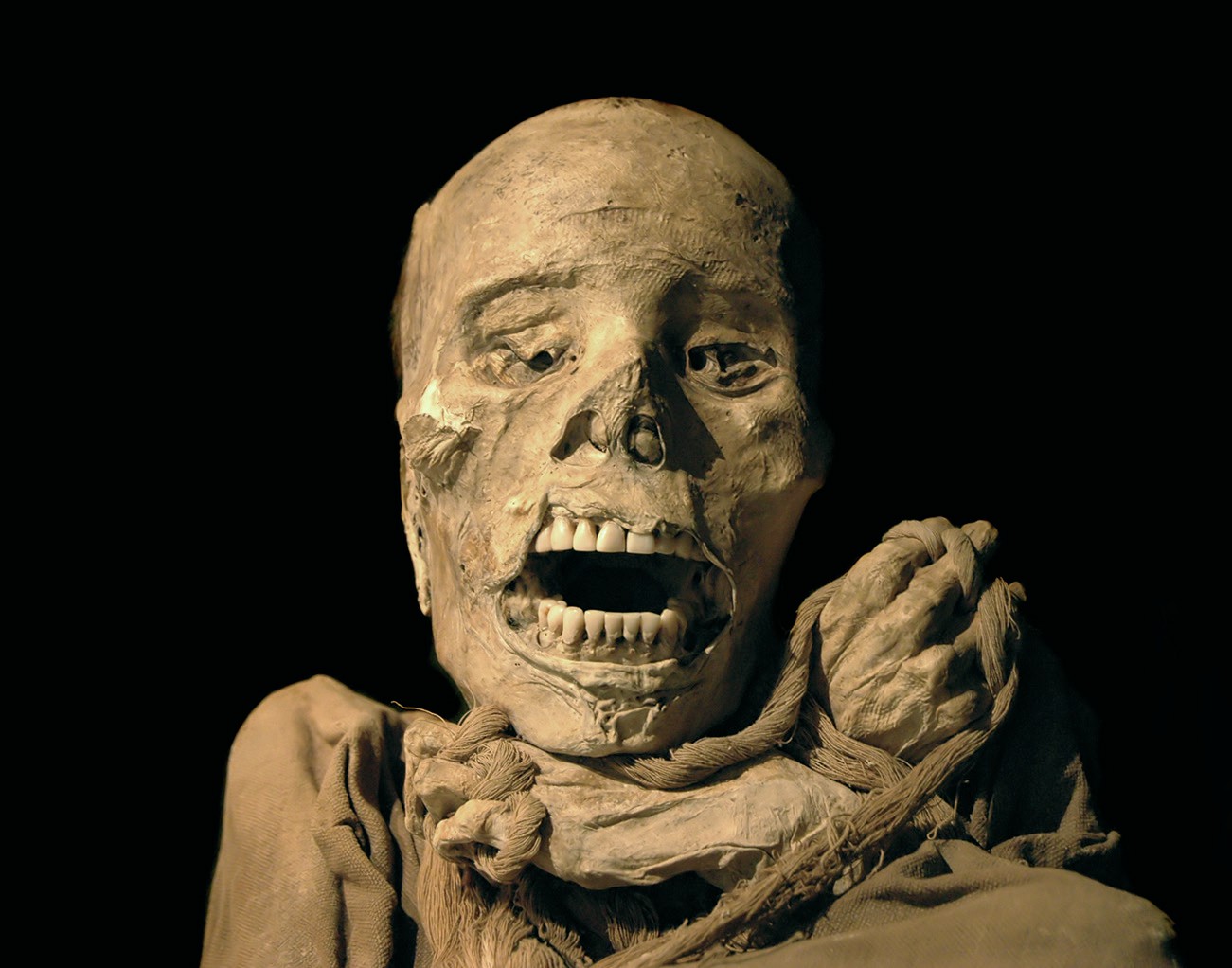
In two books written towards the end of his life, The Future of an Illusion (1927) and Civilisation and its Discontents (1930), Freud articulated his psychological view of religion in a form that agreed with Bacon and the later view of Feuerbach. In contrast to his earlier ideas about religion being caused by the Oedipus complex, he now saw religion as infantile regression and a failure to grow into adult maturity and face the world as it is. As a child grows it passes through various stages of psychosexual development, which Freud termed oral, anal, phallic, latent and genital. At each stage the developing child relates to the world in age-appropriate ways and faces various challenges. In as much as these challenges are not met, stress is created. To deal with this stress our mind creates defence mechanisms. Defence mechanisms are unconsciously programmed ways of behaving and thinking which guide our behaviour and allow us to avoid or deal with the unresolved stress and its challenge.
An illness of the mind
The religious person for Freud is someone who still hungers for the loving father of childhood and finds in religion and God a father substitute to take care over and responsibility for their life. Such a person has failed to grow effectively through the psychosexual stages of development and has an immature, childlike outlook on the world and life. Humanity, in wishing to escape from an often cruel and uncertain world, creates in religion what it most desires and seeks through its fantasies — the fulfilment of its childlike wishes. For Freud religious belief is a psychopathology, an illness of the mind.
The developmental views of religion with which we started all portrayed religion as the immature strivings of humanity moving toward scientific and rational maturity. Friedrich Nietzsche (1844–1900), who also suggested yet another developmental view of religion, did not take such a positive view of modern man. In Nietzsche’s so-called archaic, primal age man was in touch with the world, as reality was limited by the horizon of personal experience. But over time, through various intermediate stages, man became removed from the world of sensory experience and came to see the true world as being beyond our experience of the world. In Platonic philosophy and its theory of forms, and Christianity with its talk of heaven and life after death, we fail to see the true limitations of life and its possibilities.
Christianity and Buddhism encourage dependence, obedience and submissiveness. They stifle creativity and joy in life. The religious are psychologically life-denying and victims of their own imaginations in creating religion to prop up their weak wills. This is a slave mentality. In contrast to this some people are strong. They have an alternative psychology for life that is life-affirming, creative and assertive. Life is not limited by stifling religion, it is not dictated to by the fashions or persuasions of others. Yet, despite the courage of the strong-willed, religion is kept in existence by the weak as a power they can use to limit the domination of the strong. Nietzsche uses the term ‘resentment’ to describe this attack of inferior people on those who are courageous and would embrace life in its fullness.
Religion as myth
For Nietzsche, when humanity finally comes of age and shrugs off the misguided myths of religion in this scientific, rational age man is faced with a cold and indifferent world where the loss of myths leaves the business of living life with no foundations. What will happen to a culture shorn of its moorings? When Nietzsche proclaims ‘God is dead’ he is not just rejecting religion but proclaiming that human life is radically free, and only constrained by the limits we put on our own individual lives. The values we live by have nowhere to root themselves beyond the individual self. This situation is seen clearly for the first time. This is both liberating and frightening. We are alone in the world, what will we do with ourselves? What will others do with us? It is in this context that Nietzsche fears for those of strong will.
The weak-willed forever condemn themselves; they are not his concern. Nietzsche, having recognised in his first book, The Birth of Tragedy (1872), that myth is the very lifeblood of culture, offers in his later writings a new mythic vision and substitutes the religious myth with a new myth of the self. The myth of the superman will be the strong person’s guide. The superman embraces the new godless, rootless reality of life and has the courage to revalue all values and live by their own authority, their own will to power.
WHEN NIETZSCHE PROCLAIMS ‘GOD IS DEAD’ HE IS NOT JUST REJECTING RELIGION BUT PROCLAIMING THAT HUMAN LIFE IS RADICALLY FREE
Psychological wellbeing
While Freud made religion into a form of mental illness, Jung, a one-time disciple of Freud, saw religion as an essential and more positive part of the outworking of human nature. Jung left unanswered the question of whether he believed in God. Like Nietzsche, Jung recognised the importance of myth for human culture and psychological wellbeing. Indeed, he makes myth even more essential to humanity than Nietzsche did. The human mind, or psyche, finds expression for its deepest and oldest longings through the creation of culture.
The psyche is dynamic, relational and creative. Once the needs of survival are met the mind’s surplus energy can be used on more symbolic activities, which often involve religion as an aspect of culture to give expression to the mind’s deepest concerns or interests. Jung suggested that each person has two kinds of unconscious within their minds:
■ First, there is the personal unconscious which is constructed through the interaction of personality with life experience. This level of the unconscious can be explored through the methods of psychoanalysis created by Freud in order that people may better know themselves and overcome problems in their lives.
■ Second, individuals have a collective unconscious which is made up of ways of thinking and behaving that are more instinctive and universal for us all as a species. For something to be that universal and not limited to individual cultures Jung suggests it must have some kind of genetic basis. The brain has itself been shaped by history and the evolutionary experience of humanity.
Universal symbols
Having had a life-long interest in different forms of religions and cultures, Jung suggested that four universal symbols, called archetypes, dwell within the deep psychology of the collective unconscious that we all share. They are represented by four terms:
■ the anima/animus (creative and destructive forces in the male and female)
■ the wise man (the saviour, hero, king or medicine man)
■ the shadow (the animal, dark side of human nature)
■ the child (a symbol of wholeness)
A healthy individual can live with the expression of all these archetypes in their lives and avoid psychic tension and illness.
The idea of competing forces vying for influence over our mind and actions had already been discussed by Nietzsche in The Birth of Tragedy. Nietzsche used Greek culture to resource his discussion and called forces within ourselves that are creative, dynamic and frenzied, Dionysian. In tension with this are the Apollonian qualities of reason, harmony and restraint. Nietzsche gave up on the attempt to tame chaos by order and calls for the Dionysian to triumph over the Apollonian. In contrast to Nietzsche, Jung argues that a healthy individual can find psychic harmony between the competing forces within.
For Jung, as he argues in his book Modern Man in Search of a Soul, in as much as religion through its myth-making gives positive expression to the four Jungian archetypes, religion has a positive role to play in culture and in the life of the individual. However, human myth-making can also produce pathological forms of religion.
Religion can be seen as self-integrating when it enables the instinctive emotional impulses arising from the collective unconscious to be in harmony with the conscious self. With such an outlook the cultural creation of some form of religion, myth, is impossible to avoid given human nature — for the drive to do so lies deep within the architecture of our minds.
Religion as an evolutionary adaptation
The evolutionary theory of attachment was developed by John Bowlby (1907–90) in the years after the Second World War. Children are born with an innate drive to bond with their mother. Adults in their turn are hard-wired to find that a baby’s facial features elicit care-giving responses from them. As the infant relates to the adult it creates a relational schema, a web of emotional and, later, word-based memories and expectations of how to be in relationships. The first key relationship, normally with the mother, provides the template with which the child navigates all future relationships for the rest of its life. This was supported through work that showed later romantic relationships correlate with relational schemas developed in the early years of life (Hazan and Shaver 1987, ‘Love Quiz’ study). The first relationship is referred to by the term ‘monotropy’ and its enduring effect is called the ‘continuity hypothesis’.
Although Freud may have been wrong with his ideas about the mind and psychosexual stages, his more general claim that the early years are key to later behaviour is supported by this approach. In his discredited Totem (Oedipus) theory of religion, Freud had also stressed the importance of the maternal relationship. While Freud’s theories have struggled to find empirical, scientific support there is now a wealth of research supporting Bowlby’s theory of attachment with cross-cultural studies (for example, Ainsworth 1967, 1971; Fox 1977; Tronick 1992), establishing attachment as an innate system which is activated by particular stimuli or internal states and monitored by various regulatory mechanisms. We are hard-wired to respond to the social environment that being born into the world normally entails, as that promotes survival and the probable continuance of our genes into the next generation.
A side effect
Lee Kirkpatrick, in his book Attachment, Evolution, and the Psychology of Religion (2005), builds on the idea that humans possess innate relational systems to argue that religion in all its various forms is a side effect of those adapted systems. Various studies have indicated that children who don’t form what is called a secure attachment in their monotropic relationship, and are therefore classed as insecure resistant or insecure avoidant, are more likely to seek some form of religion in later life. The idea is that their innate relational systems find in religion the security and commitment missing in their early attachment experiences.
Although somewhat reminiscent of Freud’s idea of religion as a projected father substitute, the form and detail in the theory are quite different. Kirkpatrick and other evolutionary psychologists have gone on to discuss how other mechanisms evolved for different purposes may be related to religious beliefs and behaviours. These include:
■ intrasexual competition and its relations to power and status in religion
■ kinship and its relations to group membership and leadership in religion
■ reciprocal altruism and social exchange in relation to helping others, mutual support and morality
Religion as an enduring mystery
To offer an explanation of religion is not to say we have explained it away and shown it to be false. To assume this would be to commit what is known in philosophy and science as the genetic fallacy. Kirkpatrick is careful not to read into evolutionary psychological explanations of religion any assumptions about the truth or falsity of the kind of metaphysical truth claims that inhabit religion. However, his claim that religion is a side effect of adapted systems is debated, as it could be argued that evolution has primed humanity through genetics to be religious.
Finding a basis on which religion can be seen as an adaptive system that might be promoted by evolutionary experience is somewhat problematic. The debate remains open and even if religious forms of life and expression are side effects of adaptations, metaphysical realities (God) could still exist awaiting the emergence of just such systems in order to relate to sentient beings like humanity (the anthropic principle). The evolutionary debate around God leads us back towards considerations of cosmology and the Design Argument.
LIVING BEYOND OURSELVES AND TAKING THE RISK ON REALITY BEING THIS WAY OR THAT WAY IS PERHAPS THE STARTING POINT OF MYTH.
Coherent understanding?
The attraction of evolutionary psychology in explaining religion is that it offers to build our particular and scientific understandings of religion on a general theory of human nature which has much plausibility and support. Our ability to apply it to many aspects of life and religion helps us integrate knowledge into a coherent web of understanding rooted in the physical world. Tylor and Frazer may have been right to be inspired by Darwin’s theory of evolution in seeking to explain religion — they just did not pursue it in the best way. They also committed the genetic fallacy by thinking that religion had been shown to be false through their functional explanation of religion.
When looking at the way human beings relate to the world we can surely agree that we are dynamic creatures primed to relate to the world around us. But the world is always both within and beyond our comprehension. Understanding is always partial. In such a context we live beyond what is justified by our experience. Jean-Paul Sartre (1905–80), the French existentialist philosopher, said that man ‘is always a project in advance of himself’. Trust and deception, whether directed toward others or inwardly to ourselves, are required.
We live and move as if things were true that may not be. Living beyond ourselves and taking the risk on reality being this way or that way is perhaps the starting point of myth. As communities we commit ourselves to forms of life and inhabit a web of beliefs and practices which transcends its own foundations, and in so doing becomes myth. To claim religion and science are myth is not to proclaim their falsity but to acknowledge their deep, open-ended engagement with our lives and the mystery of reality.