
Edexcel special
Implications New Testament
This ‘Edexcel special’ looks at one way of tackling a passage on Jesus’ death in the New Testament Implications paper
Edexcel A2 Unit 4: Implications
Understanding the death of Jesus is a problem that has puzzled both believers and scholars. The New Testament addresses the issue in two different ways: one that is based on the historical events at the time, which led to Jesus’ death, and one that offers religious and theological reasons for his death. The two are inevitably interlinked, as the Gospel writers demonstrate how the divine plans and purposes are revealed in the working out of the political manoeuvrings in the last weeks of Jesus’ life.
The Gospels show that Jesus’ words and actions created unrest among those who encountered him, particularly the Jewish and Roman authorities. Jesus angered the Jewish religious leaders with his teachings, his healings on the Sabbath and his interpretation of the Law of Moses. He condemned the Pharisees and Sadducees as hypocritical and angered them with his claims concerning his relationship to God. In particular, the cleansing of the temple market and the triumphal entry into Jerusalem led them to see him as a great danger, not only to their own status and position, but also to the religious faith of the people — they feared that the people would accept the teachings of a false Messiah.
At the trial before the Sanhedrin, Jesus was found guilty of blasphemy — for claiming to be the Christ — and was sentenced to death for the ultimate religious crime.
Exam advice is provided to help you apply the answers to your own work.
Question (a)
Examine the argument and/or interpretation in the passage. (30 marks)
Student’s answer
‘The Son of Man must suffer many things and be rejected…he must be killed and on the third day be raised to life.’
Luke 9:22
This passage is about the historical and theological factors which lay behind the death of Jesus Christ. As Tyler and Reid suggest, there are no simple answers as to why Jesus had to die. Morison famously suggested that it was all part of God’s plan, with the Almighty acting as ‘an invisible taskmaster from whose decree there was no appeal’. (Who Moved the Stone?, OUP 1974). On the other hand, Ian Wilson condemned some of the Gospel writings as ‘an almost hopeless jumble of confusion’ (Jesus — the Evidence, OUP 1998). Certainly, on the purely historical side, little is known about the life of Christ, prompting Russell to assert that ‘historically, it is quite doubtful whether Christ ever existed at all, and if he did, we don’t know anything about him’ (Why I Am Not a Christian, Routledge 2004). It is not surprising, therefore, that there are many different viewpoints concerning the circumstances leading to the death of Jesus. The passage suggests that the reasons for the death were both religious and historical — in other words, that Christ’s death was about maintaining the power and position of the authorities. It was also about fulfilling God’s plan of salvation.
As the passage suggests, historically speaking, Jesus was executed by the combined actions of the religious and political authorities. The former saw Jesus as a threat to the purity of the Jewish religion and the covenant with God. In particular, the cleansing of the temple market and the Triumphal Entry into Jerusalem led them to see Jesus as a great danger to their own status and position and to the religious faith of the people. They were certainly not prepared to accept him as the Messiah:
‘Here is a man performing many miraculous signs. If we let him go on like this, everyone will believe in him, and then the Romans will come and take away both our place and our nation.’
John 11 :48
The political authorities, meanwhile, saw Jesus as a threat to peace and the established order. Pilate condemned Jesus to death because, as Roman procurator, he wanted to ensure peace and order in the land and he did not want to risk trouble by upsetting the Jewish leaders. Jesus, it would appear, died as a matter of religious and political expediency.
‘How could Jesus have been brought to the cross by people who were blessed by his signs and wonders?’
J. Jeremias, Unknown Sayings of Jesus
A good start — the candidate has offered a clear overview of the passage and begins to examine the background and context. Notice how he or she uses material from a range of sources.
For the religious authorities, the crucial factor was Jesus’ claim to be the Christ, which was blasphemy and punishable by death. In truth, they did not understand who Jesus was and were afraid of him because they believed that he would pose a threat to Judaism and to the peace of Israel. Jesus was a challenge to the traditional system of Jewish law, worship and ritual. Crucially, he claimed to be the Son of God, with a unique relationship with God. They regarded him as a false prophet which, under the Law of Moses, was punishable by death:
‘A prophet who presumes to speak in my name anything I have not commanded him to say…must be put to death.’
Deuteronomy 18:20
For the Gospel writers, the religious authorities lived in darkness and would not accept him:
‘The light shines in the darkness, but the darkness has not understood it… he came to that which was his own, but his own did not receive him.’
John 1:5, 11
As Tyler and Reid point out, this conflict reached its height when Jesus entered the temple area and overturned the stalls of the market traders and money-lenders who were exploiting the worshippers (John 2:12–25). By this action, Jesus was making a direct challenge to the authority of the religious leaders. The prophets Isaiah and Malachi had foretold that the Messiah would one day come and cleanse the temple and in Psalm 51:16 God states that he does not want sacrificial worship. As Marsh noted, Jesus, by his actions, was making very clear the fact that salvation comes not from religious ritual and sacrificing animals, but from faith in him.
Jesus also challenged the religious leaders by questioning their authority and interpretation of the law. Jesus healed a crippled man on the Sabbath. The religious authorities did not see the healing as an act of God, but as a deliberate and punishable breaking of the law, particularly keeping the Sabbath day holy (Exodus 20:8). Moreover, Jesus declared that he was the Son of God —a direct challenge to the status and authority of the Jewish leaders:
‘For this reason the Jews tried all the harder to kill him; not only was he breaking the Sabbath, but he was even calling God his own father, making himself equal with God.’
John 5 :18
Ellis Rivkin observed:
‘It was not easy for the authorities to decide what to do about charismatic leaders who preached no violence… . Were these charismatics harmless preachers, or were they troublemakers?’
Who Crucified Jesus? (SCM 19 84)
The religious authorities refuse to even consider that Jesus may be who he claimed to be. John’s Gospel reports that, in their ‘darkness’, they accuse Jesus of lying and question the legitimacy of his relationship with God — they do not understand who he is, as Culpepper observed in Anatomy of the Fourth Gospel (Fortress 1983):
‘By not having heard or seen the father, they are Jesus’ opposite; in their response to Jesus they are the opposite of the disciples.’
Jesus condemns the religious authorities for not being prepared to see, hear or believe in him:
‘You are from below; I am from above. You are of this world; I am not of this world.… The reason you do not hear is that you do not belong to God.’
John 8:23, 47
Their response is to repeat their accusation that Jesus is a sinner because he has broken the Sabbath laws by healing the man — they use the law, which, according to Psalm 119:105, was their light, to keep themselves in the darkness:
‘If you were blind, you would not be guilty of sin; but now that you claim you can see, your guilt remains.’
John 9:41
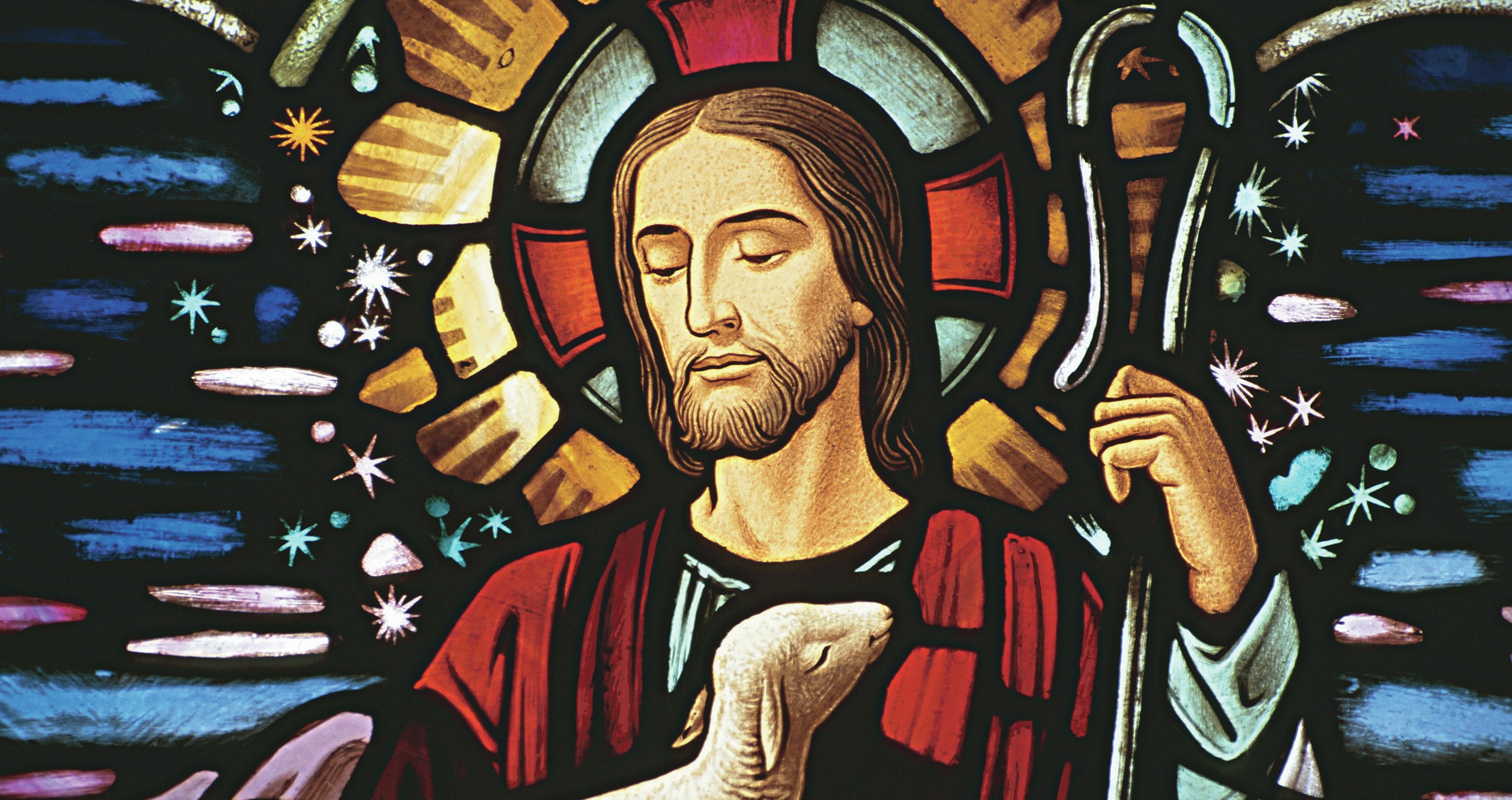
Later, Jesus speaks of himself as the ‘gate for the sheep’ (John 10:7) and the ‘good shepherd’ (John 10:11), reflecting the Old Testament image of a shepherd as a guardian of the people and also as their king (Ezekiel 34). Jesus likens the religious authorities to the ‘hired hand’ (John 10:12) who does not care for the sheep. Jesus is the good shepherd who will ‘lay down my life for the sheep’ (John 10:15). The authorities are not the real and trusted leaders of God’s people. Inevitably, the religious leaders are enraged, and when Jesus declares ‘I and the Father are one’ (John 10:30), they accuse him of blasphemy and try to stone him.
The fear that the religious authorities have for Jesus is most starkly shown after the raising of Lazarus. By now the crowds believe in Jesus and are threatening the authority and power of the religious leaders. It prompts Caiaphas, the High Priest, to declare a radical solution to the issue:
‘It is better for you that one man die for the people than that the whole nation perish.’
John 11:50

Shortly after this, Jesus enters Jerusalem, fulfilling the prophecy of Zechariah that the king of Israel would enter in such a way. This blatant attack on the authority of the religious leaders leads to Jesus’ arrest, trial and eventual crucifixion — with the Jews trapped in their own darkness. John Marsh observes: ‘…good men are driven to evil sometimes by the very soundness of their good intentions.’
But what of the views of the Romans? Their priority was to collect the taxes and to maintain the nation in a state of peace. To that end, the Romans would require that the religious authorities dealt firmly with any potential troublemakers. Only the Romans, as the political authority, could pass the death sentence or ius gladii. So the religious authorities brought Jesus before Pilate. Blasphemy was not a crime in Roman law, so instead, the Jews accused Jesus simply of being ‘a criminal’ (John 19:30).
The Gospel writers tell us that Pilate was uncomfortable with the whole proceeding. He declared that he found no basis for a charge against Jesus. However, Pilate knew it was expedient that he should not anger the religious authorities, because he depended on them to keep the peace. Stephen Smalley notes:
‘The contrast between Jesus and his enemies — who are also the enemies of God — as darkness, is sustained throughout the Gospel, particularly in the debates between Jesus and the Jews.’
Pilate condemned Jesus to death because he was afraid, not of Jesus, but of what the religious authorities might do. He was being used as a pawn in a power game between Jesus and the religious authorities. The author of the Gospel makes it clear that he believes that it was the religious and not the political authorities who were responsible for the death of Jesus — acting not out of malice or evil, but out of fear and a misunderstanding of who Jesus was. According to Alan Culpepper:
‘Although they do not recognise who Jesus is, there is wilfulness in their blindness. They love darkness rather than light.’
The candidate has methodically worked through the passage and successfully identified and explained the main concepts and ideas. Meanings have been clarified using both scripture and scholarship. The candidate has also gone beyond the passage and discussed theological concepts, leading to a clear and thorough examination of the passage.
Question (b)
Do you agree with the ideas expressed? Justify your point of view and discuss its implications for understanding religious and human experience. (20 marks)
Student’s answer
I disagree with the assertion that Jesus died because he was said to be a blasphemer, since this ignores the entire theological meaning of the ministry of Jesus. The Bible teaches that humanity lives in a state of sin that separates people from God. As a result, humanity cannot live up to the standards of God. It comes from the ‘original sin’ of Adam and Eve’s disobedience towards God (Genesis 3), which affects all humanity. The Gospels tell us that Jesus’ ministry was involved in the struggle against sin and evil in people’s lives. Jesus’ death marks the end of the power of evil and sin forever. Through his love, which the Bible calls grace, God himself reaches out to humanity and offers salvation through the death of Jesus. This is the doctrine of atonement — Christ stands ‘at one’ with humanity and dies in the place of sinful people:
‘He himself bore our sins in his body on the tree, so that we might die to sins and live for righteousness; by his wounds we are healed.’
1 Peter 2:24
God, in his righteousness, cannot just forgive and forget sins. Sin must be dealt with through an act of punishment. However, humanity cannot itself take the punishment because it is too great. Humanity needs help and God, in his love, gives that help through Jesus.
‘The Son of God, our Lord Jesus Christ…became a human being among human beings, capable of being seen and touched, to destroy death, bring life and restore fellowship between God and humanity.’
Irenaeus, Demonstration of the Apostolic Preaching
In my view, the true meaning of the death of Jesus is linked to the notion of sacrifice. At the time of Christ, the Jews followed an elaborate system of sacrificial procedures:
‘If a person sins and does what is forbidden in any of the Lord’s commands…He is to bring to the priest as a guilt offering a ram from the flock, one without defect and of the proper value. In this way, the priest will make atonement for him for the wrong he has committed.’
Leviticus 5:17– 18
I do, however, agree with the assertion in the passage that God’s plans are revealed in the manoeuvrings of the authorities. For instance, many actions, including the triumphal entry and the cleansing of the temple market, find their origins in Old Testament prophecies. Perhaps most significant in this is the way in which God’s plan for the Messiah, as stated in Isaiah 53, really is fulfilled by Christ’s death. For instance, consider this prophecy:
‘But he was pierced for our transgressions, he was crushed for our iniquities; the punishment that brought us peace was upon him, and by his wounds we are healed.’
Isaiah 5 3:5
This is promising — the candidate has stated his or her own view, and this is what the question is looking for. Reasons are explained, supported and justified and backed up with scholarly comment.
Jesus becomes the ultimate sacrificial lamb, dying in the place of human sinners and taking the punishment they are due. In this way, sins are forgiven and God and humanity are reconciled together.
‘For Christ, our Passover Lamb, has been sacrificed.’
1 Corinthians 5 :7b
Christ’s death is, in a sense, an example for others to follow and as a ransom — an offering made to someone to free someone else. Just as it was possible to pay a ransom to set a slave free, so the Gospels talk of people being slaves to sin, and Jesus’ death as the payment of a ransom to secure freedom from this slavery:
‘For even the Son of Man did not come to be served, but to serve, and to give his life as a ransom for many.’
Mark 10:45
This is the nature of atonement. Christ’s death is more than mere religious expediency. Christ dies so that humanity is set free. He takes the place of humanity and the punishment from sin:
‘He himself bore our sins in his body on the tree…by his wounds we are healed.’
1 Peter 2:24
God’s saving plan is thus fulfilled by the actions of the authorities — though they did not know it, for Christ stands at one with God’s people and offers salvation and eternal life to all believers:
‘If there is anything distinctive about the teaching of Jesus, it has to be the way he redefined God, replacing the harsh, confrontational image of judgement and condemnation, with the language of family love and acceptance.’
John Drane, Introducing the New Testam ent
This is why I disagree with Tyler and Reid — while, certainly, some members of the authorities were only interested in killing Jesus as a matter of expediency alone, this misses the real reason for Christ’s death: by this sacrificial action, God’s plan is fulfilled and humanity is set free from sin and can gain eternal life:
‘For God so loved the world that he gave his only Son, so that all who believe in him should not perish but have eternal life.’
John 3:16
The candidate is doing well here — having shared his or her own view and used good supporting quotations, he or she has expressed arguments in a clear and concise way.
By way of implication, if Jesus did die purely as an alleged blasphemer, then Christ’s mission was a failure and he died for nothing. It would mean that all his teachings on his relationship with God and salvation through his death were meaningless. He was just a good man. Moreover, humanity has no escape from sin, death and darkness.
However, if Jesus died as a sacrifice and atoning salvation for humanity, then he is indeed that Son of God and his teachings on salvation and eternal life are true, Christianity is confirmed and presents all peoples with the opportunity of eternal life.
This part is often forgotten by students and the marks are easily lost. To gain some positive marks here, just consider what would happen if, on the one hand, the arguments in the passage are true, and then what would happen if they are false. There is no right or wrong answer — it is a test of how well a candidate understands the issues in the wider context of the world and the experience of humanity.
Overall, this is a very good response. The candidate has thoroughly examined the issues, identified important issues and used texts and scholarly views to support his or her opinions. The piece is sharp, clear and addresses all the issues raised by the passage.
This ‘Edexcel special’ is the responsibility of RELIGIOUS STUDIES REVIEW and has been neither provided nor approved by Edexcel.