
A virtue-based approach to ethics
Virtue ethics is on many specifications but seems less popular with candidates than other ethical theories. Riva Black explains

All boards: Ethics options
Virtue ethics is a strand of normative ethics alongside utilitarian and deontological ethics. While it has historic origins in ancient Greece, much of the modern work on virtue ethics can be seen to be inspired by the postmodern rejection of grand theorising and universalisability.
In this article, I will draw on the work of ethical thinkers Aristotle and Julia Annas. I will explore two key features of a virtue-based approach to ethics:
■ the assertion that ‘moral knowledge cannot be viewed in isolation from character’
■ the assertion that ‘moral knowledge is acquired over time by the means of practice and experience’
Character
Whereas according to the other two major ethical schools of thought ‘basic moral judgments are judgments about the rightness of actions’ (Trianosky), for virtue ethics, in assessing whether someone is a virtuous person ‘the primary object of moral evaluation is not the act or its consequences, but rather the agent’ (Louden).
In his Nicomachean ethics, Aristotle reasons that behaving morally involves not only doing certain actions, but carrying them out in a particular manner. Concerning this, Aristotle lists three criteria that we must meet in order to be truly virtuous. He writes:
‘Whatever deeds arise in accord with the virtues are not done justly or moderately if they are merely in a certain state, but only if he who does those deeds is in a certain state as well:
1 first, if he acts knowingly
2 second, if he acts by choosing and by choosing the actions in question for their own sake
3 and, third, if he acts while being in a steady and unwavering state.’
These criteria that an individual must meet mean that: ’
Consciously aware
First, actions are not fully virtuous if done accidentally, where agents may not have even been aware of what they have done. Thus an individual must be consciously aware of what action they are doing and why they are doing it.
Children might put a coin in a charity box because that is what they have seen their parents do. However, if as they reach their teenage years their moral understanding does not develop and they continue to give money in the same way out of unthinking habit, they could hardly be labelled as virtuous as their moral understanding is incomplete. They do not have a clear knowledge of the moral activity in which they are participating. In order for an individual to be truly virtuous, they must become more intelligent through repeated performance.
No ulterior motive
Second, the individual must not have an ulterior motive when carrying out a given action. As Annas explains, ‘Jane…may have done a generous action, suppressing her normal stinginess, in order to impress a friend who really is generous and will respond favourably to her action.’ Jane’s motivation for acting generously may therefore be motivated by her own personal gain (in this case her friend’s approval) rather than wanting to do a generous action because that is the virtuous thing to do. The person must also value virtues for their own sake and not merely as a means to an end (as is the case with utilitarianism).
Reliable manner
Third, the behaviour must manifest itself as part of a consistent disposition. As Annas explains, ‘[Jane] may have had a generous feeling triggered by a sentimental song she has just heard.’ Jane’s generous action would therefore be an irregular occurrence as she does not typically feel or act in this generous fashion. The virtuous person must act in a reliable manner.
From these three criteria we can see that virtues are not externalities that are separated from a person’s character but rather ‘a virtue is a deep feature of the person’. As Annas writes: ‘A virtue is a disposition which is central to the person, to whom he or she is, as we standardly think of character.’
The virtuous person
A further qualification that needs to be met is that the virtuous person must enjoy acting virtuously. As Aristotle writes: ‘he who takes no delight in noble actions is not good…for no one would say that somebody who does not delight in acting justly is just or who does not delight in liberal actions is liberal’.
Let’s use Jane to help us illustrate this concept. Jane might give a generous amount of her money to charity because she feels deep down that it is the right thing to do. However, every time she goes to donate some money, she is overcome by a feeling of reluctance and gives the money begrudgingly. She knows that giving charity is the right thing to do, but she would really be a lot happier if she could spend the money on sweets.
According to Aristotle, Jane would not meet the criteria to be considered a truly virtuous person. There is clearly a dissonance between Jane’s emotions and her intellectual reasoning. While she understands that giving charity is a good thing to do, the act does not come naturally to her — she has a sense of duty but not a sense of desire.
Gillian, on the other hand, is a truly virtuous person. While fulfilling exactly the same act as Jane, she does so wholeheartedly with no inner conflict, and more importantly, with the right feelings — she finds the act of giving money to charity to be pleasurable. We could say that the difference in their moral education is that Gillian’s is personally transformative.
We will now turn back to Louden’s original definition that we started off with. According to virtue ethics, ‘the primary object of moral evaluation is not the act or its consequences, but rather the agent’. In our example, each of the charity givers gives the same amount of money, and both know that it is the right thing to do. However, one takes enjoyment in the act while the other does not. The difference between the two charity givers relates to their intentions and is thus not observable. Therefore, a person’s actions do not necessarily serve as a reliable indicator of whether they are a virtuous person. As Annas explains: ‘Virtues involve a range of emotional feelings and expression: not merely our thinking and reasoning but also our affective side.’
Practice and experience
Now that we have explored what makes a person virtuous, we will ask the question ‘how does someone go about becoming a virtuous person?’ Aristotle writes:
‘The virtues we come to have by engaging in the activities first, as is the case with the arts as well. For as regards those things we must learn how to do, we learn by doing them, for example, by building houses, people become house builders, and by playing the cithara, they become cithara players. So too, then, by doing just things we become just; moderate things, moderate; and courageous things, courageous.’
THE BEHAVIOUR MUST MANIFEST ITSELF AS PART OF A CONSISTENT DISPOSITION.
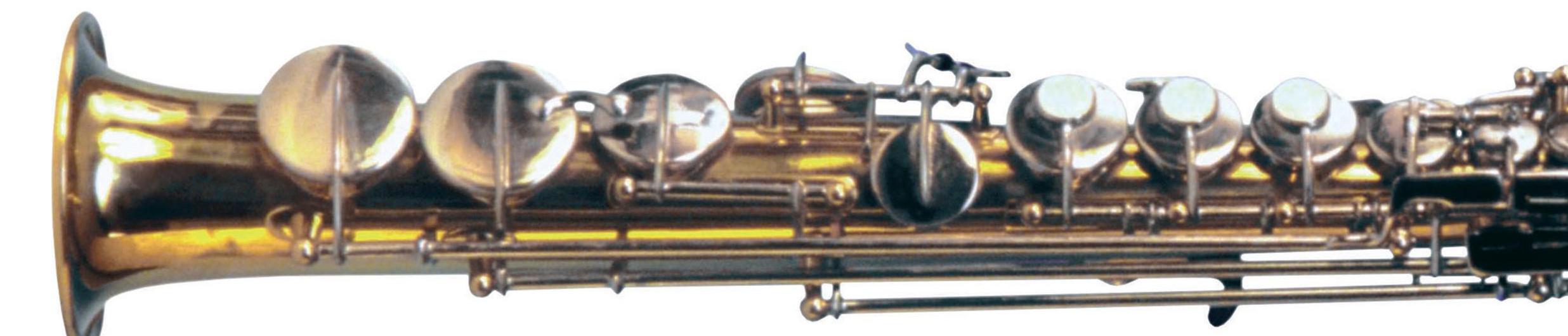
WHEN IT COMES TO POSSESSING VIRTUOUS BEHAVIOUR, THERE IS NO QUICK-FIX SOLUTION
The acquisition of virtue requires experience because the intellectual possession of moral theory alone does not suffice. As with learning an instrument, ability develops over time. We get better with repeated actions until the particular skill in question becomes second nature to us. When it comes to possessing virtuous behaviour, there is no quick-fix solution, as virtues take a long time to develop.
For precisely these reasons, in Aristotle’s thought, younger people are incapable of being prudent to the same extent that older people can be. Prudence in Aristotle’s thought (in Greek, phronesis) refers to a type of practical knowledge, it ‘permits [the individual] always to choose the correct action in a given circumstance and to perform it well and for the right reason’. He writes:
‘The young become skilled in geometry and mathematics, and are wise in such things, but a young person does not seem to be prudent. The cause is that prudence is also of particulars which come to be known as a result of experience, but a young person is inexperienced: a long period of time creates experience…’
In agreement with Aristotle, Annas critiques the lack of experience required in other schools ’ of ethical thought. She reasons that as the moral understanding in other ethical systems is technical, there could theoretically be individuals who would be able to master the theory of right action from a young age (a child genius, for example), unimpeded by a lack of life experience. They would consequently be well equipped to provide accurate moral guidance.
She then highlights the absurdity of this suggestion and shows that it has no counterpart in real life. She writes:
‘We do not go to clever teenagers for advice on what to do or how to live, because we realize that the technical cleverness they often do have may, because of their comparative lack of experience, be accompanied by naiveté and credulity, rendering their advice shaky at best.’
We can thus see that moral knowledge cannot be considered in abstraction from a person’s level of practical experience.
Conclusion
In conclusion, the fundamental question of virtue ethics — ‘What kind of person should I be?’ — can be seen to penetrate the source of moral enquiry deeper than questioning ‘What should I do?’ By placing a large emphasis on having the correct motivations, it seeks to ensure that one’s moral actions are firmly integrated into one’s disposition and individuals are thus more consistent in their moral behaviour.
References and further reading
Annas, J. (2004) ‘Being Virtuous and Doing the Right Thing’, American Philosophical Association, Vol. 78, No. 2, pp. 61–75.
Annas, J. (2011) Intelligent Virtue, Oxford University Press.
Aristotle (2011) Aristotle’s Nicomachean Ethics, R. Bartlett and S. Collins (trans.), University of Chicago Press.
Louden, R. (1984) ‘On Some Vices of Virtue Ethics’, American Philosophical Quarterly, Vol. 21, No. 3, pp. 227–236.
Trianosky, G. (1990) ‘What Is Virtue Ethics All About?’ American Philosophical Quarterly, Vol. 27, No. 4, pp. 335–344.