
Deprecated: mb_convert_encoding(): Handling HTML entities via mbstring is deprecated; use htmlspecialchars, htmlentities, or mb_encode_numericentity/mb_decode_numericentity instead in /mnt/storage/stage/builds/pugpig-site-subs-server/latest-1.2.0-1753096337.768322/pugpig-site-subs/content.php on line 225
What is the purpose of Christian worship?
Worship forms an important part of faith for many Christians. Stephanie Denning looks at some of the questions surrounding its purpose
Edexcel AS Units 1 and 2 WJEC: RS3 CHR: Studies in Christianity (A2)
What is the purpose of worship? Who is it for? Is it essential to being a Christian? Before we consider these questions, we need to understand exactly what worship is. We can then examine the purpose of worship by looking at worship in modern society, the role of the Eucharist, liturgy and prayer and finally worship as a way to build communities.
What do we mean by worship?
Despite the fact that the majority of Christians across the globe take part in worship, there is no uniform agreement of exactly what worship is. Dictionary definitions refer to worship as honouring a supernatural power, being a religious practice, and associated with respect and devotion. Christian worship can occur in a variety of forms — perhaps the most common being through music, the Eucharist, prayer and liturgy.
There is also debate over who worship is for, with suggestions broadly categorised into three groups:
■ Worship is for the benefit of worshippers.
■ Worship shows the relationship between humans and God.
■ Worship focuses on God.
Worship is most likely a combination of all three, being for both humans and God — and through this it shows a relationship between humans and God. It is this definition of worship as a combination that we will carry forward in this article. If worship does not take into account at least one of these points of focus, then the purpose and authenticity of worship becomes questionable.
Worship in modern society
In a multicultural world with consumer societies, particularly in developed countries such as the UK, worship is arguably playing a decreasing role in the everyday lives of Christians. It is increasingly becoming something that is only carried out on a Sunday morning at a church service — if at all. There are two possible consequences of this.
First, it could be argued that this has meant worship is no longer relevant to people’s everyday lives and therefore has no real purpose. However, just because people do not use worship as much as in previous centuries does not mean that true worship has no purpose in today’s society.
Second, it could be argued that in an attempt to attract more people to worship, culture has been incorporated into services. One example of this is the use of music in worship in modern society. Instead of traditional hymns many churches use modern worship songs, which some have criticised for containing lyrics referring only to Jesus rather than the whole Trinity (Father, Son and Holy Spirit) and which, they argue, therefore miss out important parts of Christian teaching. Others object to the use of guitars and percussion compared to traditional instruments such as the organ. But this is perhaps more a criticism of taste rather than an objection to the authenticity of the worship or its purpose.
Modern worship has also been criticised for focusing too much on priests or worship leaders rather than on God, thereby emphasising humanity in worship rather than God. However, this is not to say that worship should not evolve to incorporate modern cultures and tastes.
It is important to acknowledge these criticisms of modern worship and access their focus in worship. If worshippers feel that their worship is God-focused and is building their relationship with God, then arguably that is what is most important and gives worship in modern society its purpose.
The role of the Eucharist
The Eucharist is one of the most common forms of worship used by Christians. It has its origins in Jesus’ Last Supper before his death on the cross to save humanity from its sins, and comes from the Greek ‘eucharistia’ which means ‘thanksgiving’. This is therefore a form of worship giving thanks to God for his part of the relationship with humanity.
However, although the majority of Eucharist practices are based on the representations of the Last Supper in the New Testament, there is considerable diversity in how scripture has been interpreted, and hence diversity across different Christian denominations in Eucharistic practices. For example, in the earliest churches the Eucharist was originally a meal shared by the local Christian community to represent the delights to be found in God’s kingdom. However, this was followed later by a belief in Jesus’ actual presence in the wine (blood) and bread (body) during the more formal communion service, and then by a belief in Jesus being represented in the consecrated elements during communion. More recently, in some churches there has been a move back to the origins of the Eucharist and the use of a communal meal as a general representation.
It could be argued that the lack of uniformity in Eucharist practices both in the history of the Church and today across different denominations reduces the credibility of the practice and results in the questioning of whether there is any true purpose to this form of worship. However, the fact that each of the variations aims to reflect scripture resolves the issue, as there are a number of books within the New Testament which give an account of the Last Supper and so different interpretations can be accounted for.
WORSHIP IS ARGUABLY PLAYING A DECREASING ROLE IN THE EVERYDAY LIVES OF CHRISTIANS.
INSTEAD OF TRADITIONAL HYMNS MANY CHURCHES USE MODERN WORSHIP SONGS
No matter how the Eucharist varies temporally or spatially, the important message and purpose of this form of worship is that it represents the ultimate sacrifice which God, through Jesus, made for humanity, as shown in 1 Corinthians 11:23–25:
‘For I received from the Lord the teaching that I passed on to you that the Lord Jesus, on the night he was betrayed, took a piece of bread, gave thanks to God, broke it, and said, ‘This is my body, which is for you. Do this in memory of me.’ In the same way, after the supper he took the cup and said, ‘This cup is God’s new covenant, sealed with my blood. Whenever you drink it, do so in memory of me.’
Good News Bible (1994) New Testament
Christians therefore believe that God wills humans to worship because the primary purpose of worship is to provide a means by which our relationship with God can be maintained and improved. Furthermore, the Eucharist clearly shows that worship allows humanity to give thanks for what God has done and to uphold its part of the relationship with God.
Prayer
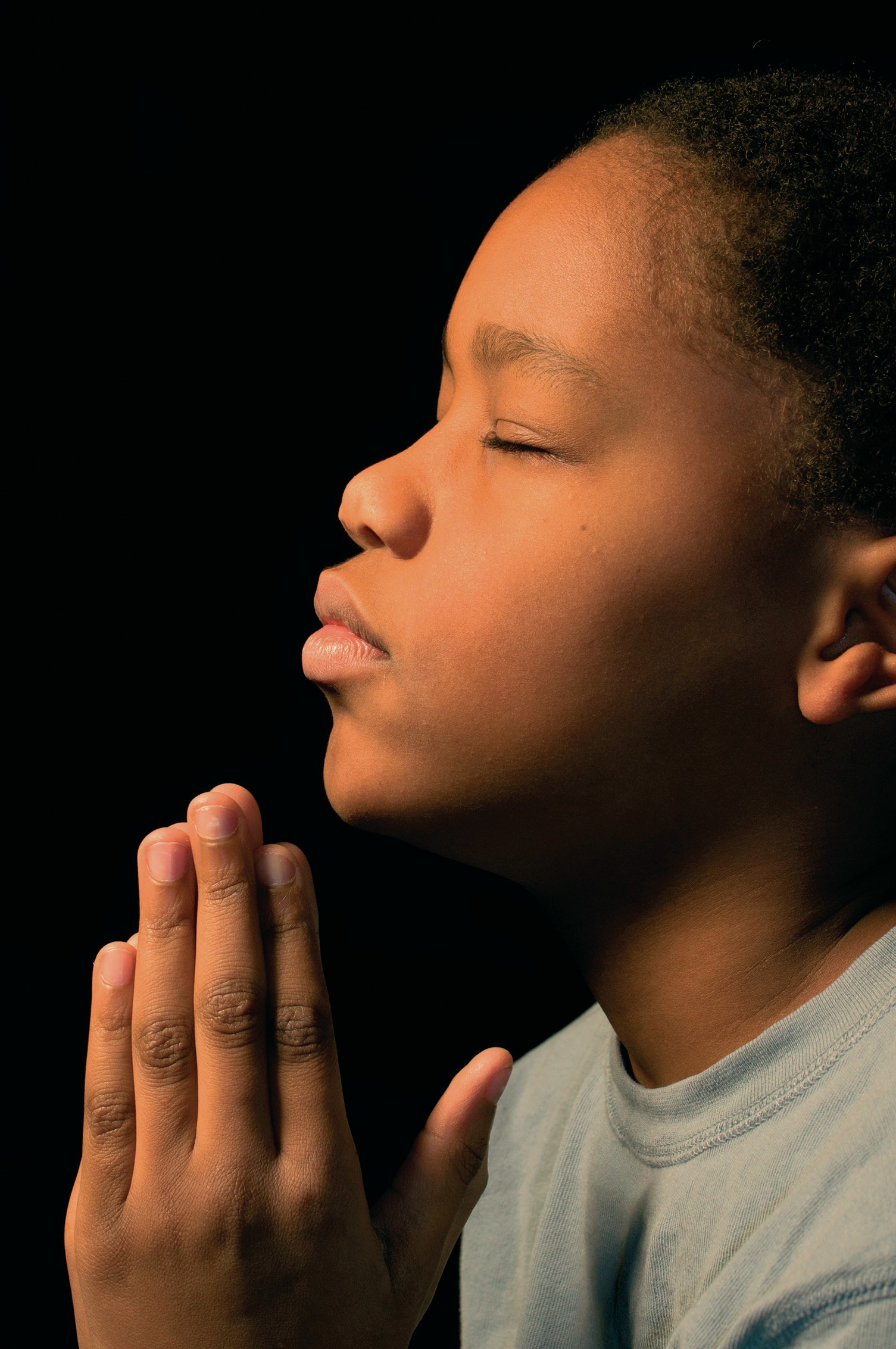
Prayer is also important in examining the purpose of worship. Prayer comes in many forms, from the personal prayer of an individual in any location or situation, through to formal prayers in school assemblies and in church services. Prayer can be silent or spoken, led by an individual to a group, or a combination of this with a group being together but each praying their own prayers.
One of the most well-known prayers for Christians is the Lord’s Prayer, through which Jesus taught his disciples how to pray, as detailed in Matthew 6:9–10:
‘Our Father in heaven: May your holy name be honoured; may your Kingdom come; may your will be done on earth as it is in heaven.’
Good News Bible (1994) New Testame
The first sentence shows that the focus here is on God, while the subsequent words show the wish for a reflection of God and his goodness in the world. Prayer therefore clearly shows worship with a purpose, both for God and humanity and as a means to build on the relationship between the two. Indeed, many consider prayer to be analogous to a conversation not only with humanity speaking to God but as a means through which God may speak to humanity in answering prayers. This is not necessarily through humans literally hearing God’s voice (though there are examples of this, such as Jacob and Joseph in the Old Testament) but may be through an individual praying about a situation which then becomes resolved, or about a decision before a path is chosen.
Daily prayer is considered important by many Christians as a means to maintain their relationship with God and continue to grow in faith. Prayer is therefore an important part of worship, showing a purpose for worship through a means to build on the relationship between God and humanity.
Liturgy
Liturgy can be defined as an act of worship. Examples of liturgy include the Eucharist, and also set spoken parts of church services which are used particularly by more traditional churches. These set spoken pieces are an important part of worship for many Christians, as they provide a means to access Christian teaching and again show a purpose through building on the relationship between humanity and God.
For example, the Creed is a statement of belief for Christians used in many services, which sets out the foundation beliefs around the Trinity and the essence of what it means to be Christian. The repetition of saying this weekly in a church service is therefore an important reminder for worshippers of their beliefs. Understanding of the Creed develops as a person develops their faith. As well as a means to develop the relationship between God and humanity, liturgy therefore also has a purpose in worship in helping Christians grow in faith and understanding.
A further example of the purpose of liturgy in worship is through the liturgical church calendar. This provides the church with specific events to celebrate, such as Easter, Advent and Christmas, and through this helps people to keep God as their main priority and focus throughout the year. The liturgical calendar also has a purpose in ensuring all the important aspects of Christianity are covered by worship throughout the year, again showing the role of worship for Christians in growing in faith.
Worship to build a community
Finally, another purpose of worship is that it can be a means by which a community is formed. This community may go as far as to be an alternative to the consumerist cultures of many modern societies. This can come about by the regular meeting of a congregation for church services, as well as the meeting of groups such as youth groups which hold more informal worship, but still meet in God’s name. Prayers in a service can also help maintain a community by stimulating a sense of care and belonging — for example, praying for those within the church or community who are sick. Therefore, although the primary purpose of worship is to focus on God and to build on the relationship between God and humanity, there are also communal benefits to humanity.
Summary
We can conclude that the purpose of worship is to provide a means by which humans can focus on God and build on their relationship with God. Hence primarily worship is about God, but there are also benefits to humanity. Despite claims that worship has no purpose in modern society, through the examples of the Eucharist and prayer it is clear that worship is still important for practising Christians.
Secondary purposes of worship are that, through liturgy, Christians can grow in faith and understanding, and worship can also help to build communities and give support, which is important in the wider implications of being a practising Christian.
PRAYER IS ALSO IMPORTANT IN EXAMINING THE PURPOSE OF WORSHIP.