
Deprecated: mb_convert_encoding(): Handling HTML entities via mbstring is deprecated; use htmlspecialchars, htmlentities, or mb_encode_numericentity/mb_decode_numericentity instead in /mnt/storage/stage/builds/pugpig-site-subs-server/latest-1.2.0-1753096337.768322/pugpig-site-subs/content.php on line 225
stretch and challenge
Jesus as God and the Church
In the first of two columns exploring the diversity within the Christian Church in understanding the person of Jesus, Peter Manning looks at early debates about whether Jesus was fully God, fully human or both
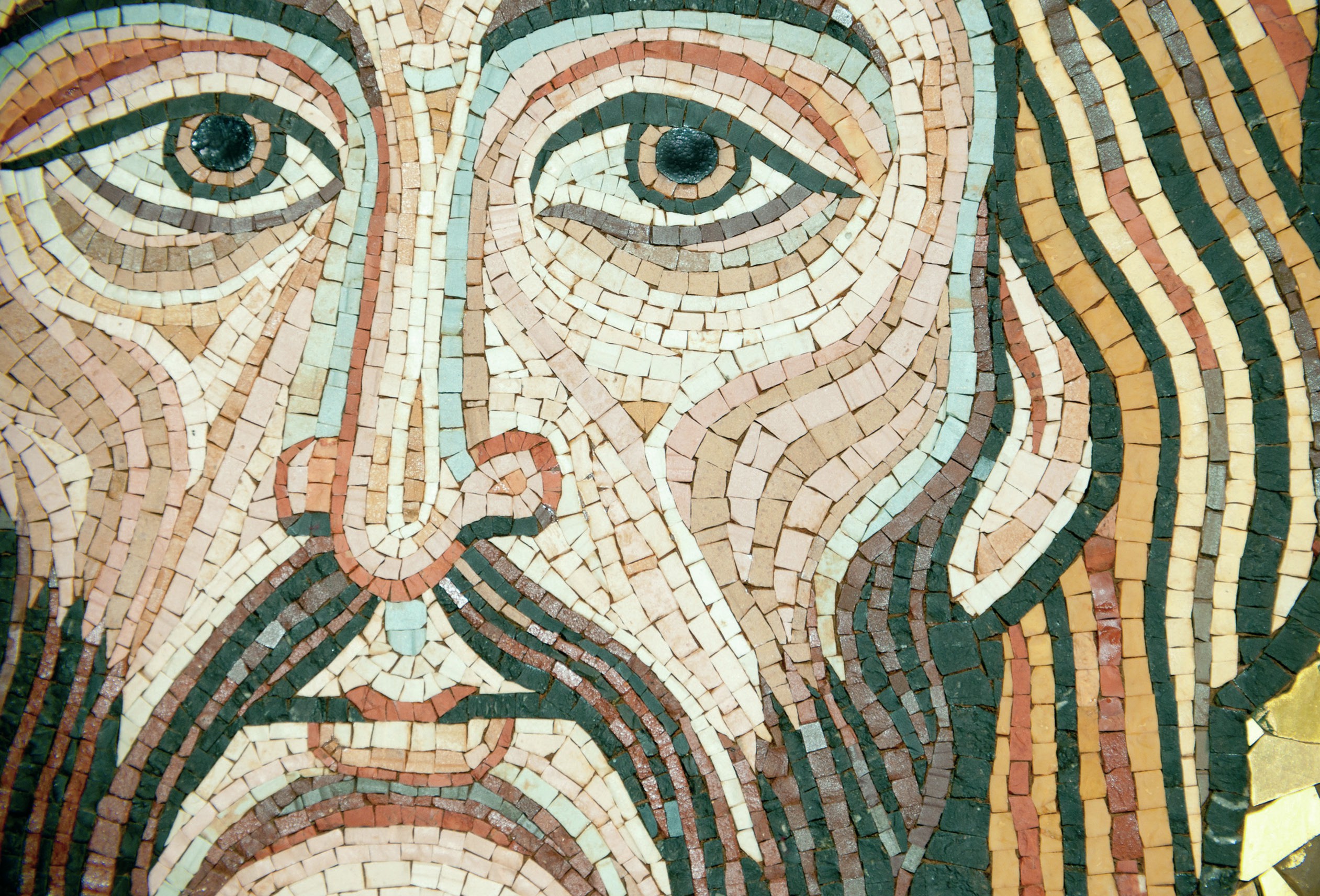
Listening to the news during August 2013, the situation in Egypt seemed to go from bad to worse. Within the conflict between the army, the Muslim Brotherhood and the wider divisions about what kind of state the population of Egypt desires the country to be stands the Coptic Church.
It rarely appears in Western news, yet the Coptic Church is one of the oldest Christian communities. Coptics make up at least 10% of the population of Egypt and trace their roots back to the first century CE.
A surprising diversity
Within Europe, Christianity is often seen in terms of Catholicism or Protestantism. These two branches of Christianity came about through a growing rejection of papal authority after Martin Luther challenged aspects of Catholic teaching in 1517.
Reformers like Luther, Zwingli, Calvin, Tyndale and others expressed a desire to create the Church in a way that they saw as more faithful to the early Church of the New Testament than the state institution they perceived the Church had become in Catholicism. Protestantism has itself given birth to a bewildering array of movements: Baptists, Methodists, Brethren and Pentecostals to name just a few.
Earlier splits
1054 CE and the Great Schism
There were two earlier major splits of the Christian community. In 1054, what has become known as the Great Schism took place, in which Christians in western Europe under the authority of the Bishop of Rome formed the Catholic (meaning ‘universal’) Church. Christian communities in the rest of Europe and the Mediterranean proclaimed themselves as members of the Orthodox (meaning ‘true’) Church.
Up until this point the Church had operated with a system of two overseeing bishops, or popes, leading the Church — one based in Rome and the other in Alexandria, Egypt — together with the Bishops of Constantinople, Antioch and Jerusalem. The Great Schism ended this arrangement and reflected wider disagreements over the use of icons in worship, and growing language and also cultural differences between the Latin west and the Greek east. The split itself came about through the pope in Rome authorising a change to one of the most important statements of belief in Christianity, known as the Nicene Creed, without the agreement of the other bishops. The change concerned a matter of doctrine considering how the Holy Spirit is understood in God’s nature.
WITHIN EUROPE, CHRISTIANITY IS OFTEN SEEN IN TERMS OF CATHOLICISM OR PROTESTANTISM.
451 CE and the Coptic Church
The split echoed a major division within Christianity 500 years earlier. At the early Church council at Chalcedon in 451 CE the Church produced a series of statements on its beliefs about Jesus and God in an attempt to affirm the boundaries of what was accepted belief about Jesus and what could be seen as heresy. However, this settlement was rejected by the broadly non-Greek-speaking Christian communities in Armenia, Syria, Egypt and Ethiopia, collectively known as the Oriental Orthodox Churches.
The non-Chalcedonian Christian community in Egypt became the Coptic Church we now hear about due to its persecution by parts of the Muslim community in the present troubles. Being Christian, they are sometimes seen as part of Western influence in Egypt but in reality they represent one of the oldest communities in Egypt, with a history going back 2,000 years.
While we may struggle to see the need for the disagreement over the person of Jesus, and indeed the Catholic and Orthodox Churches are in fellowship with each other again today, at the time defining what the Church believed about Jesus was seen as essential due to earlier controversies and questions.
Was Jesus God?
This question was asked within the Christian community, who believed that Jesus was the Messiah, the saviour of humanity sent by God to save us from ourselves, that we might be back in fellowship with the creator of the universe. While all Christians accepted the witness of the New Testament and the Church as a worshipping community to this truth, such a belief left room for further reflection on how God related to Jesus.
An early Church theologian called Arius emphasised the absoluteness and singularity of God who is totally transcendent and cannot therefore be in direct contact with this world. Arius believed that the Son of God was the first creation made by God. The purpose of the Son was to manifest himself in our world as Jesus and through his ministry point humanity back towards God.
Jesus as demi-God
In this view Jesus as the Son of God present on earth becomes a kind of ‘demi-God’ ministering between humanity and God the Father. Jesus is more than human but less than God. While Arius’ viewpoint persisted within the early Church for some time, and can be found today in the modern Jehovah’s Witness movement, it was formally rejected at the council of Nicea in 325 CE, which sided with the arguments of Athanasius. Athanasius, secretary to the Bishop of Alexandria, argued that the Son of God was not created but eternal with the Father and therefore also part of God.
This view was upheld because although it left the Church with problems over how to square belief in one God with the presence of two identities or persons in the Godhead — God the Father and God the Son — it was felt that it avoided problems over how a demi-God sacrificing himself on the cross could be said to adequately save humanity from the consequences of its sin and distance from God. Only God has the power and authority to save. Also, the Christian community gave worship to Jesus and so to demote Jesus to demi-God status might put in question such worship when the true target of worship should be God alone.
The statement of belief produced at this council is the short version of what is now known as the Nicene Creed, spoken as a profession of faith in many Churches to this day. For Christians Jesus is fully God.
Was Jesus human?
Apollinarius (c. 310–390 CE) was a defender of Athanasius who developed the position in ways that created their own problems. Apollinarius so stressed the divinity of Christ that he argued that, although Jesus’ body was human flesh, his soul or mind was divine. He argued that Christ only had one nature, divine, as the human flesh was glorified and made divine. Flesh does not have life apart from a soul and so the soul, in this case divine, transformed the flesh.
Such a viewpoint presses the understanding of Jesus’ divinity so far that the early Church proclaimed that the humanity within it was lost. If Jesus was not in some way fully human he could not represent humanity in the process of salvation. An early Church theologian, Gregory of Nazianzus, proclaimed ‘what has not been assumed cannot be restored; it is what is united with God that is saved’. For Christians Jesus is fully human.
Human and divine at the same time?
In order to guard against the Arian heresy that made Jesus into a demi-God, and the loss of Jesus’ humanity in the Apollinarian approach, Nestorius, as Bishop of Constantinople since 428 CE, became embroiled in one of the most severe disputes of the early Church. Asked whether ‘Godbearing’ was a suitable way to refer to the Virgin Mary, he ruled that it wasn’t unless balanced by the use of the term ‘manbearing’. He ruled in this way to stop disputes in his own Church over the two natures of Jesus and to discourage worship of the Virgin Mary as the Mother of God. In doing so he was upholding the agreed teaching of the Church and protecting the humanity of Jesus.
Nestorius’ caution over the use of the term ‘God-bearing’ was used as a political tool by the Bishop of Alexandria, Cyril — whose character can only be described as vindictive and lacking love — to persecute Nestorius. Cyril chose to see in Nestorius’ viewpoint a revival of an already rejected teaching that Jesus’ two natures were not in proper union with one another as two persons existed in Jesus. In reality Nestorius was not saying this, even though such a view became known as Nestorianism. He preferred to use the term ‘Christ-bearer’ with reference to Mary as a means of upholding the existence of the two natures together in the one person of Jesus.
The history of this episode does not show the early Church in the best light. The film Agora (2009) is worth watching, as it portrays the struggles of the Alexandrian female philosopher Hypatia with Christian extremism championed by Cyril — alongside some wonderful debates about the nature of reality and the relationship between science and religion.
Monophysite
Following on from this controversy, in 448 CE Eutyches, who had taught that two natures existed before the union but only one after, was denounced as a heretic. The details of his teaching are hard to reconstruct from the sources but it may be that he defended his position by arguing that the eternal Son took the flesh of the one Virgin Mary to create a new hybrid nature, or that the humanity was absorbed by the divine nature. This general position is known as monophysite (‘one nature’). In any event this approach was rejected by the Church — for Christians, Jesus is both fully human and fully divine at the same time.
NESTORIUS’ CAUTION OVER THE USE OF THE TERM ‘GOD-BEARING’ WAS USED AS A POLITICAL TOOL BY THE BISHOP OF ALEXANDRIA, CYRIL — WHOSE CHARACTER CAN ONLY BE DESCRIBED AS VINDICTIVE AND LACKING LOVE