

All A-level exam boards expect you to do an experiment that measures the rate of action of an enzyme. An enzyme is a protein that acts as a catalyst for a biochemical reaction, increasing the rate of the reaction but remaining unchanged itself. Enzyme rate experiments provide opportunities to explore how enzyme activity changes in different conditions, but the data obtained are often variable, and sometimes the answers are not intuitive (see Box 1). Why, then, would a required practical include a set of experiments about a complex area that may provide data that are not absolutely clear?
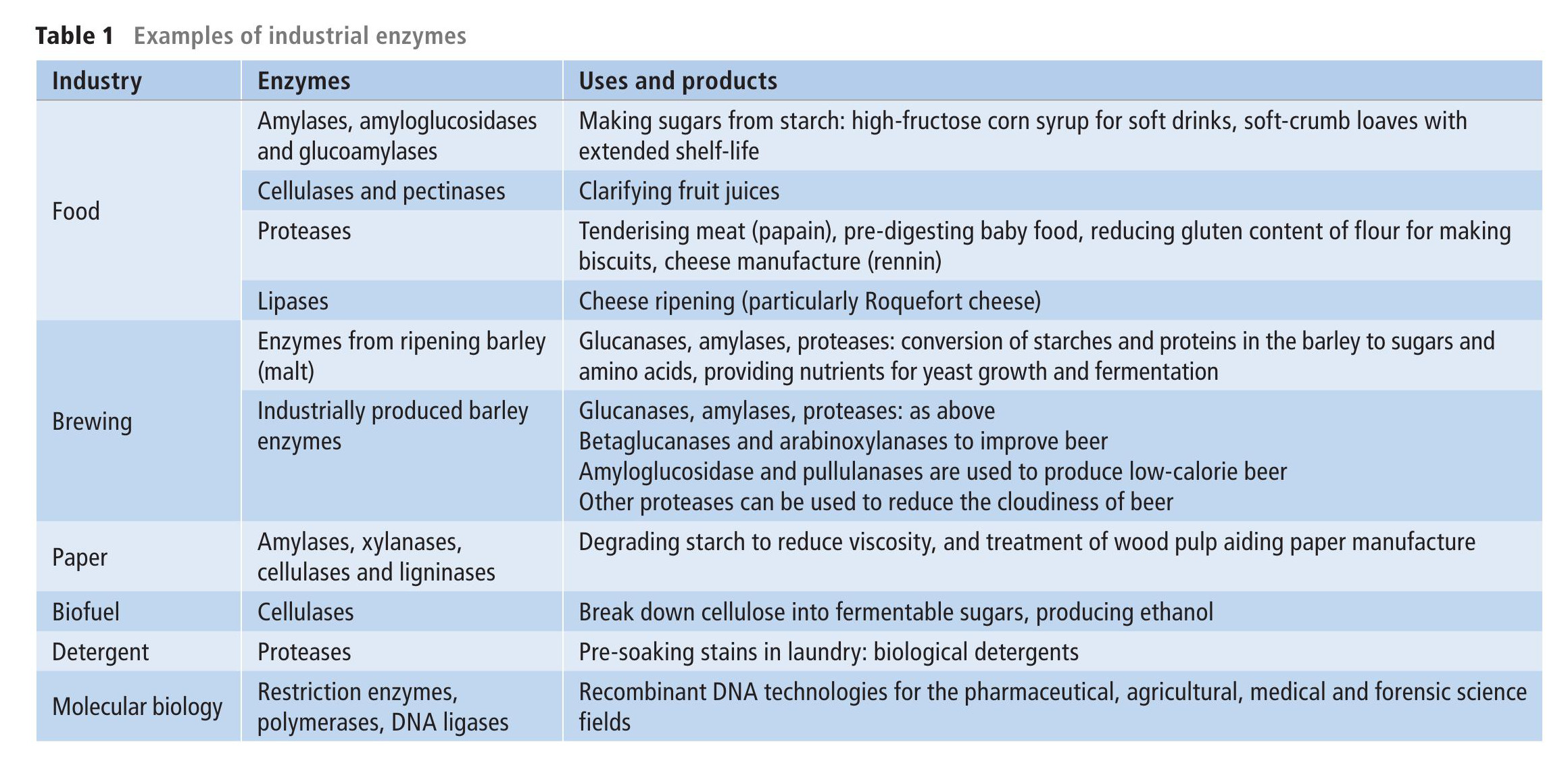
Biologists need to understand how enzymes work in order to appreciate how biochemical reactions are linked together. Enzymes are big business, with many industrial applications (see Table 1). For example, amylases account for ~25% of the world’s market for industrial enzymes and are important for the food and brewing industries. Knowing how they work enables further development. It allows engineering of an enzyme for improved usage (perhaps altering a bacterial protease to work efficiently in a biological washing powder at low temperatures) or even allows design of an enzyme to catalyse reactions that don’t happen in nature.
Your organisation does not have access to this article.
Sign up today to give your students the edge they need to achieve their best grades with subject expertise
Subscribe