

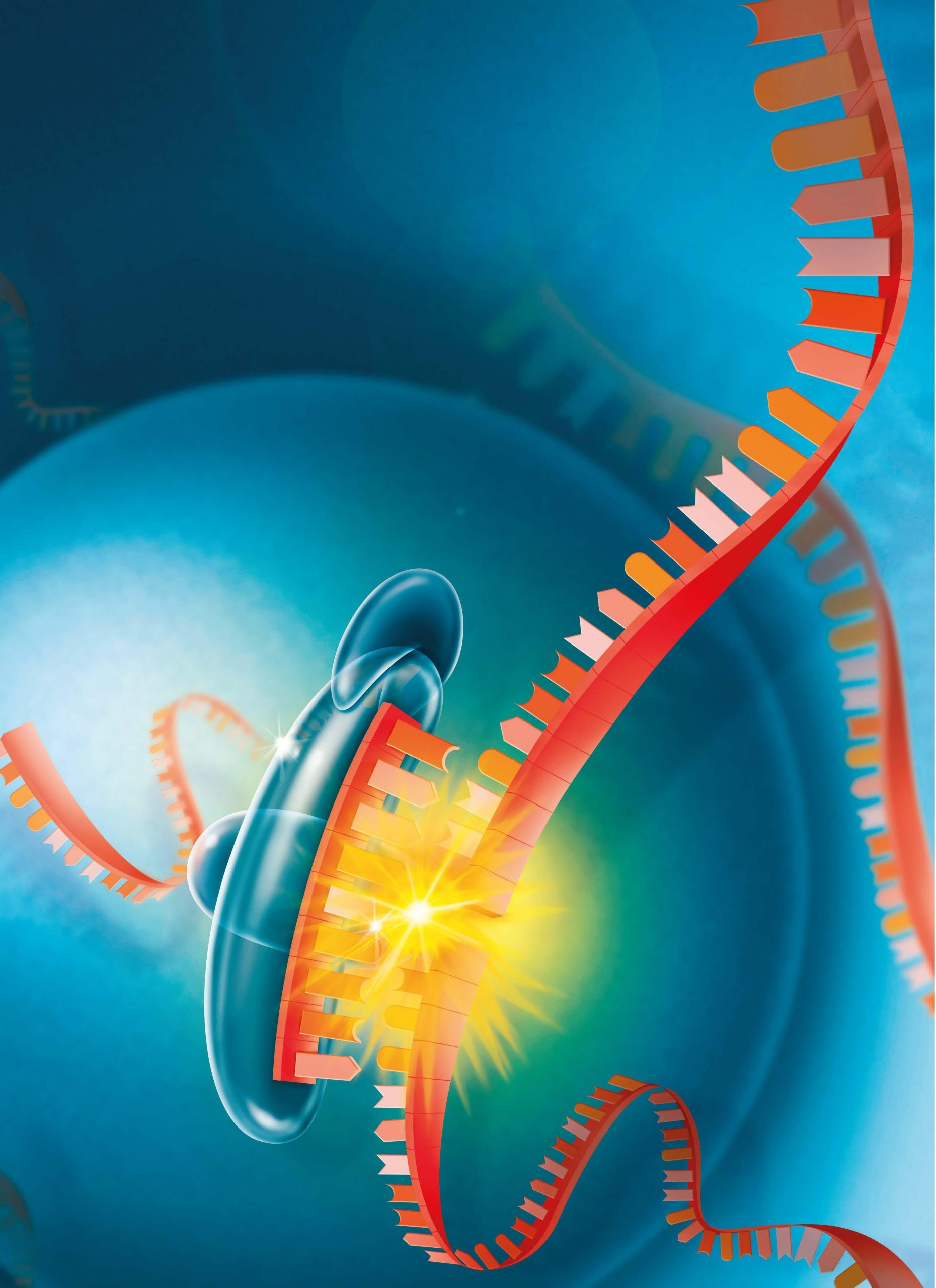
Joining of two cells at fertilisation leads to the development of a complex human with over 37 trillion different cells. Each of these cells has a highly specialised and complex function, from absorbing nutrients from our small intestine to capturing information on this page with the specialised cells in our retinas and then decoding the words into something we can understand with different specialised cells in our brains. Each of these cells has the same 20000 or so genes, so how does each cell use these genes to function very differently within our bodies?
Until recently, the function of different cell types in an organism was thought to be determined by switching genes on or off at specific times. The mechanism by which genes are used by cells is well understood and is called gene expression (see Figure 1). The genetic information found in genes in the form of DNA is copied, using the DNA as a template, into a molecule called a messenger RNA (mRNA). A protein called RNA polymerase copies DNA into mRNA by a process called transcription. Controlling transcription regulates the expression of genes.
Your organisation does not have access to this article.
Sign up today to give your students the edge they need to achieve their best grades with subject expertise
Subscribe