

texts in context
A Room with a View
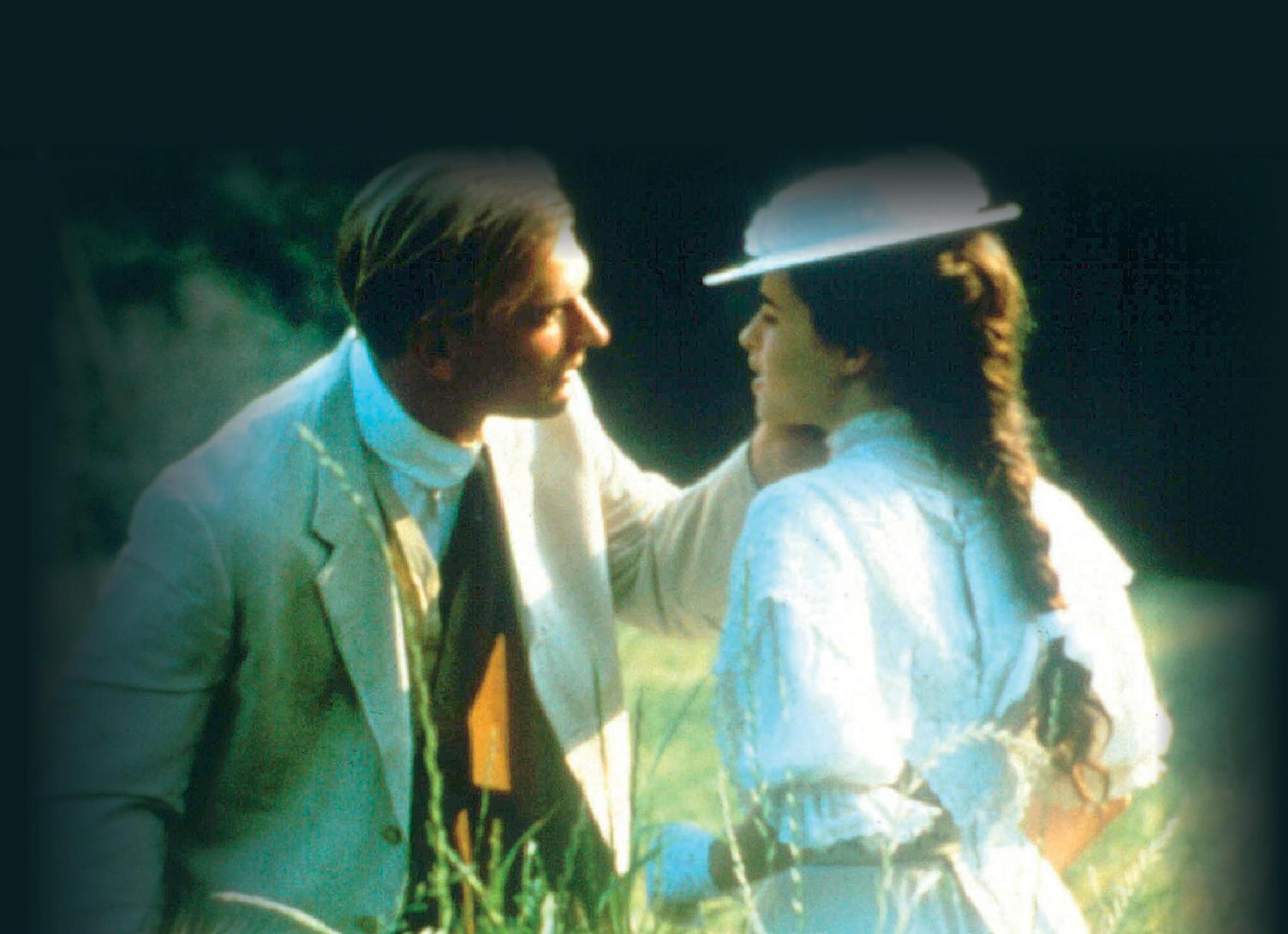
A Room with a View (1908) is a comic romance in which the heroine, Lucy Honeychurch, defies social convention to marry for love. Moving between contrasting locations in Florence and Surrey, the novel offsets the sunny freedom of Italy against the chilly reserve of suburban England
Historical context
The Edwardian summer
A Room with a View is set when it was written, at the height of the so-called Edwardian summer. It’s tempting to romanticise this period as an age of lost innocence all too soon to be swept away in August 1914, but as cultural historian Samuel Hynes notes, the first decade of the twentieth century was a time of transition and transformation well before the war: ‘aircraft, radiotelegraphy, psychoanalysis, Postimpressionism, motion picture palaces, the Labour Party were all Edwardian additions to the English scene’ (Hynes 1992, p. 5). He suggests that while the First World War ‘dramatised and speeded the changes from Victorian to modern England, it did not make them’.
Social and political context
The People’s Budget and the rise of socialism
Within a year of A Room with a View’s publication, when the radical Liberal Chancellor of the Exchequer David Lloyd George called the financial reforms that he unveiled ‘a war Budget’, it was not military conflict he had in mind. The People’s Budget aimed to tax the rich to help the poor:
It is for raising money to wage implacable warfare against poverty and squalidness. I cannot help hoping and believing that before this generation has passed away, we shall have advanced a great step towards that good time, when poverty, and the wretchedness and human degradation which always follows in its camp, will be as remote to the people of this country as the wolves which once infested its forests.
Moreover, the modern Labour Party had emerged even before this, and while the novel’s Mr Emerson is not presented as an aggressive political activist, many middle-and upper-class Britons would have seen his socialist views as embodying a declaration of class war — nothing less than an all-out assault on the traditional structure of English society.
Geopolitical context
Growing international tension
1908 was the midpoint between the accession of Edward VII and the outbreak of the Great War. The king, hugely popular, effortlessly cosmopolitan and widely travelled, was connected by blood or marriage to so many other reigning monarchs that he was nicknamed ‘the Uncle of Europe’. New technologies made foreign travel easy and growing prosperity allowed more people, like Forster’s characters, to follow the royal example. At a political level, however, England’s increasingly friendly diplomatic relations with France caused great unease in Germany, but while the seeds of the conflict that was to engulf millions of young men like Cecil Vyse, George Emerson and Freddy Honeychurch were beginning to germinate, few would have yet predicted it.
Sociocultural context
The rise of the suffragettes
The Women’s Social and Political Union (WSPU), founded in 1903 by Emmeline Pankhurst and her daughters, aimed to get women the vote. The WSPU’s campaign of direct action saw many women imprisoned and force-fed when they went on hunger strike. Core issues associated with traditional gender roles such as marriage, homemaking, education, work and civil rights are extensively debated within the text, with Lucy’s mother expressing strong disapproval of the WSPU’s activities. Above all, Forster’s presentation of Lucy Honeychurch’s development as an independent thinker is highly topical, given that a 1908 suffragette rally in Hyde Park was attended by more than 300,000 people.
Literary context
Realism and modernism
Although the text is much shorter and more tightly constructed than the typical Victorian three-decker novel, suggesting that Forster agreed with Henry James’ withering assessment of these ‘large, loose, baggy monsters’, the central love story still ends in marriage — the nineteenth-century blockbuster’s trademark happy ending. Moreover, while Forster was writing in the early years of literary modernism, a movement that often rejected traditional narrative forms in favour of exploring the significance of brief moments in time, experimenting with innovative language patterns and investigating unusual sexual relationships, A Room with a View unfolds realistically and chronologically and features an omniscient narrator. But the novel is not timidly orthodox. Forster presents a heroine who experiences sexual passion and makes a triumphantly progressive marriage outside her own social class, revealing her interior thought processes in considerable depth and detail.
References and further reading
Bradshaw, D. (2007) The Cambridge Companion to E. M. Forster, Cambridge University Press.
Hynes, S. (1992) The Edwardian Turn of Mind: The First World War and English Culture, Pimlico.
Online resource
Cavendish, R. (2009) ‘The House of Lords rejects the 1909 People’s Budget’, History Today, Vol. 59, No. 11: www.tinyurl.com/oxmzpow (Accessed March 2017) (An account of Lloyd George’s budget speech)